Iran launches seven ballistic missiles at Kuwait, Bahrain in sharp Gulf escalation, US says
Hezbollah rejects US-brokered truce as cross-border strikes and Iran tensions grow

Highlights
We are closing this coverage now. For latest updates, click here.
IRGC strikes oil tanker in Strait of Hormuz
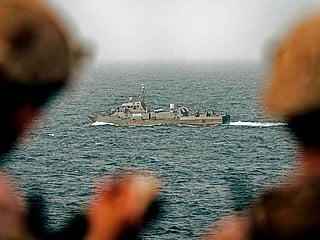
Iran's Revolutionary Guard said it targeted one of four oil tankers that allegedly attempted to pass through the Strait of Hormuz without prior coordination. The IRGC claimed the vessels ignored warnings issued by Iranian authorities and were attempting what it described as an "illegal transit" through the strategic waterway, alleging that the move had been encouraged by the US military. Iranians said one tanker was struck and forced to halt, while the remaining vessels turned back.
US military says Iran launched seven ballistic missiles at Kuwait and Bahrain
The US military said Iran launched seven ballistic missiles towards Kuwait and Bahrain in a significant escalation of tensions across the Gulf. According to US Central Command, six of the missiles were successfully intercepted by air defence systems, while the seventh failed to reach its intended target. The launches came shortly after US forces said they had intercepted four Iranian drones heading towards the Strait of Hormuz and carried out strikes against Iranian radar installations on Qeshm Island and in Goruk. US officials said there were no immediate reports of injuries among American personnel, while Kuwait and Bahrain activated emergency response measures as the situation unfolded.
Bahrain activates sirens, urges residents to seek shelter
Residents across Bahrain were urged to move to safe locations early Saturday after warning sirens were activated nationwide amid escalating regional tensions. Bahrain's Ministry of Interior issued an alert at 4:15 a.m. local time, calling on citizens and residents to remain calm and follow emergency guidance.
The precautionary measures came as missile activity and military exchanges intensified across the Gulf region, raising concerns over potential threats to civilian areas.
Kuwait intercepts missile and drone attacks
Kuwaiti air defences were intercepting missile and drone attacks, state news agency KUNA cited the army's General Staff as saying.
The General Staff added that any explosions heard were the result of interceptions by air defence systems and urged the public to follow safety and security instructions issued by the relevant agencies.
Lebanon says Israeli strike kills 5 including woman, paramedic
Lebanon's health ministry said an Israeli strike in the south on Friday killed five people including a woman and an emergency worker, condemning "the targeting of paramedics carrying out rescue operations".
"The Israeli enemy strike on the town of Zebdine in the Nabatieh district killed five people including a woman, and a paramedic from the Risala Association, and wounded two people including a paramedic," a ministry statement said, referring to emergency responders affiliated with Hezbollah ally the Amal movement.
Trump hails ‘great success’ with Iran, offers no new details
President Donald Trump said his administration is achieving “great success” in negotiations with Iran, speaking to reporters on Air Force One.
“They’re not going to have a nuclear weapon. They’re in no position to have a nuclear weapon,” Trump said, repeating comments he has made multiple times during the ongoing conflict.
Get updated faster and for FREE: Download the Gulf News app now - simply click here.
Qatar reaffirms condemnation of Barakah nuclear plant attack
Qatar has reaffirmed its condemnation of last month’s attack on the UAE’s Barakah nuclear power plant during an emergency session of the UN nuclear watchdog (IAEA) in Vienna.
Qatari Ambassador to Austria Jassim Yaqoub Al Hammadi described the incident as a clear violation of international law, according to a statement from Qatar’s Ministry of Foreign Affairs.
He also emphasised that “the security of the UAE is an integral part of the security of the Gulf Cooperation Council (GCC) states and the wider region,” the ministry added.
Israeli strike kills Hezbollah operative in southern Lebanon
The Israeli military said it has killed a Hezbollah operative in southern Lebanon during a strike near a United Nations Interim Force in Lebanon (UNIFIL) position in the Burj Qalawiya area.
The Israel Defense Forces (IDF) said the individual was operating from within or near a UNIFIL outpost and entered a vehicle before approaching Israeli troops in a manner that posed an “immediate threat.”
According to the IDF, the operative was also involved in planning and advancing attacks against Israeli soldiers and civilians.
The military said it carried out what it described as a “precise strike” to eliminate the target, while taking steps to avoid damage to the nearby UNIFIL position and minimise harm to civilians.
There was no immediate independent confirmation of the incident from Lebanese authorities or UNIFIL.
Get updated faster and for FREE: Download the Gulf News app now - simply click here.
Iran World Cup players granted US visas, White House says
Iran’s national football team players have been granted visas to enter the United States for the upcoming World Cup, a White House official confirmed on Friday.
The visas clear the way for the team to participate in matches hosted in the US, following earlier concerns about travel restrictions. Officials emphasised that all necessary clearances were issued to ensure the players can compete without delay.
The move comes as part of ongoing coordination between US authorities and FIFA to facilitate smooth participation for all qualified teams in the tournament.
Iran ex-PM hospitalised after years under house arrest
Iran's former prime minister Mir Hossein Mousavi, who was the focus of a 2009 mass protest movement and has spent the last 15 years under house arrest, has been hospitalised after his health deteriorated, an advisor said on Friday.
Last week, "he suffered a health crisis and was transferred to a hospital," his advisor Ardeshir Amir Arjomand, who is based outside Iran, told BBC Persian.
"He is now hospitalised, although his condition has improved since today," he added.
Arjomand said Mousavi's condition had been affected by being moved to a new location when his previous residence in central Tehran was damaged in the US-Israeli strike on February 28 that killed supreme leader Ali Khamenei.
Mousavi, 84, and his wife Zahra Rahnavard, 80, also under house arrest since 2011, had been living on Pasteur Street close to Khamenei's offices.
"They remain in a state of uncertainty and displacement. They were previously under pressure, and now it has increased further," said Arjomand in the interview.
"It is unclear how many more times they must go through such crises before officials realise that they should be released," he added.
US sanctions Iranian LPG export and 'shadow banking' networks
The United States imposed sanctions on a network allegedly exporting Liquefied Petroleum Gas (LPG) from Iran to South and Eastern Asia by falsely flagging it as originating in Oman, the Treasury said.
The system, designed to evade existing US sanctions, moved LPG worth hundreds of millions of dollars, it added.
The United States has tightened sanctions on Iran since it jointly launched its war on the country with Israel in late February.
In addition, Washington on Friday also sanctioned an Iranian currency exchange house and individuals associated with it for allegedly helping Iran facilitate billions in financial transactions.
These sanctions are part of the Administration's Economic Fury campaign, which maintains maximum pressure on the Iranian regime and disrupts its ability to generate revenue for weapons development, support for terrorist proxies, and regional aggressionTommy Pigott, US State Department spokesperson
Iran adviser says US talks stalled over $24b in assets: CNN report
A senior adviser to Iran's supreme leader has told CNN that US-Iran negotiations are at a standstill, with Tehran seeking the release of $24 billion in frozen assets as a confidence-building measure.
Mohsen Rezaei also warned of wider regional consequences if hostilities resume, saying the "ball is in Trump's court" to revive talks.
US forces board sanctioned tanker in Indian Ocean
US forces boarded an oil tanker in the Indian Ocean overnight that was sanctioned by Washington for transporting Iranian crude, the US military said on Friday.
"US forces carried out a maritime interdiction and right-of-visit boarding of the sanctioned stateless vessel MT DAVINA located in the Indian Ocean," the US Indo-Pacific Command said in a post on X.
"We will continue global maritime enforcement to disrupt illicit networks and interdict vessels providing material support to Iran, wherever they operate," said the post, which included photos and a video clip of the operation.
The Davina was sanctioned in 2024 by the US Treasury, which said it had delivered oil from Iran to China.
Since the start of the US-Israeli war on Iran in late February, Tehran's forces have imposed a naval blockade on the Strait of Hormuz, the strategic waterway connecting the Gulf with the Indian Ocean.
The United States later set up its own blockade of Iranian ports, redirecting scores of vessels and firing on six ships that refused to comply.
Lebanon president tells Iran not to interfere
Lebanese President Joseph Aoun urged Iran not to interfere in his country in a video interview published by CNN, also telling the Tehran-backed Hezbollah that diplomacy was the only solution to the conflict with Israel.
"It's not your country, it's our country... It's not your job to interfere into our country," Aoun told Iran in the interview, adding that "they are using Lebanon as a bargaining chip in their negotiation with the United States. It's unacceptable".
"Hezbollah must understand that (there is) no other way but to sit and talk, no other way to solve this problem and to save what's left except through negotiation and diplomacy," he added.
IndiGo extends Kuwait flight suspension
IndiGo has announced the continued suspension of all flights to and from Kuwait due to the ongoing closure of Kuwaiti airspace.
In a travel advisory posted on X, the airline said the suspension will remain in effect “until further notice” following guidance from Kuwaiti authorities.
The airline said it understands the disruption caused to passengers and expressed regret over the inconvenience, adding that safety of customers and crew remains its top priority.
Lebanon PM tells Iran to stop treating country as 'bargaining chip'
Lebanese Prime Minister Nawaf Salam urged Iran to stop treating his country, where Israel and the Tehran-backed Hezbollah are at war, as a "bargaining chip" in its negotiations with Washington on the Middle East conflict.
"If I may address a word to Iran, it is this: have mercy on our south, stop treating it and its people as merely a bargaining chip to improve the terms of your negotiations," Salam told a press conference for a UN aid appeal for Lebanon.
US military rejects Iran's claim of firing on American warships
The US Central Command (CENTCOM) has rejected Iranian claims that its forces fired warning shots at US warships in the Gulf of Oman, forcing them to retreat towards the Indian Ocean.
In a post on X, CENTCOM described the claim as “false” and said Iranian forces did not attack or fire on US Navy vessels.
It said any such action would represent a “gross violation” of the ceasefire, adding that US forces continue to operate freely in regional waters.
CENTCOM also stated that US naval operations remain active in the region as part of ongoing maritime enforcement efforts against what it described as illicit activity linked to Iran.
Ireland bans two Israeli ministers from entering country: Ministry
Ireland barred Israel's national security minister and finance minister from entering the country over the war in Gaza.
Justice Minister Jim O'Callaghan "has instructed immigration officers to refuse entry to Itamar Ben-Gvir - Minister for National Security of Israel, and Bezalel Smotrich, Minister of Finance of Israel - should they seek to enter the state," said a justice ministry statement sent to AFP.
US adds 172,000 jobs in May, strongly beating expectations
US employment growth surged in May, beating market expectations, while the unemployment rate remained steady, government data showed on Friday, with the labor market in the world's largest economy sustaining recent gains.
"Total nonfarm payroll employment increased by 172,000 in May, and the unemployment rate was unchanged at 4.3 percent," the US Bureau of Labor Statistics said.
Economists polled by Dow Jones Newswires and the Wall Street Journal had expected job growth of 80,000 jobs.
Friday's data release also revised job growth numbers for March and April upwards by a combined 93,000, a signal that the labor market may be exiting a recent period of turbulence.
Job growth in the United States has see-sawed between expansion and contraction from month to month over the last year, but May's data marks the third straight month of increases.
The leisure and hospitality sector added 70,000 jobs last month, the new data showed, well above its average monthly gain of 14,000 over the last year.
The health care sector remained one of the labor market's strongest performers, with 35,000 jobs added in May, in line with 12-monthly averages.
Employment in the financial activities sector, however, declined by 22,000, with losses concentrated in insurance and commercial banking.
The sector is down 107,000 jobs from its recent peak in May 2025. The air transportation sector lost 9,000 jobs, after low-cost airline Spirit wound down its operations.
Iran dismisses idea of Trump meeting supreme leader
Iranian Foreign Minister Abbas Araghchi has dismissed the idea of his country's supreme leader meeting Donald Trump, after the US president floated the prospect.
On Wednesday, Trump told the New York Post: "Yeah, I'd like to meet him," when he was asked about a possible encounter, adding that "we probably will meet at some point, depending on how it all works out".
Iran's top diplomat however played down the chances in an interview with Lebanese media aired on Thursday night, suggesting it was not realistic.
"I saw a report which apparently said that he (Trump) had stated that he was ready for a meeting or that he wanted to hold a meeting," Araghchi told Al Mayadeen television channel.
"I think we should be realistic and think and live in the real world," he said.
Ayatollah Mojtaba Khamenei was appointed Iran's supreme leader in March after the death of his father and predecessor Ali Khamenei in US-Israeli strikes on February 28.
Araghchi said in the interview that during the attacks that killed Ali Khamenei he had been inside the leader's office where he died, but in another wing of the building so was unharmed.
The attacks prompted Iran to retaliate with missile and drone strikes against Israel and US allies in the Gulf region.
Araghchi also said the new supreme leader has a "completely close and effective presence in the country's affairs and has full control".
He said Mojtaba Khamenei's absence from public view since his appointment was "due to security considerations" surrounding the war, which has been paused since April 8 by a fragile ceasefire.
Mediated and direct talks between Iran and the United States have so far failed to produce a permanent end to the conflict.
Iran army says fired 'warning missiles' at US destroyers in Gulf of Oman
Iran's army said Friday it had fired "warning missiles" at two US destroyers in the Gulf of Oman, forcing the vessels to leave the area, according to state media.
"In continuation of operations to counter maritime misconduct and harassment, as well as the hijacking of commercial vessels and oil tankers by the terrorist naval forces of the United States, following the firing of warning missiles, the hostile destroyers DDG-103 and DDG-8 have left the Gulf of Oman towards the Indian Ocean," the army said in a statement carried by state news agency IRNA.
Get updated faster and for FREE: Download the Gulf News app now - simply click here.
Iran squad hand passports to US embassy for visa approval
Iran's football squad, whose participation in the World Cup remains uncertain, have handed their passports to the US embassy in Turkey for visas, the head of their Football Federation said on Friday.
Mehdi Taj said Iran were following instructions from world football's governing body.
The Iranian team is due to fly from Turkey to Spain on Saturday before travelling on to their base camp in Mexico, which has issued visas to the squad.
Taj said the Iranian Football Federation said had "raised certain points and requests, in such a way that FIFA was told that if they (the Americans) do not issue visas for the players, some members of our technical staff, and other sections of our delegation, we may make other decisions."
"My assessment is that all visas will be issued in full, and there most likely will not be any problem in this regard," he added.
The Iranians relocated their World Cup base, which initially was planned to be in Tucson, Arizona, to the northwestern Mexican border city of Tijuana.
All three of their group matches are in the United States.
They open with two games in Los Angeles, against against New Zealand on 15 June and Belgium on 21 June, and play Egypt on 27 June in Seattle.
Iranian-American journalist in Tehran seeks US help: Report
An Iranian-American journalist sentenced to 10 years in a notorious Tehran prison called on Washington to provide medical help for him and other US detainees, CBS News reported Friday.
Reza Valizadeh, who holds both Iranian and US citizenship and worked for US-funded Radio Farda, is in prison on charges of collaborating with a hostile government, according to his lawyer.
Valizadeh said in the two-minute recording that he and three other Americans held at Tehran's Evin prison were sick and being denied medical treatment.
Valizadeh's lawyer Ryan Fayhee told CBS News that Valizadeh was suffering from persistent coughing, back pain and dental problems.
The United States said in 2024 it was aware of Valizadeh's detention and called on Iran to free him.
Rights groups have denounced conditions in Iran's prisons, where detainees suffer from overcrowding and shortages of food, water, hygiene supplies, medicine and medical care.
Hezbollah ally signals withdrawal under truce deal
Lebanese parliament speaker and Hezbollah ally Nabih Berri said Friday that the Iran-backed group would withdraw from the area south of Lebanon's Litani River if Israel pulls out and a comprehensive ceasefire is reached.
"I agree to... Hezbollah's withdrawal from south of the Litani River in parallel with an Israeli withdrawal from the areas it occupies" and "a complete and comprehensive ceasefire without conditions", Berri, who acts as Hezbollah's mediator, said in a statement.
Iran FM warns US bases in region could be targeted
Iranian Foreign Minister Abbas Araghchi has warned that US military bases used in any attack against Iran would be considered legitimate targets.
Speaking in remarks carried by Iran's state broadcaster IRIB, Araghchi said Iran's ability to withstand pressure from the United States had demonstrated the country's strength.
"Standing against the world's greatest power, equipped with nuclear weapons, for 40 days is no joke," he said, adding that "the world has realised the true power of the Iranian nation."
He also issued a warning to countries hosting US military facilities in the region. "We warned regional states that US bases used for any aggression against Iran are legitimate targets," Araghchi said.
Despite the warning, the Iranian foreign minister stressed Tehran's commitment to improving ties with Saudi Arabia, saying: "We are committed to fostering sustainable, constructive ties with Saudi Arabia
Israel strikes Lebanese village after warning to several areas
Israel's air force struck a Lebanese village on Friday following warnings for several areas of imminent attacks against Hezbollah, after the Iran-backed militants rejected a truce brokered by the United States.
Israel army warns of imminent strikes against Hezbollah in Lebanon's Sarafand
Israel's military warned residents of south Lebanon's Sarafand, a town on the coastal road between Tyre and Sidon, to immediately evacuate on Friday ahead of expected attacks against Iran-backed Hezbollah. "In light of the terrorist Hezbollah's violation of the ceasefire agreement and its targeting of Israel's home front, the Israel Defence Forces are compelled to act against it forcefully, especially in your areas," the military's Arabic-language spokesman Avichay Adraee posted on X, listing six towns and villages including Sarafand and Saksakiyeh, which is also on the coastal road.
He added: "Out of concern for your safety, you must evacuate your homes immediately and move north of the Zahrani River," which runs some 40 kilometres (25 miles) north of the border.
Get updated faster and for FREE: Download the Gulf News app now - simply click here.
Another Hezbollah leader 'eliminated': IDF
Abed Harb, the commander of Hezbollah's Engineering unit has been killed, according to a social media post from the Israel Defense Forces.
Harb’s unit was responsible for assembling explosives intended to harm IDF soldiers in southern Lebanon. He was a senior commander within Hezbollah & was responsible for numerous attacks against IDF soldiers, from the Second Lebanon War.
Israel army warns will attack 3 villages north of Lebanon's Litani River
Israel's military warned residents of three villages north of the Litani River in southern Lebanon to evacuate on Friday ahead of expected attacks against Iran-backed Hezbollah.
"For your safety, you must evacuate your homes immediately and move away from the villages and towns by at least 1,000 metres into open areas. Anyone who is near Hezbollah operatives, their facilities, or their weapons endangers their life!" the army's Arabic-language spokesman Avichay Adraee posted on X.
Hezbollah chief Naim Qassem on Thursday rejected a conditional truce announced by Lebanese and Israeli envoys, demanding a comprehensive ceasefire and full Israeli withdrawal instead as he threatened northern Israel with new attacks.
Get updated faster and for FREE: Download the Gulf News app now - simply click here.
UAE, Indian airlines are cutting flights this summer
Dubai: UAE, Indian and multiple global airlines are entering what analysts are calling “one of the most unpredictable summer travel seasons in recent years”, with the Iran conflict, fuel prices and airspace disruptions forcing carriers to rethink growth plans during what is usually the industry’s busiest and most profitable period.
The crisis is no longer limited to smaller or financially weaker airlines. The disruption is now global in scale.
Industry estimates show airlines worldwide have removed more than 75,000 flights from summer 2026 schedules.
Oman's Mina al Fahal terminal resumes operations
Petroleum Development Oman said on Friday that operations at Mina Al Fahal port are proceeding normally, after three sources told Reuters earlier that oil loading had been suspended following an explosion near its mooring berths.
Israeli strikes kill 7 in south Lebanon's Tyre: civil defence
Israeli strikes overnight in the south Lebanon city of Tyre killed seven people, a source from Lebanon's civil defence told AFP on Friday, despite a ceasefire in the Israel-Hezbollah war.
One strike near the Jabal Amel hospital killed four people, wounded seven and lightly damaged the facility, while another elsewhere in the city killed three and wounded five, including two children.
IAEA unable to inspect Iranian facilities
The U.N. nuclear watchdog has been unable to inspect nuclear facilities in Iran affected by the war last June according to a confidential report by the U.N. nuclear watchdog circulated to member states and seen Thursday by The Associated Press.
The International Atomic Energy Agency (IAEA) reported that it “cannot provide any information on the current size, composition or whereabouts of the stockpile of enriched uranium in Iran or whether Iran has suspended all enrichment-related activities.”
The IAEA warned that it was “unable to discharge its safeguards responsibilities” that it has under the Safeguards Agreement of the Nuclear Non-Proliferation Treaty, adding that it is “indispensable and urgent” for Tehran to implement its obligations under that Treaty.
The only nuclear facility inspected in Iran by IAEA inspectors since the last report in February has been the Bushehr nuclear power plant, which was visited on June 1-3.
Oil steadies after first drop this week
Oil was steady after its first decline this week on optimism that talks between the US and Iran will see energy flows resume through the Strait of Hormuz.
West Texas Intermediate traded below US$93 a barrel, after sliding more than 3% on Thursday, while Brent closed near US$95. The US oil benchmark is still up more than 6% for the week.
India central bank holds rates despite Mideast conflict
India's central bank left interest rates unchanged on Friday, despite the Middle East conflict threatening to stoke inflation and heap pressure on a weak rupee.
The Reserve Bank of India (RBI) said the benchmark repurchase rate, the level at which it lends to commercial banks, would remain at 5.25 percent after a unanimous vote by a six-member panel.
Central banks in emerging and frontier markets from Indonesia to Sri Lanka have hiked rates in recent weeks to bolster their currencies and tamp down inflationary pressures.
Explosion halts Oman's main oil terminal
Oman has halted oil loading at its Mina al Fahal terminal after an explosion struck near the facility's single-buoy mooring (SBM) berths, two people familiar with the matter told Reuters on Friday. The blast reportedly occurred between the SBM 1 and 2 berths and was caused by a suspected drone attack, according to the sources, though it was not immediately clear when the attack took place.
Several supertankers were seen anchored off the port on Friday, according to shipping data from LSEG, as reported by Reuters.
Asian stocks take another hit from AI, Mideast worries
Asian equities went into reverse Friday on continued worries about the AI trade after disappointing forecasts from chip titan Broadcom, while investors were also keeping a wary eye on stuttering Middle East peace efforts.
After leading several markets to record highs this year, technology firms are facing selling pressure on concerns that the eye-watering sums pumped into artificial intelligence may have been overdone and stock valuations are too high.
Broadcom on Wednesday sparked concern among traders who have piled into all things AI when its revenue forecast for the third quarter came in below expectations, sparking a sell-off in Wall Street's Nasdaq as dealers took profits and rotated into other sectors.
Jamshid Ghomi, tech company CEO living in a $35-million US mansion arrested for secretly arming Iran
A dual US-Iranian national and CEO of a Tehran-based technology company was arrested on federal charges accusing him of conspiring to violate US sanctions by supplying sophisticated American networking, security and encryption equipment to Iran’s military and nuclear programs, according to the US Justice Department.
Jamshid Ghomi, 63, of Newport Coast, was taken into custody at his $35-million-dollar waterfront home in Orange County following a federal investigation, authorities said. He faces a charge of conspiracy to violate the International Emergency Economic Powers Act and could receive up to 20 years in prison if convicted.
Get updated faster and for FREE: Download the Gulf News app now - simply click here.
US issues security alert for Americans in Middle East amid tensions
The US State Department sent a security alert overnight on Friday to Americans across the Middle East, highlighting a complex environment with potential for hostilities due to ongoing strains like Israel's operations in Gaza and Lebanon, Iranian proxy activities, and Houthi shipping attacks.
Embassies from Jerusalem to Riyadh urged enrolling in the Smart Traveler program, avoiding crowds, monitoring news, and keeping a low profile near US sites — echoing shelter precautions common in rocket-prone areas like Israel. Travel advisories remain unchanged, with many countries at Level 3 'Reconsider Travel' and others at Level 4 'Do Not Travel,' signaling caution without calling for evacuations. While social media buzzed with speculation about US planes and unverified ultimatums, officials emphasized vigilance over alarm.
Hezbollah, Israel trade fresh strikes amid uncertainty surrounding US-Iran talks
Hezbollah and Israel exchanged fresh attacks despite renewed diplomatic efforts to reduce tensions across the Middle East, underscoring the fragile state of a proposed ceasefire and the uncertainty surrounding negotiations between Washington and Tehran.
Israeli forces carried out new strikes in southern Lebanon while Hezbollah launched rockets and drones toward northern Israel, raising fears that the Lebanon front could derail broader efforts to end months of conflict linked to the wider Iran war.
The renewed fighting is unfolding against the backdrop of delicate US-Iran diplomacy.
Hezbollah rejects 'humiliating' new US-brokered Lebanon-Israel ceasefire deal
Iran-backed Hezbollah has rejected a renewed ceasefire arrangement negotiated by Lebanon and Israel with US mediation, casting doubt on efforts to stabilise the volatile border and prevent a broader Middle East conflict.
The heavily-armed group operating in Lebanon and classified as a terrorist group by the UAE, the GCC, the US, the UK, and several other countries, said it was "not bound" by the agreement and vowed to continue what it described as "resistance operations" against Israel, underscoring the challenge facing Lebanese authorities as they seek to enforce a truce after months of cross-border fighting.
The ceasefire was intended to halt hostilities along the Israel-Lebanon frontier, facilitate the return of displaced civilians and create conditions for broader diplomatic talks. Lebanese officials backed the arrangement in hopes of avoiding another devastating war, while Israel presented the deal as a step toward restoring security in its northern communities.
Hezbollah's rejection highlights a longstanding complication in Lebanon's political and security landscape: while the Lebanese government can negotiate on behalf of the state, Hezbollah maintains an independent military structure and significant influence.
The renewed fighting has stalled Lebanon's rare push to disarm the militia, reshaping power, security and US-backed diplomacy.
Lebanon health ministry says Israeli strikes in south and east kill eight
An Israeli strike in eastern Lebanon killed five people on Thursday, while another attack near the southern city of Tyre killed three more, the Lebanese health ministry said.
The strikes also left eight wounded, including three children and two women. They came a day after the Lebanese and Israeli governments agreed a ceasefire plan for Israel's war with Hezbollah, which the group has rejected.
Putin says Iran war has 'shifted' US attention from Ukraine
The United States has switched its attention away from trying to end the Ukraine conflict since it launched its war against Iran, Russian President Vladimir Putin said Thursday.
"Naturally, we can all see and understand that the US administration is being forced to shift its attention and deal with this issue above all others," Putin told foreign journalists, including AFP, in Saint Petersburg.
Get updated faster and for FREE: Download the Gulf News app now - simply click here.
Rubio condemns Iran's 'outrageous' attacks on Kuwait
US Secretary of State Marco Rubio on Thursday condemned Iran's "outrageous" attack this week on a Kuwait airport that killed one person and wounded dozens.
Meeting Kuwaiti Foreign Minister Jarrah Jaber Al-Ahmad Al-Sabah in Washington, Rubio "condemned Iran's outrageous and unacceptable attacks targeting Kuwait International Airport and other parts of the country and expressed condolences for those killed and injured in that attack," according to a State Department readout.
US‑Israel war on Iran: Recent developments
Day 97: UN peacekeeper killed in south Lebanon shelling
Day 96: US: Iran's Kuwait attack was 'deliberate & calculated'
Day 95: Rubio says Iran's Khamenei alive and 'increasingly engaging'
Day 94: Kuwait intercepts missiles, drones; Iran halts US talks
Day 93: Trump asked for tougher terms in proposed Iran war deal
Day 92: Hormuz disruption raises summer fuel shortage fears
Day 91: Trump wraps Iran talks without announcement
Day 90: US, Iran reach deal pending Trump's final approval
Day 89: Trump says 'not satisfied' yet on Iran deal
Day 88: Iran condemns US attacks as violation of ceasefire
Day 87: 'Proceeding nicely': US-Iran talks intensify, oil drops
Day 86: US-Iran talks: Trump says 'I don’t make bad deals'
Day 85: Trump: Iran deal ‘largely negotiated’, Hormuz to open