US-Israeli goal before bombing Iran: How Trump and Netanyahu’s Ahmadinejad gamble failed
Report says ex-president's house was bombed in bid to free him for a post-war role in Iran
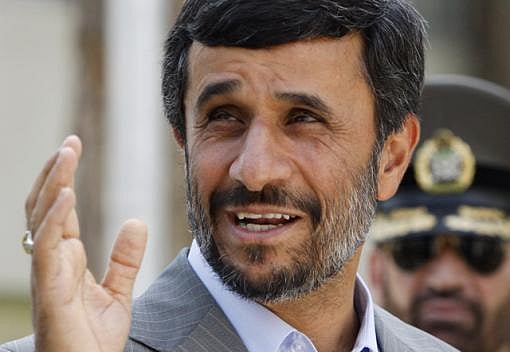
Dubai: Days after Israeli strikes killed Iran’s supreme leader and decapitated much of Tehran’s military leadership, Washington and Tel Aviv were already looking beyond the battlefield — toward a dramatic and deeply controversial plan for a post-war Iran.
According to a detailed report by The New York Times, US and Israeli officials quietly explored the possibility of installing former Iranian president Mahmoud Ahmadinejad as part of a broader regime-change strategy designed to topple Iran’s theocratic establishment after the opening phase of the war.
The plan, described by officials briefed on the discussions, reportedly unravelled almost immediately.
On the first day of the conflict, an Israeli strike targeted Ahmadinejad’s residence in Tehran in what US officials described as an operation intended to free him from house arrest by eliminating the Revolutionary Guard personnel monitoring him. Ahmadinejad was injured but survived, according to the report.
After the strike, officials said, the former Iranian president grew disillusioned with the regime-change effort and disappeared from public view. His current whereabouts remain unclear.
The revelations offer one of the clearest indications yet that the US-Israeli campaign against Iran went far beyond dismantling nuclear facilities and missile sites. Behind the scenes, officials were reportedly gambling on the collapse of the Iranian state and the installation of a leadership they believed could work with Washington.
The idea stunned even some within the Trump administration.
Who is Mahmoud Ahmadinejad?
Served as Iran’s president from 2005 to 2013
Known for hardline anti-Israel and anti-US rhetoric
Denied the Holocaust and drew global outrage for inflammatory speeches
Oversaw rapid expansion of Iran’s uranium enrichment programme
Became increasingly estranged from Iran’s clerical leadership after leaving office
Blocked from running for president again in 2017, 2021 and 2024
Accused Iranian elites of corruption and mismanagement
Maintained a surprisingly low profile during the recent war with Israel
Visited Hungary in 2024 and 2025, fuelling speculation about foreign contacts
In a 2019 interview, praised Trump as “a man of action” and called for better US-Iran relations
Barred from election
Ahmadinejad — once one of the West’s most vilified adversaries — was known for fiery anti-Israel rhetoric, Holocaust denial and hardline support for Iran’s nuclear ambitions during his presidency from 2005 to 2013. He famously called for Israel to be “wiped off the map” and oversaw a violent crackdown on protests after Iran’s disputed 2009 election.
Yet in recent years, he had increasingly clashed with Iran’s clerical establishment and was repeatedly barred from running for president again. According to the report, US and Israeli officials viewed him less as a moderate and more as a powerful nationalist figure who could potentially stabilise Iran after the war.
The report said the broader Israeli strategy envisioned several stages: Massive US-Israeli airstrikes, the killing of Iran’s top leadership, Kurdish uprisings along Iran’s borders, influence campaigns designed to trigger political chaos, and eventually the collapse of the Islamic Republic.
But much of the plan failed to materialise.
Iran’s resilience underestimated
While Israeli and US strikes succeeded in killing top Iranian leaders, including Supreme Leader Ali Khamenei, Iran’s state structure survived the initial shock. Kurdish mobilisation failed to produce a decisive uprising, and the hoped-for internal collapse never came.
The report suggests Washington and Tel Aviv may have badly underestimated Iran’s resilience — and overestimated the willingness of Iranian political figures to align with a foreign-backed transition.
A White House spokeswoman told the newspaper that President Donald Trump had focused narrowly on military goals under “Operation Epic Fury,” including destroying Iran’s ballistic missile capability and weakening its proxy network.
But the Ahmadinejad revelations point to a far more ambitious objective lurking behind the scenes: Reshaping Iran’s leadership itself.
Even after the failure of the initial strategy, some Israeli officials reportedly continued to believe regime change remained achievable.
According to the report, Mossad chief David Barnea privately argued that the intelligence agency’s long-developed plans for destabilising Iran still had a strong chance of success if fully implemented.
Sign up for the Daily Briefing
Get the latest news and updates straight to your inbox
Network Links
GN StoreDownload our app
© Al Nisr Publishing LLC 2026. All rights reserved.