Trump rejects Iran truce as US presses Lebanon on Hezbollah funding, Saudi-US stress Hormuz security
From diesel bans to Tether probes, war jitters ripple through world markets
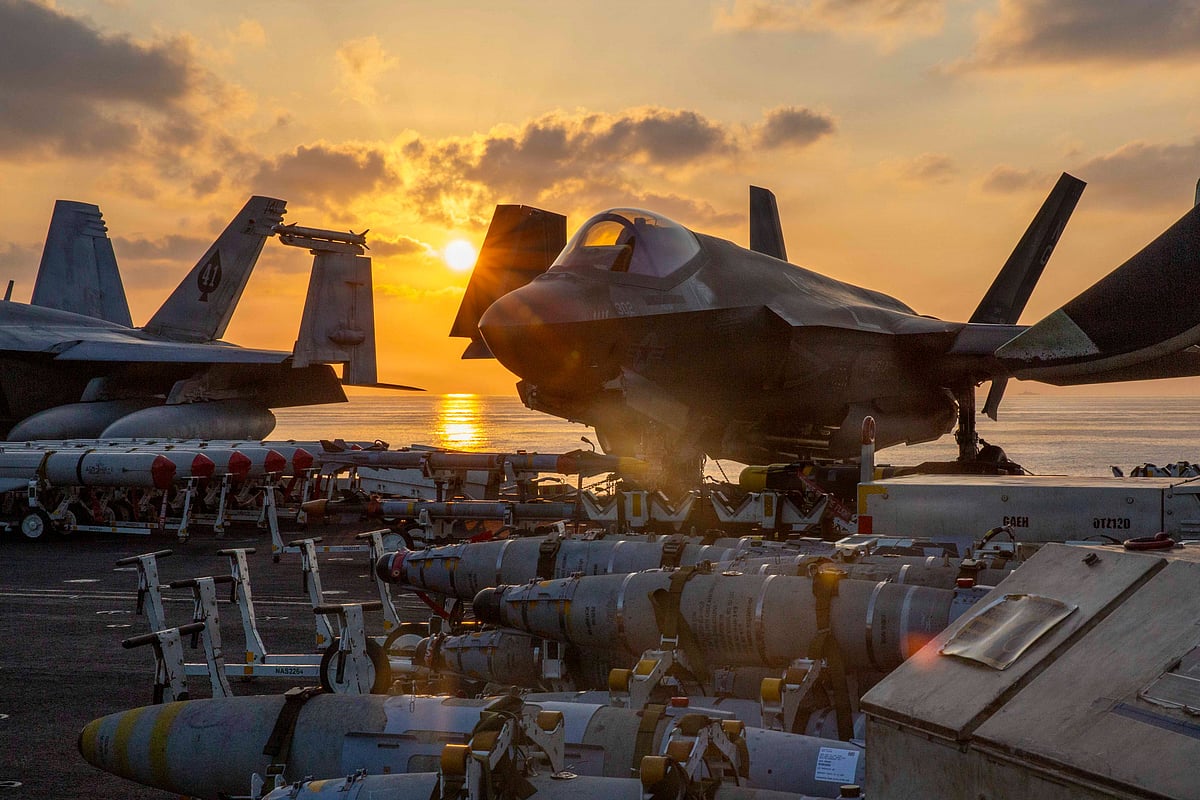
President Donald Trump rejected Iran's seven-day truce offer on Monday but expects talks to continue, as mediators met Iranian Foreign Minister Abbas Araghchi and US envoys in New York on reopening Hormuz and nuclear concerns. Tehran denied showing nuclear "flexibility", said a blast-like sound near Qeshm Island was likely warning shots at vessels, and denied its Najaf flights had resumed. Wall Street fell, with the S&P 500 down 0.8 percent as yields climbed, while oil rose but closed off its highs. Washington pressed Lebanon to cut Iranian and Hezbollah funding, and a Senate report said Iran leans heavily on the Tether stablecoin. Saudi Arabia and the US stressed Hormuz and Bab al-Mandab security amid rising Houthi attacks, and the UAE President received Netanyahu. Britain is in talks with the US over Trump's threatened diesel export ban, and Trump denied offering to sell weapons to China's Xi. Follow our live coverage for the latest.
President His Highness Sheikh Mohamed bin Zayed Al Nahyan received Israeli Prime Minister Benjamin Netanyahu, who visited the UAE on Sunday.
During the meeting, the two sides discussed bilateral relations between the UAE and Israel and ways to strengthen and further develop them.
Donald Trump on Monday denied asking Xi Jinping if he would like to buy American weapons, after the US ambassador to Beijing said the US president made the offer to his Chinese counterpart.
"I've never heard of that one," Trump told reporters in the Oval Office when asked about the comments made by envoy David Purdue.
"They'd probably like to buy it because we do make better equipment than them, so maybe it's a good idea. But we didn't discuss it."
An unnamed Iranian official denied reports that Tehran had shown "flexibility" on its nuclear position, telling state-run Press TV via Telegram on Monday that no discussions were underway on the issue.
The official said the US was “trapped” over the Strait of Hormuz and was raising the nuclear file to divert attention, adding that Iran’s nuclear stance had not changed.
The remarks contradict a US official’s account to CNN that Iran had signaled nuclear flexibility and that Washington was holding “positive and constructive discussions” through mediators, with President Donald Trump open to sanctions relief and releasing frozen funds if Tehran made “concrete progress.”
Iran’s Civil Aviation Organisation denied reports that flights between Iran and Iraq’s Najaf had resumed, saying no approval had been issued for Iranian carriers. Spokesman Majid Akhavan said reports of resumed Iranian flights were false. The clarification followed reports that Iraqi Airways had restarted flights between Najaf and Iranian airports. Iraq’s flag carrier has resumed the route, while Iranian airlines remain restricted amid US sanctions and concerns over penalties on aviation providers.
Iran’s state-run IRNA news agency reported late on Monday that residents on Qeshm Island heard an explosion-like sound coming from the direction of the sea, with no apparent impact on the island. State TV later cited local sources as saying no strikes or explosions had occurred on Qeshm, describing the noise as similar to previous nights and likely warning shots at vessels violating waterway rules. Reuters and other outlets recast earlier reports, noting there was no immediate independent confirmation of the sound’s cause.
President Donald Trump said that US officials had spoken with mediators involved in indirect talks with Iran, as Washington and Tehran weigh further diplomacy amid the war. Speaking to reporters in the Oval Office, Trump said, “We’re going to win. As far as I’m concerned, it’s going to be one way or the other. It’s going to go pretty quickly.”
The remarks came as Qatari mediators held separate meetings with Iranian Foreign Minister Abbas Araghchi in New York and with US envoys, discussing proposals to reopen the Strait of Hormuz and address nuclear concerns. Trump has rejected Tehran’s latest truce plan but signaled talks could resume soon.
A US Senate Democratic report released Monday says Tether’s dollar-pegged stablecoin USDT has become a “significant financial lifeline” for Iran’s shadow banking network.
Investigators analysed 846 crypto wallets sanctioned or targeted for seizure over links to Iran and regional proxies, finding that 84% transacted exclusively or nearly exclusively in USDT.
The report criticises Tether for failing to consistently freeze illicit wallets, particularly before 2024.
The United Kingdom is reportedly holding urgent talks with US authorities over President Donald Trump’s threat to halt American diesel exports, as London prepares contingency measures to cushion a potential supply shock, Chancellor John Healey. Healey, speaking on the sidelines of Labour’s annual conference in Liverpool, confirmed the government is “in discussions with the Americans” and has begun planning for a possible ban, including tapping national fuel stocks if needed.
US Treasury Secretary Scott Bessent pressed Lebanon’s leadership to take “proactive steps” to dismantle Iranian and Hezbollah financial networks during a Monday meeting in Washington with Prime Minister Nawaf Salam and Finance Minister Yassine Jaber, according to a Treasury readout.
Bessent also underscored the need for swift financial-sector reforms to restore confidence in Lebanon’s battered banking system, as Beirut seeks to revive negotiations with the International Monetary Fund and secure World Bank support.
Salam highlighted progress on banking reforms and asked for US help in IMF talks and broader economic recovery, the prime minister’s office said.
Get updated faster and for FREE: Download the Gulf News app now - simply click here.
Saudi Foreign Minister Prince Faisal bin Farhan and US Secretary of State Marco Rubio underscored the need to safeguard maritime security and freedom of navigation through the Strait of Hormuz and Bab al-Mandab during talks in Washington on Monday, the Saudi Foreign Ministry said.
The ministers reviewed strategic ties and discussed regional developments, including the escalating conflict in Yemen, where Houthi forces have intensified attacks on Saudi territory and shipping lanes, according to Saudi and international reports.
Both sides reaffirmed support for diplomatic efforts to resolve regional crises and ensure the flow of global trade, the ministry added.
Wall Street stocks retreated Monday as US Treasury yields continued to climb after US President Donald Trump rejected Iran's offer of a seven-day truce.
Oil prices also rose, although crude finished well below session highs as traders were heartened that Trump also signaled he expects talks to continue.
Markets also digested a report from Iranian state media that Iran's Foreign Minister Abbas Araghchi was set to meet on Monday with Qatari mediators in New York.
Wall Street indices spent the entire session in the red, with the broad-based S&P 500 closing down 0.8 precent.
"The ongoing Washington and Tehran impasse is roiling markets to start the week, as yields soar further into the nosebleeds," said Jose Torres of Interactive Brokers. "The geopolitical premium bolstering oil prices is worrying Wall Street that the Fed will meaningfully tighten monetary policy to constrain inflation."
Iranian Foreign Minister Abbas Araghchi said he expected a formal answer on Tuesday from the United States to Tehran's proposal to open the Strait of Hormuz, state media reported.
Qatari intermediaries "presented ideas, and we discussed them; they are set to raise the matter with the American side once more, after which the final US response will be conveyed to us", Araghchi said late Monday.
Iran's top diplomat, who is in New York for the UN General Assembly, said "the Qataris hope this will be done by tomorrow".
Iran's chief negotiator Mohammad Bagher Ghalibaf said Tuesday that if his country's security was not guaranteed, no infrastructure in the region would be safe from attack, state media reported.
"In a region where we cannot sell oil, no one else will sell oil either; or if our security is not guaranteed, no infrastructure will remain safe," said Ghalibaf, who is also Iran's parliament speaker, according to video released by state TV.
Asian stocks mostly fell and oil prices extended gains Tuesday as hopes for a reopening of the Strait of Hormuz fade amid expectations the Federal Reserve will hike interest rates again next month.
Hopes for an easing of Middle East tensions were dashed at the weekend when Donald Trump rejected Iran's offer for a seven-day truce.
While he said talks would resume this week, that was unable to lift the gloom on market floors, with traders contemplating further rises in inflation that will force the Fed to tighten monetary policy more.
The US president on Monday denied a report by the news outlet Axios that he offered Iran sanctions relief and the release of frozen funds, as the Middle East war drags on.
Khalifa Shaheen Al Marar, Minister of State, affirmed in the UAE's statement at the High-Level General Debate of the 81st Session of the United Nations General Assembly that “our region and the world are undergoing a period of rapid transformation, marked by intensifying challenges and divisions.
“Amid all this, the United Arab Emirates stands tall — guided by a clear vision and unwavering determination to transform challenges into opportunities, turn ambitions into achievements, and open new horizons for peace, development, and prosperity for our people, the peoples of the region, and the world.”
He said, “This stems from our principled approach rooted in de-escalation, bridge-building, the promotion of diplomacy and dialogue, the peaceful settlement of disputes, and the rejection of the unlawful use or threat of force, as well as coercion. This approach is grounded in full respect for the sovereignty of States, good-neighborly relations, international law, and the Charter of the United Nations.”
Iran's currency fell to a new record low on Tuesday, with traders in Tehran exchanging more than 2.5 million rials to the U.S. dollar.
The latest decline came just 27 days after the rial hit its previous record of 2.2 million to the dollar on Sept. 2. The currency has repeatedly reached new lows since the war began in February.
Gen. Hossein Mohebbi, spokesman for the Revolutionary Guard, held a news conference dubbed "A letter to the American people" in Tehran, Iran's capital.
He said that the only way for the war to end is for Washington to admit defeat and leave - a message apparently meant for the U.S. public just weeks ahead of the Nov. 3 midterm elections for the U.S. Senate and Congress.
Later in remarks to The Associated Press, Mohebbi urged Americans to take to the streets and protest Trump's policies.
He accused the United States of using Iran's nuclear program as a ruse to "plunder Iran's wealth" and to turn the country "back into a colony." The U.S. military action and economic sanctions would not get Tehran to submit.
Meanwhile, Iran's currency fell to a new record low Tuesday, with traders in Tehran exchanging more than 2.5 million rials to the U.S. dollar, a sign of how the conflict has further eroded Iran's economy.
An "unknown projectile" struck a ship in the Strait of Hormuz, sparking a fire on board that has been extinguished, a British maritime agency reported Tuesday.
The ship was hit on Monday evening but the crew were safe, the United Kingdom Maritime Trade Operations Centre (UKMTO) said.
"The fire has since been extinguished and the vessel is underway," the agency said. "There has been no reported environmental impact or damage assessment."
The Strait of Hormuz is currently at the centre of the Middle East war between Iran and the United States.
Since the conflict broke out, Tehran has been blocking the passage of commercial ships, firing on vessels it accuses of unauthorised crossings.
Washington has responded with a counterblockade of Iranian ports in an effort to prevent Tehran from exporting its oil.
Prime Minister Benjamin Netanyahu on Tuesday said there were "indications" that Israel's enemies could try to attack ahead of elections scheduled for the end of October, without giving details.
"We have indications that ahead of the elections our enemies will try to attack us. So... I am sending you a message: Don't mess with us, not now and not ever. Our long arm will reach you anywhere, anytime," Netanyahu said at an air force base, according to a video published by his office.
The United States has granted Iraqi airlines a sanctions waiver allowing them to fly Iranian pilgrims in and out of the Iraqi city of Najaf, holy to Shia Muslims, an Iraqi government official and an airport source told AFP.
The Iraqi government had on Saturday said it was in talks with the US to seek such an exemption after sanctions on Iran's aviation sector took effect.
The escalating fighting in Yemen is pushing the country's health system to "breaking point", the World Health Organization said Tuesday, warning that diseases like cholera were already circulating widely.
"Yemen's latest escalation is pushing an already fragile health system towards breaking point," warned Annette Heinzelmann, WHO's emergency director for the eastern Mediterranean region.
Speaking to reporters in Geneva via video link from Cairo, she highlighted how insecurity, damaged infrastructure, displacement of health workers, shortages of medicines and medical supplies and limited access to swathes of Yemen's west coast were preventing many from receiving the services they need.
"Nine health facilities or assets have now been damaged, put out of service, closed or directly attacked" in the hard-hit areas of Taiz, Lahj and Hodeidah, Heinzelmann said.
At the same time, "comprehensive emergency obstetric and newborn care has been suspended in two hospitals in Marib and Ras Al-Arah because staff and operating capacity have been redirected to trauma care for the incoming wounded," she pointed out.
Even before the latest escalation, only around 60 percent of Yemen's health facilities were fully functional, Heinzelmann added.
And the country had been facing high malnutrition and outbreaks of diseases like cholera "already circulating on a large scale", she said.
Iran threatened on Tuesday to attack infrastructure around the Middle East, intensifying its rhetoric as it awaits a formal response from Washington on a new plan to reopen the Strait of Hormuz.
US President Donald Trump has already dismissed the proposal from Tehran, but Iran's foreign minister said Monday that he was expecting a formal response from American officials within a day.
Iran's chief negotiator Mohammad Bagher Ghalibaf on Tuesday threatened new attacks, saying no infrastructure in the region would be safe if his country's security was not guaranteed.
"In a region where we cannot sell oil, no one else will sell oil either; or if our security is not guaranteed, no infrastructure will remain safe," Ghalibaf, who is also Iran's parliament speaker, said according to a video released by state TV.
Turkish authorities have seized a plane belonging to Iran's Caspian Airlines at Istanbul Airport, an official said Tuesday, with Turkish and Iranian media linking it to an unpaid three-million-euros ($3.4 million) debt.
The seizure took place on Monday after passengers had boarded the Boeing 737, which was waiting to take off when officials detained it on the basis of a court-issued seizure order, Turkey's state news agency Anadolu said.
The reports did not mention the recently imposed US sanctions against Iranian airlines as Washington seeks to economically isolate the Islamic Republic.
In a written response to AFP, a Turkish government official confirmed the move, saying it was linked to "a commercial dispute" but did not give further details.
"We can confirm that a Caspian Airlines aircraft at Istanbul Airport was subject to an enforcement measure pursuant to a decision by the competent authorities. The matter arises from a commercial dispute," he said, asking not to be identified.
In a statement quoted by Iranian state television, Caspian Airlines said it had encountered "temporary operational restrictions regarding one of its Boeing aircraft due to an administrative issue in Turkey".
The report said passengers were forced to disembark but that the airline had taken "administrative" steps with regard to a three-million-euro debt for "Istanbul Airport services".
It said the plane would return to Iran on Tuesday.
Get updated faster and for FREE: Download the Gulf News app now - simply click here.
Iraqi fuel trucks loaded gasoline at a Syrian port on Tuesday in a bid to meet surging energy demand as the critical Strait of Hormuz remains closed and mediators work with Iran and the United States to end the war.
Iraq has been exporting oil to foreign markets for months by trucking it through Baniyas as a workaround to the closure of Hormuz. Now, through a three-month agreement between the two, Iraq has begun importing gasoline via Syria; the first shipment to Iraq arrived at the port on Thursday.
Under the deal, the Qatar-based conglomerate UCC purchases the gasoline, and Syria manages transportation and receives transit fees. The shipments are then transported by land to Iraq from the northwestern port through al-Tanf in southeastern Syria.
Ahmed Qubbaji, deputy head of the state-run Syrian Petroleum Company, said Tuesday that Syria is working to bring in 200 tankers daily to Iraq.
"We are thinking of setting up pipelines from Iraq to Syria via the sea through other countries," he told The Associated Press. "So we are not looking at interim projects, but thinking strategically for the long term."
The US on Tuesday targeted people and firms around the globe that it has accused of being financial facilitators or enablers of Iran's military supply chain, as the Trump administration pushes forward with economic warfare against Tehran at a time when renewed diplomacy between the two countries remains uncertain.
The latest action by the Treasury Department is part of the administration's Operation Economic Outcast campaign, which is aimed at severing "critical financial lifelines" for the already heavily sanctioned Iranian government.
"Treasury will not tolerate any support to the regime and will continue to identify, expose, and isolate Iran's enablers," Treasury Secretary Scott Bessent said in a statement.
Ten individuals and entities based in Iran, Hong Kong and Pakistan were sanctioned for allegedly procuring weapons and weapon components for Iran's defense ministry as it fights its now seven-month war against the US.
Iran now says it will launch direct pre-emptive strikes if intelligence indicates an attack is being prepared, with Iranian Army spokesperson Brig. Gen. Mohammad Akrami-Nia declaring that Tehran will not wait to absorb another strike and will act to eliminate the threat before it materialises, per ISNA.
Akrami-Nia says Iran’s military doctrine has shifted toward “preemptive defence and deterrent operations,” warning that Iranian forces will respond faster and more forcefully to any new attack.
The doctrine shift comes as tensions remain high and Donald Trump weighs further military action against Iran following the November midterm elections.
Iran is now publicly signaling that it could strike first if its intelligence indicates an attack is imminent.
Washington shares Israel’s assessment that Iran or its proxies may try to attack Israel ahead of its October 27 general election, i24NEWS reported on Tuesday, citing unnamed American intelligence sources.
The report followed remarks by Prime Minister Benjamin Netanyahu earlier Tuesday that his country had “indications that its enemies would try to attack before the election."
Iran will continue strengthening its military capabilities and introduce new weapons if it faces another confrontation, an Islamic Revolutionary Guard Corps spokesman said.
Hossein Mohebbi, speaking to Yemen’s Houthi-affiliated Al-Masirah network, said Iran was closely monitoring its opponents’ plans and movements and remained prepared for a possible new round of conflict.
“We will continue arming ourselves, and in any possible confrontation, we will bring new weapons to the field,” Mohebbi said.
His remarks signal that Tehran intends to use the period between conflicts to expand and adapt its military arsenal, amid continuing tensions with the US and Israel.
Egyptian President Abdel Fattah El-Sisi affirmed that supporting and safeguarding the security and stability of the Arab Gulf states is one of the constants of Egypt’s foreign policy, stressing the need to maintain freedom of navigation in maritime corridors in accordance with international law.
Speaking during a government meeting, President El-Sisi also affirmed that the Egyptian state is making every necessary effort to de-escalate tensions in the region and prevent a renewed outbreak of fighting.
Iranian Army spokesman Brig. Gen. Mohammad Akraminia said Iran would pay a 5 billion-toman reward — about $20,000 — to citizens who kill or capture US soldiers entering Iranian territory in the event of a US ground invasion.
He said the reward would double to 10 billion tomans, or about $40,000, if a woman carried out the action.
Akraminia also said people in other countries across the region could potentially qualify for the reward if they killed or captured an American soldier. The announcement was presented as part of an Iranian military plan for a possible US ground incursion.
Akraminia said the scheme also provides for the weapon used in the operation to be purchased by the army at twice its value and displayed in a military museum.
The US is offering up to $15 million for information that disrupts the financial mechanisms of Iran’s Islamic Revolutionary Guard Corps Aerospace Force (IRGC-ASF), including information on three senior officials.
The officials are Brig. Gen. Abdollah Mehrabi, Ahmed Ja’farabadi and Ali Asghar Norouzi, according to the US State Department’s Rewards for Justice program.
“Somewhere between Iran’s missiles, drones, and victims is a money trail. Help us disrupt it,” Rewards for Justice said in a post on X.
The State Department says the IRGC Aerospace Force conducts operations, develops weapons and procures equipment for the IRGC. It identifies Mehrabi as chief of the force’s Research and Self-Sufficiency Jihad Organisation, Ja’farabadi as a senior official involved in operations and logistics, and Norouzi as chairman of the IRGC Cooperative Foundation.
Information about the officials’ financial activities, the Aerospace Force’s financial mechanisms, or associated individuals, organisations and activities could qualify informants for a reward of up to $15 million and potential relocation, the program said.
President Donald Trump said five men arrested near a British air base used by US forces were “looking to do big damage to our fort,” as counterterrorism police continued investigating a suspected explosives and terrorism plot near RAF Fairford in western England.
British armed police detained the men early Sunday after authorities received reports that three suspicious vans appeared to be traveling toward the air base in Gloucestershire.
The men were initially arrested on suspicion of explosives offenses and were later held on suspicion of preparing a terrorist act, an offense under Section 5 of Britain’s Terrorism Act, BBC reported.
Police deployed bomb disposal specialists and imposed a 400-meter, or roughly 1,312-foot, cordon around the vehicles near the village of Whelford, directly east of the base. Nearby homes were evacuated while Army explosives experts examined the vans.
The five men, all British nationals from London and in their early to mid-20s, have since been released on police bail while the counterterrorism investigation continues, the BBC reported.
Release on bail does not end the investigation and does not amount to a decision not to charge the men.
Iranian President Masoud Pezeshkian accused the US and Israel of seeking to deepen divisions inside Iran after failing to force the country into submission through war, as Tehran faces continued military, economic and diplomatic pressure.
“Today, the entire plan of the United States and the Zionist regime is to create and intensify internal divisions in our country,” Pezeshkian said Tuesday during a meeting with mayors of major cities and provincial capitals, according to Iran’s state-run IRNA news agency.
Pezeshkian said Iran’s adversaries had concluded they could not compel the country to surrender through military force. “They cannot force the Iranian people to surrender through war, nor can they conquer the country using bombs and missiles,” he said, according to IRNA.
His comments came as Iran and the US remain far apart on terms for ending the war, despite indirect talks in New York this month. Tehran has called for a halt to U.S. military action, an end to wider hostilities and the release of frozen Iranian assets, while American and Iranian officials have continued to communicate through Qatari mediation.
Sign up for the Daily Briefing
Get the latest news and updates straight to your inbox
Network Links
GN StoreDownload our app
© Al Nisr Publishing LLC 2026. All rights reserved.