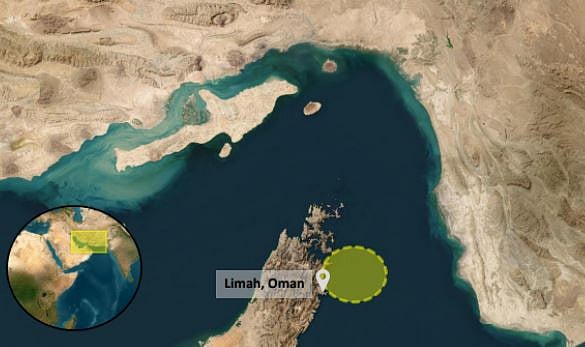
Maritime security risks remain elevated across the Middle East, with a new attack reported on a liquefied petroleum gas (LPG) tanker near Oman and continued threats to commercial shipping in the Strait of Hormuz, according to the Joint Maritime Information Center (JMIC).
The tanker was struck by an unknown projectile on October 22 while sailing out of the Strait of Hormuz, about seven nautical miles northeast of Limah, Oman. No casualties or environmental impact were reported, according to the UK Maritime Trade Operations (UKMTO).
The JMIC’s latest advisory, covering the period from March 1 to October 25, classifies the threat level in the Strait of Hormuz as severe, with deliberate hostile action considered highly likely. The Arabian Gulf, Gulf of Aden and southern Red Sea/Bab El Mandeb remain at substantial threat levels.
Strait of Hormuz traffic remains sharply reduced
Commercial traffic through the Strait of Hormuz remains well below its 2025 baseline, with congestion continuing at anchorages around the region.
The JMIC reported just 101 US-facilitated transits through the strait between October 22 and 24. Its historical baseline is approximately 138 vessel transits a day.
The advisory also highlighted continued Iranian Revolutionary Guard Corps (IRGC) activity, including drone overflights, surveillance of merchant vessels, radio hailing and pressure on ships to change routes.
Mariners have been warned to remain vigilant for possible mining activity in and around the traffic separation scheme. Vessels operating with their automatic identification systems (AIS) switched on may face increased targeting risks and receive instructions to divert towards the northern route controlled by Iran.
The JMIC said further attacks were highly likely, citing the October 22 tanker incident and a separate attack west of Bukha on October 21.
Nearly 500 vessels waiting outside the strait
Congestion remains high around key ports and anchorages, with restricted passage through the Strait of Hormuz contributing to a growing backlog.
As of October 25, the JMIC estimated that:
About 194 vessels were anchored near Fujairah and Khor Fakkan.
Around 178 vessels were anchored off Dubai.
Approximately 55 vessels were near Musandam and Sohar.
About 32 vessels were off Bandar Abbas and Qeshm.
Around 492 vessels were waiting outside the Strait of Hormuz, while visible AIS traffic through the waterway remained in the single digits to low double digits. The advisory said the backlog was expected to persist.
Note: There was no immediate confirmation from UAE officials regarding the vessel congestion figures.
The JMIC also warned that vessels remaining stationary for extended periods, particularly those keeping their Automatic Identification System (AIS) switched on, could face elevated targeting risks.
UAE steps up coastal clean-up after oil spill
UAE authorities confirmed oil pollution along the Umm Al Quwain coastline on October 23, linked to a tanker damaged in an earlier attack. Clean-up operations are under way to address the pollution along the affected coast.
The JMIC said no other attacks on ports, terminals, offshore platforms, oil and gas loading facilities or subsea infrastructure had been reported during the latest 72-hour period. However, the overall risk to maritime infrastructure remained moderate because of the potential for further attacks along the Iranian, Yemeni and Saudi coasts.
Navigation-system interference also increased in parts of the Arabian Gulf, particularly from Kuwait and Khafji through Dammam to Bahrain.
Windward recorded 293 vessels affected by jamming and 8,487 false ship-to-ship meetings in the Gulf and Gulf of Oman on October 21. UKMTO reported 18,049 anomalous AIS positions in its weekly overview published on October 23.
Threat levels remain elevated across the region
The JMIC’s regional assessment highlights differing levels of risk across Middle Eastern waterways.
Arabian Gulf — Substantial: Recent Iranian attacks and increased navigation interference mean another attack remains a strong possibility.
Strait of Hormuz — Severe: Further deliberate attacks are considered highly likely, with continued IRGC monitoring and pressure on shipping.
Gulf of Oman — Moderate: Military monitoring, vessel checks and electronic interference remain concerns, particularly near approaches to Iranian ports.
Arabian Sea — Moderate: No confirmed attacks were reported during the latest period, although risks linked to wider regional tensions remain.
Gulf of Aden — Substantial: Piracy-related activity and the possibility of attacks remain concerns, particularly as conditions become more favourable for small-boat operations.
Southern Red Sea and Bab El Mandeb — Substantial: Further attacks on shipping linked to Saudi, Israeli or Yemen’s internationally recognised government interests remain possible.
Somali coast and Somali Basin — Moderate: Piracy risks persist as seasonal conditions increasingly allow operations farther offshore.
Northern Red Sea and Suez Canal — Moderate: Periodic electronic and satellite-navigation interference remains possible, while the canal continues to operate.
Eastern Mediterranean — Low: No new maritime security incidents were reported, although localised navigation interference remains a concern.
US blockade enforcement continues
The JMIC said the US naval blockade of Iranian ports remained in force, with monitoring, radio hailing and verification checks continuing, particularly near approaches to Iranian ports.
According to the latest official US Central Command figures cited in the advisory, 138 commercial vessels had been redirected by October 17. Four vessels had been disabled during enforcement activity on October 10 and 11. No further blockade enforcement action was announced during the latest reporting period.
Neutral commercial transit is permitted, but vessels may face inspections and checks. The advisory recommends maintaining a distance of 30 nautical miles from US naval units to reduce the risk of misidentification.
Operators were also advised to monitor VHF Channel 16 continuously and maintain heightened awareness of military activity and navigation-system interference.
Bab El Mandeb remains open but volatile
No confirmed attacks on commercial shipping were reported in the southern Red Sea or Bab El Mandeb during the latest 72 hours. However, the JMIC continues to classify the threat level as substantial.
The waterway remains open to commercial traffic, but the advisory warned that further attacks against shipping linked to Saudi Arabia, Israel or Yemen’s internationally recognised government remained possible.
The JMIC said Houthi forces retained the capability to launch long-range missiles and drones against the waterway despite reported gains by Saudi-backed Yemeni government forces.
Commercial traffic through Bab El Mandeb totalled 58 vessel transits between October 22 and 24, compared with a historical baseline of around 61 vessels a day.
Hijacked tanker remains outstanding
The JMIC also reported that the Tanzanian-flagged product and chemical tanker MT Asana remained hijacked. The vessel was seized on July 17, approximately 65 nautical miles southwest of Mukalla, Yemen, while carrying oil products.
No other confirmed attacks or disruptions were reported during the latest period in the Arabian Sea, Gulf of Aden, Northern Red Sea and Suez Canal, or eastern Mediterranean.
The JMIC advised ship operators to maintain heightened security measures, monitor navigational warnings and prepare for short-notice routing instructions as regional tensions continue.
Network Links
GN StoreDownload our app
© Al Nisr Publishing LLC 2026. All rights reserved.