A US Air Force B-1B Lancer refuels from a KC-135 Stratotanker during a training flight over regional waters in the Middle East.
Commercial air traffic over Iran has thinned dramatically, reviving fears of a possible new military escalation in the Middle East even as regional powers intensify diplomatic efforts to salvage fragile negotiations between Washington and Tehran.
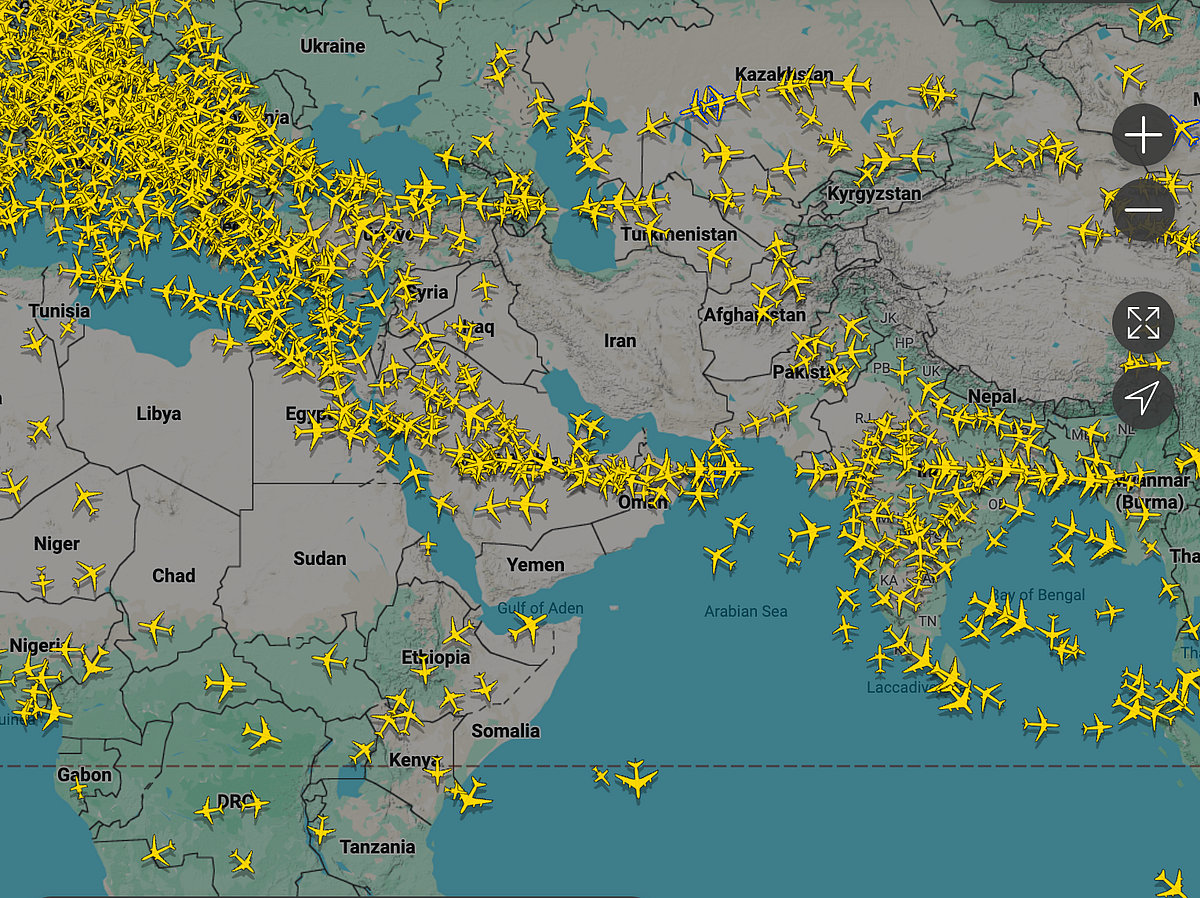
The unusually empty skies above Iran — coupled with widespread electronic navigation disruptions reported in the Arabian Gulf — have triggered speculation among military observers and analysts that preparations for possible strikes may already be underway.
The developments come amid mounting tensions following warnings from US President Donald Trump, who said ongoing negotiations with Iran were on the “borderline of collapse,” raising doubts about the future of diplomacy surrounding Tehran’s nuclear program.
Trump has given conflicting signals since announcing on Monday that he had called off renewed attacks to give time for negotiations, veering between optimism about an agreement and threats of more action.
Flight tracking data reviewed by analysts showed a sharp reduction in commercial overflights across Iranian airspace, a pattern some observers described as eerily similar to conditions preceding the February 28, 2026, US-Israeli strikes that killed Iranian Supreme Leader Ali Khamenei and triggered a month-long regional conflict.
That war saw waves of Iranian missile attacks targeting Israeli and US interests, temporary disruption in Gulf shipping lanes and the closure of the Strait of Hormuz, a critical global oil chokepoint.
A ceasefire brokered in part by Pakistan on April 8 halted the heaviest fighting, though both sides have since accused each other of repeated violations.
Signal for something more 'serious'
While aviation experts note airlines often avoid conflict-prone airspace for weeks or months after military confrontations, some former military officials argue the current pattern may signal something more serious.
Retired US Army Col. Douglas Macgregor chimed in, saying the lack of civilian air traffic, combined with electronic interference reported in Gulf navigation systems, could indicate preparations for renewed military operations.
'Spoofing'
Marine and aviation monitoring platforms, including MarineTraffic and Flightradar24, have shown what analysts described as large-scale AIS and transponder spoofing activity northwest of Dubai.
Hundreds of ships and aircraft appeared to transmit false or overlapping location data simultaneously, creating confusion across tracking systems.
Electronic warfare specialists say such spoofing can occur during periods of heightened military tension, though experts cautioned that similar disruptions may also result from defensive countermeasures, cyber activity or regional military exercises.
No government has publicly linked the spoofing activity to an imminent strike.
At the same time, diplomatic efforts to prevent another conflict have intensified.
According to Axios, regional mediators including Qatar, Pakistan, Saudi Arabia, Turkey and Egypt have been working to bridge gaps between US and Iranian negotiators.
Sticking points
The main sticking points remain Iran’s nuclear programme, uranium enrichment limits and broader disputes over Tehran’s regional influence and support for allied armed groups across the Middle East.
Axios also reported that Trump recently held what sources described as an “intense” and “difficult” phone call with Israeli Prime Minister Benjamin Netanyahu regarding efforts to revive diplomacy with Iran.
One source cited by the outlet said Netanyahu was deeply frustrated following the conversation, describing the Israeli leader as having his “hair on fire” after the call amid concerns Israel could be pressured into accepting concessions it opposes.
A revised draft proposal reportedly backed by regional mediators is now under consideration.
The framework is said to seek firmer Iranian commitments regarding its nuclear activities while outlining conditions for the release of frozen Iranian financial assets.
Despite ongoing talks, the combination of reduced civilian air traffic, electronic navigation anomalies and increasingly sharp rhetoric from regional leaders has fueled growing anxiety that the fragile ceasefire could unravel.
Neither US nor Iranian officials have publicly indicated that military action is imminent.
However, analysts say the region remains highly volatile as diplomacy and deterrence continue to unfold simultaneously behind the scenes.
Sign up for the Daily Briefing
Get the latest news and updates straight to your inbox
Network Links
GN StoreAbout Gulf NewsTerms & ConditionsReach by GNSitemapContact usPrivacy PolicyGN FocusHave your sayWork with usAdvertise with usGulf News epaperPrinting Services
Download our app
© Al Nisr Publishing LLC 2026. All rights reserved.