Secret votes, rival camps and Guards pressure: Inside Iran’s wartime power struggle that elevated Mojtaba
How clerics, rival factions and Guards fought behind scenes to shape wartime succession
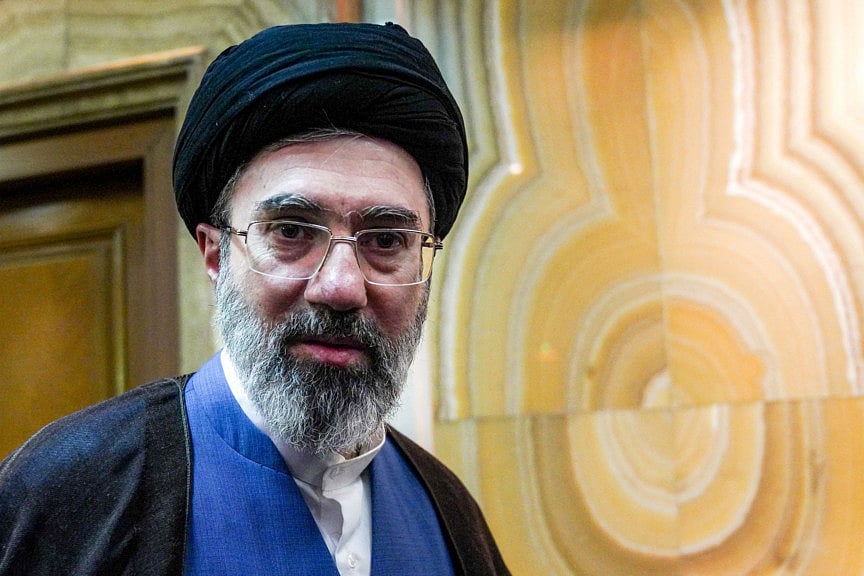
Dubai: The rise of Mojtaba Khamenei as Iran’s new supreme leader may have appeared swift and inevitable from the outside. But behind the scenes, it followed a tense power struggle among clerics, political leaders and Revolutionary Guards commanders during one of the most dangerous moments in the Islamic Republic’s history.
According to a detailed account by The New York Times, the succession battle unfolded amid war, airstrikes and intense internal rivalry after Supreme Leader Ayatollah Ali Khamenei was killed in Israeli airstrikes at the start of the conflict.
Selecting a successor to Iran’s most powerful position — a leader who wields authority over the military, the government and the country’s religious establishment — is normally a complex process. But the wartime crisis turned it into an urgent test of whether the political system could hold together.
The New York Times reported that Iran’s Assembly of Experts, an 88-member clerical body responsible for appointing the supreme leader, began secret deliberations shortly after Khamenei’s death.
The process quickly evolved into a struggle between competing political camps.
Hardliners within the establishment, backed by powerful commanders of the Islamic Revolutionary Guards Corps, pushed for continuity and a leader who would maintain the late ayatollah’s confrontational stance toward the United States and Israel.
Moderate politicians and clerics, however, argued for a different direction, urging the selection of a less polarising figure who might ease tensions abroad and pursue political reforms at home.
Rival camps and competing candidates
According to the New York Times report, Ayatollah Khamenei had privately suggested several possible successors before his death — but his son Mojtaba was not among them.
Moderates within the Assembly of Experts reportedly supported alternative figures, including former president Hassan Rouhani and Hassan Khomeini, the grandson of the Islamic Republic’s founder, Ayatollah Ruhollah Khomeini.
Another proposed compromise candidate was Alireza Aarafi, a religious scholar who possessed strong clerical credentials but limited influence within Iran’s political or military power structures.
But Mojtaba Khamenei had strong backing from within the security establishment.
Senior Revolutionary Guards figures — including commander Gen. Ahmad Vahidi, strategist Gen. Mohammad Ali Aziz Jaffari and parliament speaker Mohammad Bagher Ghalibaf, himself a former Guards commander — reportedly supported his candidacy.
Hossein Taeb, the former head of the Guards’ intelligence arm, also worked behind the scenes to rally support for Mojtaba among members of the Assembly.
A dramatic vote amid war
The Assembly of Experts held an initial secret vote on March 3, conducted virtually due to security concerns after Israeli strikes targeted the city of Qom, a centre of Iran’s clerical establishment.
According to The New York Times, Mojtaba Khamenei secured the required two-thirds majority in that first round of voting.
However, the announcement of his appointment was temporarily halted.
Senior Iranian political figure Ali Larijani reportedly urged caution, warning that publicly declaring Mojtaba as the new leader could make him a target for further Israeli or US attacks.
The delay also allowed moderates to mount a final attempt to overturn the decision.
Some aides to the late supreme leader presented what they described as instructions from Ayatollah Khamenei opposing hereditary succession, arguing that passing power to his son would contradict the revolutionary ideals that overthrew Iran’s monarchy in 1979.
But the effort ultimately failed.
Guards influence proves decisive
According to officials cited by The New York Times, Revolutionary Guards commanders intervened forcefully to ensure the succession moved forward.
Former intelligence chief Hossein Taeb reportedly contacted members of the Assembly directly, urging them to support Mojtaba Khamenei as both a religious and ideological duty.
The Assembly convened again on March 8 for a final vote.
Members wrote their choices on paper ballots that were sealed and physically delivered to a counting committee due to security concerns.
When the votes were counted, Mojtaba Khamenei secured 59 votes out of 88, comfortably exceeding the two-thirds threshold required for appointment.
Shortly before midnight, Iranian state media announced that the Islamic Republic had a new supreme leader.
Iran’s leadership closes ranks
Despite the bitter internal debate that preceded the vote, Iran’s political establishment quickly rallied behind the new leader.
According to the New York Times, even figures who had opposed Mojtaba Khamenei’s candidacy publicly pledged loyalty after the result was announced.
For now, the leadership transition appears to have stabilised the country’s political system during wartime.
But Mojtaba Khamenei begins his rule at a moment of profound uncertainty, facing an ongoing regional conflict, internal divisions and mounting economic and political pressures at home.

Sign up for the Daily Briefing
Get the latest news and updates straight to your inbox
Network Links
GN StoreDownload our app
© Al Nisr Publishing LLC 2026. All rights reserved.