No tolls, just fees? What Iran's plan for Strait of Hormuz means
Legal experts say calling a transit charge a fee may not make it lawful.
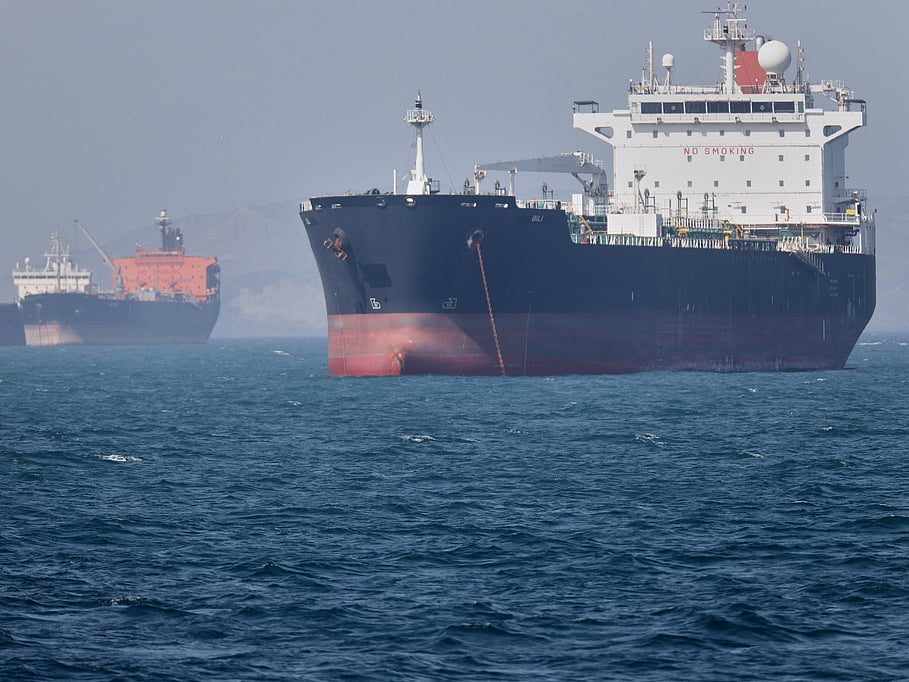
DUBAI: Iran says it is not planning to charge ships tolls for passing through the Strait of Hormuz. Instead, it insists vessels will pay fees for services provided in one of the world's most strategically important waterways.
The distinction may sound technical, but it lies at the heart of a growing legal and diplomatic dispute over the future of the strait, through which roughly a fifth of the world's oil and liquefied natural gas supplies pass.
The issue resurfaced after US President Donald Trump declared on Sunday that the Strait of Hormuz would reopen and remain "permanently toll-free" following the US-Iran peace agreement.
A day later, however, Iran signalled that ships using the waterway could still face charges.
"We are not seeking to levy transit tolls; however, fees will be charged in exchange for the services that are provided," Iranian foreign ministry spokesman Esmaeil Baghaei said.
Iran has not specified what those services would include, although officials have previously suggested environmental, navigational and maritime management services.
Toll vs fee: What’s the difference?
Toll
A payment charged simply for the right to pass through a road, bridge, tunnel or waterway.
The user pays regardless of whether any specific service is provided.
Examples include highway toll roads and some bridges.
Legal experts say charging a toll in a natural international waterway such as the Strait of Hormuz would be difficult to justify under international law.
Fee
A payment charged for a specific service provided to a vessel.
Examples can include pilotage, traffic management, waste disposal, environmental monitoring or port services.
Fees are generally permitted when linked to an actual service rendered.
Iran says any charges in Hormuz would fall into this category.
Why the debate matters
Iran insists it is not imposing transit tolls but charging for services.
Critics argue that if ships effectively have to pay in order to pass through the strait, the charge may function like a toll regardless of its label.
The outcome could set an important precedent for other international waterways around the world.
The key question
Is Iran charging ships for services they choose to use — or for passage through the Strait of Hormuz itself?
Before the war, passage through Hormuz was free. The debate now is whether Iran is charging for genuinely new services — or creating a payment system for access to the strait itself. Critics say if ships must pay to pass, the distinction between a fee and a toll may be largely academic.
Why the wording matters
Under international maritime law, there is a crucial difference between a toll and a fee.
A toll is generally understood as a payment required simply for the right to pass through a route or waterway.
A fee, by contrast, is typically charged in exchange for a specific service provided to a vessel, such as pilotage, waste disposal, traffic management or other maritime assistance.
Legal experts say that distinction is important because the Strait of Hormuz is a natural international waterway rather than a man-made canal.
Ships passing through international straits are generally entitled to transit passage under international law. Any attempt by a coastal state to charge vessels merely for the right to pass could face significant legal challenges.
Supporters of Iran's position argue that countries can charge for legitimate services they provide to shipping. Critics counter that introducing payments for ships that previously travelled freely risks creating what is effectively a toll under another name.
Can Iran legally do it?
Many maritime law specialists remain sceptical.
James R. Holmes, chair of maritime strategy at the US Naval War College, told The New York Times that international law contains no provision allowing a coastal state to charge vessels for passage through a natural waterway.
"There is no provision in international law for a coastal state charging for passage through a natural waterway, whether you call it a toll or a fee or whatever," Holmes said.
He contrasted Hormuz with waterways such as the Panama Canal and the Suez Canal, where operators maintain infrastructure and provide services in exchange for payments.
The Strait of Hormuz, however, is a natural passage connecting the Arabian Gulf to the Gulf of Oman and the wider Indian Ocean.
According to Holmes, simply rebranding a transit charge as a service fee would not necessarily make it legal.
A post-war flashpoint
The debate over shipping charges emerged during the US-Iran conflict earlier this year.
In March, Iranian officials indicated that ships using the strait could face new charges. By May, Tehran had established an authority, which it said would oversee "safe passage permits" and maritime administration in the area.
Iran and Oman later discussed a framework under which vessels could pay fees linked to services provided in the waterway.
The proposal has alarmed governments and shipping companies concerned that the strait may never fully return to its pre-war status quo.
French President Emmanuel Macron said on Monday that international law must be upheld and opposed the introduction of charges for passage through the waterway.
The issue could also complicate efforts to stabilise global energy markets, as any additional costs imposed on shipping companies are likely to be passed on through supply chains.
For now, the debate remains unresolved.
Iran says it is charging for services, not transit. Critics argue that if ships must pay to use the strait, the practical effect may be little different from a toll.
The answer could ultimately determine not only the future of the Strait of Hormuz but also whether other countries seek to impose similar charges on international waterways elsewhere in the world.

Sign up for the Daily Briefing
Get the latest news and updates straight to your inbox
Network Links
GN StoreDownload our app
© Al Nisr Publishing LLC 2026. All rights reserved.