Middle East War: Iran rejects US terms as tanker explodes near Hormuz
Tehran rules out nuclear material transfer as US sends third aircraft carrier to region
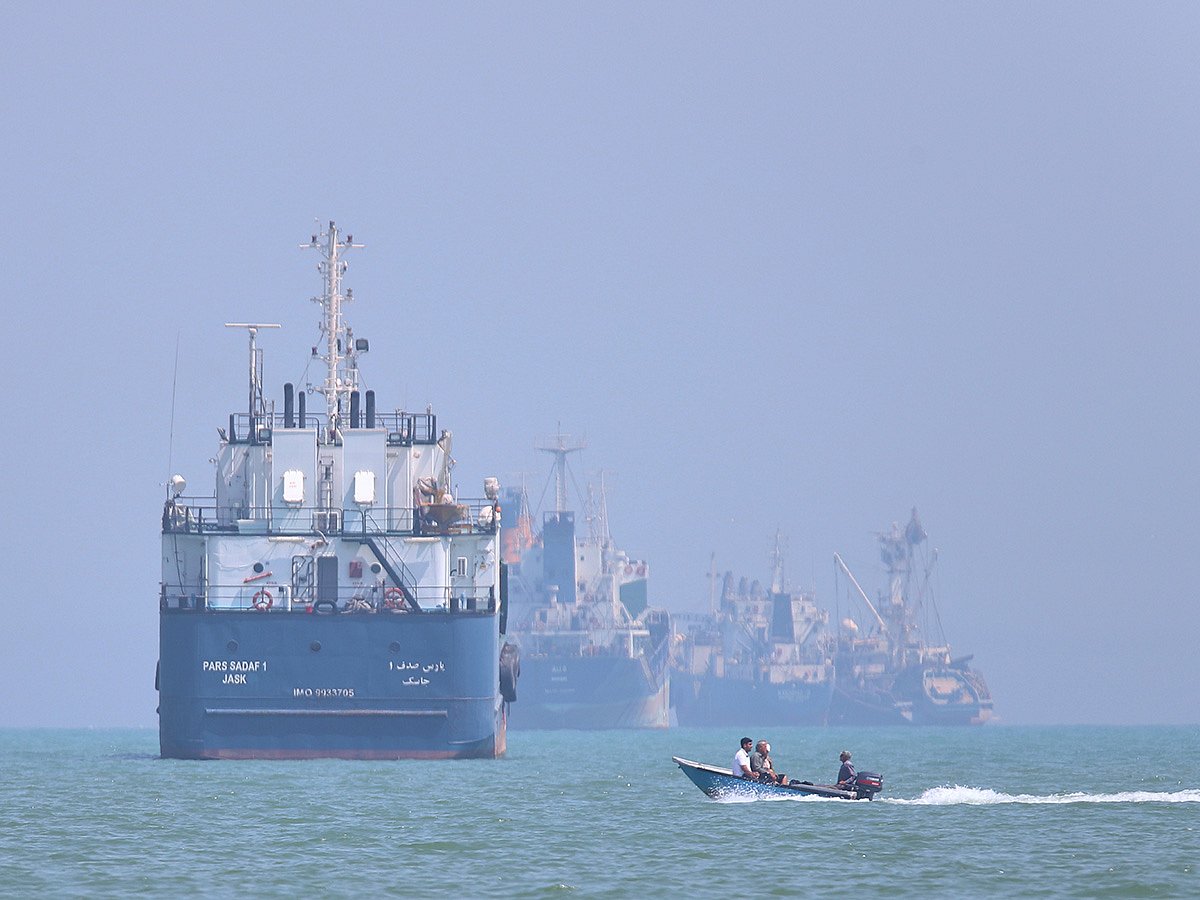
Tensions in the Middle East war remain high after Iran's Revolutionary Guards reported that a supertanker carrying more than 2 million barrels of crude exploded after striking a mine near the Strait of Hormuz. Tehran has rejected US-backed proposals for negotiations until Washington meets its conditions, while insisting that enriched nuclear material will not leave Iran. The US is sending a third aircraft carrier and around 10,000 personnel to the region, according to reports. Saudi Arabia has also intercepted a drone over Riyadh. Meanwhile, indirect diplomatic contacts continue through Pakistan and Qatar, with Hormuz reopening tied to an agreement. Follow the latest Middle East developments.
Oil prices rose on Wednesday amid renewed concerns over Middle East supply disruptions. Brent crude gained 0.78 per cent to $109.64 a barrel, while US West Texas Intermediate climbed to $98.58 in early trading. Threats to Saudi oil facilities and shipping risks near the Strait of Hormuz and Red Sea continued to unsettle markets, Reuters reported.
Iran and the US remain in indirect talks through Pakistan and Qatar, Iranian Foreign Minister Abbas Araghchi said Tuesday, while warning that the Strait of Hormuz will stay closed unless Washington accepts Tehran’s conditions.
Araghchi told Iraq’s Al Ekhbariya television that Iran had presented a seven-day initiative under which the strategic waterway would fully reopen on the sixth day. He said Washington had agreed to the conditions but wanted additional provisions.
“The negotiating table is still there,” Araghchi said. “If they adhere to these conditions, they should know that the strait will be fully reopened, and after that we will hold further rounds of negotiations until a final agreement is reached.”
Iranian President Masoud Pezeshkian signaled that Iran would endure hardship rather than surrender territory, invoking a historic declaration associated with constitutional revolutionary Sattar Khan in a post on X on Tuesday.
Marking Sattar Khan’s birthday, Pezeshkian praised the early 20th-century leader’s struggle for freedom, the rule of law and national dignity. He ended the post: “We will eat dirt, but we will not give up our land.” The message came as Iran faces a prolonged conflict with the United States and Israel, economic pressure and repeated strikes. Pezeshkian has repeatedly said pressure and force cannot make Iranians surrender to “unlawful demands,” while emphasising dialogue, international law and respect for national rights.
In a separate post, he said Iran opposes war but will continue resisting until “aggressors” regret their actions.
Sattar Khan was a leading figure in Iran’s Constitutional Revolution, a movement that sought limits on absolute monarchy and the establishment of constitutional rule.
An unnamed Iranian security source claimed Tuesday (Oct. 20) that Ukraine has deployed drone units and thousands of "micro-drones" in countries near Iran, including Iraq’s Kurdistan Region, according to the Revolutionary Guards-affiliated Tasnim News Agency.
The source said Kyiv had established an operational micro-drone network across the region and accused Tehran’s adversaries of using it as part of “hostile actions by Europe and Nato” against Iran.
Tasnim said Iran was monitoring the alleged deployments and weighing an “appropriate response.” The source did not name the other host countries, saying their identities would be revealed “at the appropriate time.”
Kuwait’s Foreign Minister Sheikh Jarrah Jaber Al Ahmad Al Sabah reaffirmed the country’s full support for Saudi Arabia and its measures to protect its sovereignty, security and stability, the Kuwait News Agency (KUNA) reported on Tuesday, October 20.
The statement followed a phone call between Sheikh Jarrah and Saudi Foreign Minister Prince Faisal bin Farhan bin Abdullah Al Saud, during which they discussed regional security developments and ways to strengthen strategic cooperation between the two countries, according to KUNA.
Iranian President Masoud Pezeshkian told Pakistan’s Field Marshal Asim Munir that US actions were driving regional tensions, including disruptions in the Strait of Hormuz.
Pezeshkian said Washington must lift its pressure, threats and sanctions against Tehran before negotiations can begin.
The United States is sending a third aircraft carrier and about 10,000 military personnel to the Middle East as President Donald Trump reportedly weighs renewed strikes on Iran, Fox News reported.
The USS Theodore Roosevelt carrier strike group and the 13th Marine Expeditionary Unit are expected to arrive by the end of November, according to two US officials. The Roosevelt will join the USS George H.W. Bush, deployed in April, and the USS George Washington, which arrived in August to replace the USS Abraham Lincoln.
The Roosevelt departed San Diego on Sunday, September 27, while the 13th Marine Expeditionary Unit sailed the following day with the Makin Island Amphibious Ready Group. The carrier group carries about 6,000 sailors, while the Marine unit and amphibious group comprise roughly 4,200 personnel.
Iran has rejected U.S.-backed Pakistani proposals for negotiations, with SNSC Secretary Mohsen Rezaei ruling out talks until Washington fulfills Tehran’s seven conditions, per the Tehran Times.
Parliament Speaker Mohammad Bagher Ghalibaf delivered the same blunt message to Pakistan’s Army Chief Asim Munir during his mediation visit to Tehran: “We have no new message.”
Reports of a US-Iran diplomatic breakthrough are completely false and designed to manipulate the oil market — and that actually worked.
Iran's security chief Mohsen Rezaei on Tuesday told the visiting Pakistani army chief Asim Munir that Tehran would not allow nuclear material to leave the country, according to state TV.
"Not even a tiny bit of enriched nuclear material will leave Iran; such materials constitute a major asset and national wealth for the Iranian people, intended for use within the country," said Rezaei, Iran's secretary of the Supreme National Security Council.
"There will be no negotiations until America takes steps to build trust - a process that must begin with the fulfilment of Iran's conditions," he added.
Iran's chief negotiator and parliament speaker Mohammad Bagher Ghalibaf made similar remarks to Munir, who is in Tehran as part of a renewed push to mediate a peace deal between the Islamic republic and the United States.
"We have nothing new to say; America cannot gain Iran's trust unless it fulfils the seven conditions," said Ghalibaf, noting that "threats and military manoeuvres cannot influence Iran's strategic decisions".
Iran has demanded, among other things, a ceasefire across the Middle East, the unfreezing of its assets abroad and the lifting of sanctions on its oil sector.
British police said Tuesday they have rearrested two men on suspicion of assisting Iran's intelligence service over the suspected plot at a U.S.-run air base in England last month.
Counter Terrorism Policing said the men, a 24-year-old British national and a 25-year-old dual U.K.-Iranian national, were arrested under the National Security Act.
The men were earlier arrested but had been bailed pending more investigation.
Police are investigating a suspected terror plot on Sept. 27 against the U.S.-run base at RAF Fairford in western England, which has been used to bomb Iran during this year's war.
Iran’s Revolutionary Guards Navy said a supertanker carrying more than 2 million barrels of crude oil exploded and caught fire after striking a naval mine south of the Strait of Hormuz.
In a statement Tuesday, the IRGC Navy said the tanker had switched off its radar and navigation systems and ignored warnings as it attempted to leave through what Tehran considers an unauthorized southern route.
The Guards warned that shipowners and crews operating in the Persian Gulf and Gulf of Oman would be held responsible for using unauthorized routes and that any activity disregarding security restrictions in the strait would face a “firm response.”
French President Emmanuel Macron has arrived in Doha for a state visit, Qatar News Agency (QNA) reported.
He and his delegation were received at Hamad International Airport by Sheikh Saoud bin Abdulrahman bin Hassan Al Thani, Qatar’s Deputy Prime Minister and Minister of State for Defence Affairs.
Qatar’s ambassador to France, Sheikh Ali bin Jassim Al Thani, and France’s ambassador in Doha, Arnaud Pescheux, were also at the reception.
The Saudi-led coalition has intercepted and destroyed a drone over the Riyadh region, it said, in the latest reported attack on the Saudi capital area.
Sign up for the Daily Briefing
Get the latest news and updates straight to your inbox
Network Links
GN StoreDownload our app
© Al Nisr Publishing LLC 2026. All rights reserved.