Khamenei warns of ‘regional war’ as Trump confirms talks with Tehran
Warning comes amid heavy US military deployments and rising fears of wider conflict
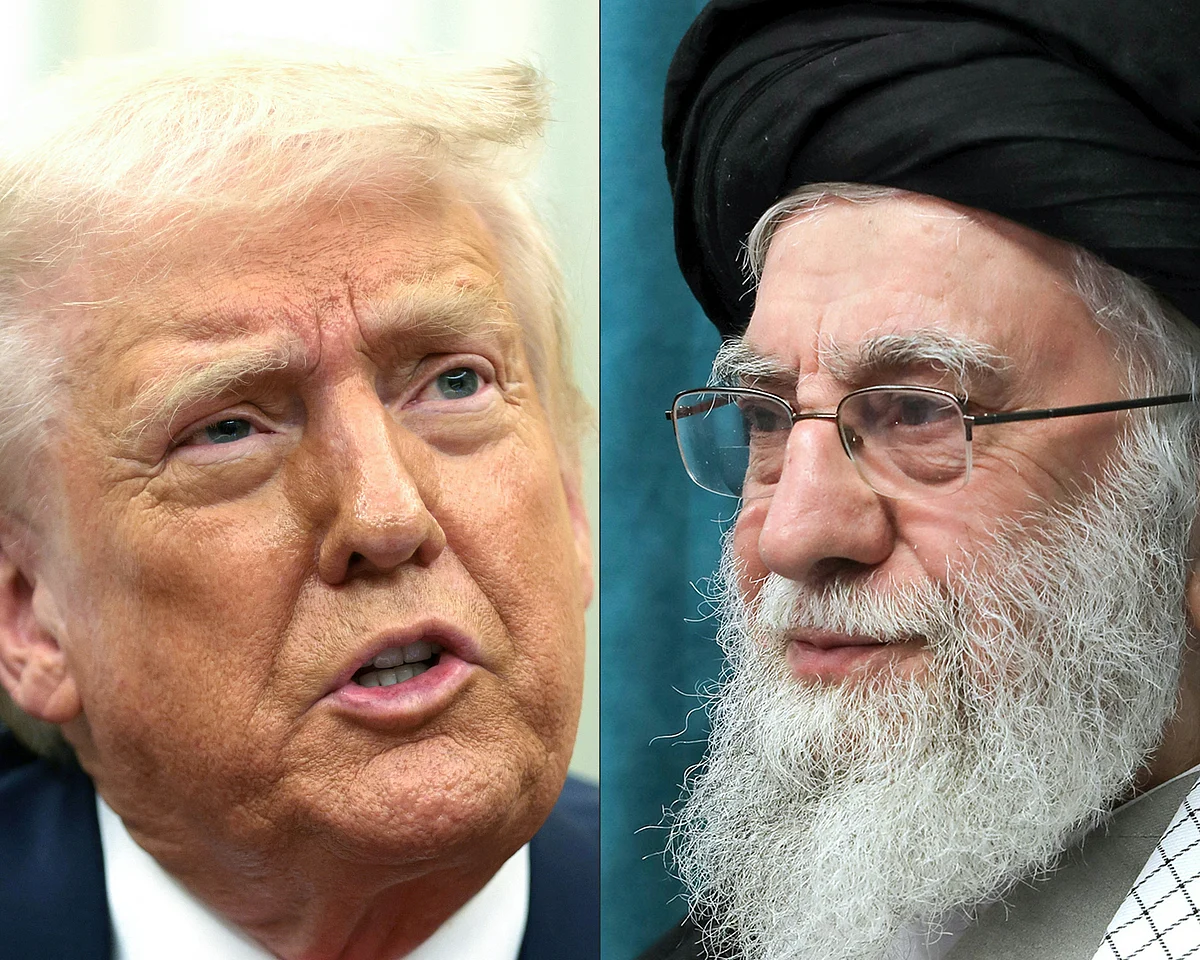
Dubai: Iran’s supreme leader Ayatollah Ali Khamenei on Sunday warned that any US military strike would trigger a wider regional conflict, even as US President Donald Trump said Washington and Tehran were in talks aimed at averting escalation.
“The Americans should know that if they start a war, this time it will be a regional war,” Khamenei was quoted as saying by Iran’s Tasnim news agency, amid heavy US military deployments in the Gulf.
The warning came days after Trump confirmed dialogue was underway with Tehran, while simultaneously ordering major US naval assets — including an aircraft carrier strike group — closer to Iran’s shores.
“(Iran is) talking to us, and we’ll see if we can do something,” Trump said, adding that Washington was seeking a deal that would leave Iran without nuclear weapons.
Protests likened to ‘a coup’
In a separate address, Khamenei described the recent wave of anti-government protests across Iran — which have left thousands dead according to rights groups — as an attempted overthrow of the state.
“They attacked the police, government centres, IRGC centres, banks and mosques, and burned the Quran… It was like a coup,” he said, adding that the unrest had been “suppressed”.
The demonstrations began over rising living costs before evolving into a broader challenge to Iran’s leadership, prompting a sweeping security crackdown.
Iran signals talks moving forward — but issues firm warnings
Iran’s top security official Ali Larijani said progress was being made toward negotiations with the United States, dismissing what he called a “contrived media war”.
“Structural arrangements for negotiations are progressing,” said Larijani, head of Iran’s Supreme National Security Council, following talks in Moscow.
Iranian President Masoud Pezeshkian struck a conciliatory tone, warning that a wider conflict would hurt both sides.
“The Islamic Republic of Iran has never sought war and firmly believes a war would benefit neither Iran, nor the United States, nor the region,” he said during a call with Egypt’s President Abdel Fattah al-Sisi.
But Iran’s army chief Amir Hatami issued a blunt warning to Washington and Israel.
“If the enemy makes a mistake, without a doubt it will endanger its own security, the security of the region, and the security of the Zionist regime,” he said, adding that Iran’s nuclear expertise “cannot be eliminated”.
Gulf unease over restraint
Meanwhile, Saudi Arabia’s defence minister has reportedly warned that failing to strike Iran could embolden Tehran — reflecting unease among some US allies in the Gulf.
Asked about the remarks, Trump acknowledged differing views.
“Some people think that. Some people don’t,” he said aboard Air Force One, without endorsing the position.
The exchange highlighted the delicate balance Washington faces — pursuing diplomacy while maintaining military pressure and managing allies’ expectations.
Region on edge
The sharp rhetoric from Tehran comes as Washington ramps up its military presence in the region, raising fears of a direct confrontation.
US officials say the deployments are meant to deter Iranian aggression while keeping pressure on Tehran to negotiate over its nuclear and missile programmes.
Iran has repeatedly warned that any attack would be met with missile strikes on US bases, warships and allies across the Middle East.
Despite the threats, Trump has insisted he believes Iran would ultimately prefer negotiations over war.
“I hope they negotiate something that’s acceptable,” he said.
With live-fire military exercises underway near key waterways, protests simmering inside Iran, and warships massing offshore, the standoff has placed the Middle East on high alert.
Diplomatic efforts — including mediation by regional powers — continue behind the scenes, but Khamenei’s latest warning underscored how quickly the crisis could spiral beyond Iran and the United States.
For now, fragile talks remain open, even as both sides brace for the possibility of a far wider conflict.

Sign up for the Daily Briefing
Get the latest news and updates straight to your inbox
Network Links
GN StoreDownload our app
© Al Nisr Publishing LLC 2026. All rights reserved.