Shipping congestion worsens amid rising Gulf security concerns
Iran attacks on Gulf shipping hit highest levels since conflict began: Why Strait of Hormuz is on alert
Iran-linked maritime incidents disrupt global oil and gas shipments
Last updated:
4 MIN READ
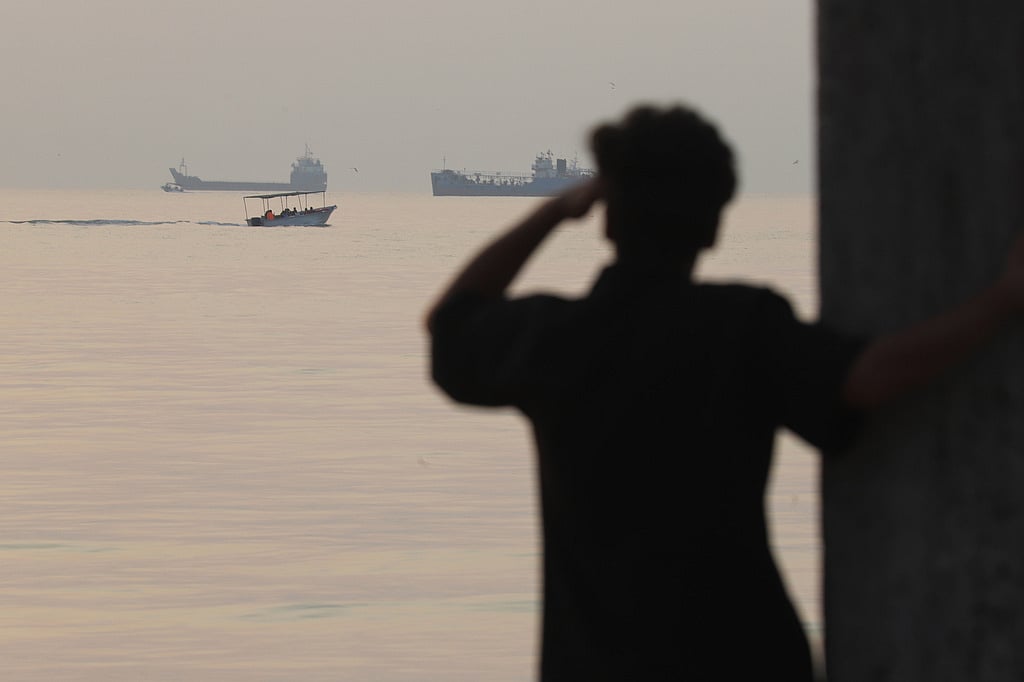
Strait of Hormuz faces severe threat as tanker attacks escalate
(Amirhosein Khorgooi/ISNA via AP)
Attacks on commercial shipping in and around the Strait of Hormuz have reached their highest levels since the Iran conflict began, raising fresh concerns over the safety of a waterway critical to global oil and gas supplies.
Three more tankers were struck by unidentified projectiles off Oman in less than 15 hours on November 20 and 21, adding to a growing number of maritime incidents as vessel movements through the strategic corridor remain severely disrupted.
More than 30 maritime attacks were reported to the United Kingdom Maritime Trade Operations Centre (UKMTO) in October, the highest monthly figure since the conflict began in late February, according to an analysis of its data by CNN.
At least 22 incidents had also been reported in November as of November 22, making it the second-highest monthly total since the conflict began.
The latest incidents involved three outbound tankers struck near Khasab in Oman's Musandam Governorate. The attacks come as the maritime security threat level for the Strait of Hormuz remains at SEVERE.
The Joint Maritime Information Center (JMIC), in its November 22 assessment, warned that further attacks on tankers using the Omani side of the strait were highly likely under current conditions.
Three tankers struck near Oman
The latest attacks involved three tankers hit by unidentified projectiles between eight and 17 nautical miles from Khasab.
On November 20, an unidentified tanker sailing outbound through the Strait of Hormuz was struck on its port bow, causing a fire on board. No crew casualties or environmental impact were reported.
Two further incidents occurred on November 21. The tanker TORKEL was hit on the stern about 11 nautical miles north of Khasab, causing a fire. The vessel was later reported at anchor.
The tanker ARINA was subsequently struck in the engine room about 17 nautical miles east of Khasab. No crew casualties were reported in either incident, although the environmental impact remained unknown for both vessels.
The three incidents bring the number of tankers struck in the Strait of Hormuz to seven since November 16, according to JMIC.
The maritime security centre did not attribute the latest attacks to a specific actor. Marisks, a maritime risk management company, assessed Iranian involvement as likely, although this has not been independently established.
Why are attacks on shipping increasing?
The rise in reported incidents comes amid continuing confrontation between Iran and the United States over control of the Strait of Hormuz, a vital route for global oil and gas shipments.
Iran has sought to restrict maritime movements through the waterway since the conflict began, while the United States has maintained a naval blockade on Iranian ports.
The latest JMIC assessment also points to continued activity by Iran's Islamic Revolutionary Guard Corps (IRGC), including drone overflights, surveillance of merchant vessels and occasional radio hailing.
These activities are adding to pressure on commercial shipping operators, particularly vessels using the southern corridor along Oman's coastline.
The reported number of attacks may also be higher than officially recorded. UKMTO has warned that some incidents cannot be independently verified, while vessels have increasingly been reluctant to report attacks or keep their commercial tracking systems active.
Iranian military claims of mine strikes on tankers have not been confirmed by official or national authorities, JMIC said.
Shipping through Hormuz remains severely disrupted
The increase in maritime security incidents has coincided with a sharp reduction in commercial shipping through the Strait of Hormuz.
JMIC reported no AIS-visible transits by cargo-carrying vessels above 1,000 deadweight tonnes between November 19 and 21, based on S&P tracking data.
US Naval Cooperation and Guidance for Shipping (NCAGS) data, meanwhile, recorded an average of approximately 38 US-assisted transits daily during the same period, compared with 27 a day between November 15 and 18.
This remains significantly below the historical average of around 138 vessels a day recorded in 2025.
The disruption has also contributed to congestion at regional anchorages. JMIC's internal tracking counted approximately 218 commercial vessels stationary at major anchorages east of the Strait of Hormuz.
The number of vessels anchored around Arabian Gulf eased from approximately 188 on November 19 to 167 on November 22, but the maritime centre expects the backlog to persist.
Trump signals possible fresh military action against Iran
The latest maritime escalation comes amid continued uncertainty over diplomatic efforts between Washington and Tehran.
US President Donald Trump has indicated that he could consider fresh military action against Iran after the New Year if negotiations fail to produce an agreement.
Trump has also said the United States does not need a deal with Tehran, while warning against Iranian vessels testing the US naval blockade.
Iranian Foreign Minister Abbas Araghchi, meanwhile, has said reopening the Strait of Hormuz would not be difficult if Washington accepted what Tehran considers reasonable conditions under international law.
The contrasting positions underline the uncertainty surrounding efforts to end the conflict, with the security of commercial shipping remaining a major concern.
Iran-linked maritime incidents disrupt global oil and gas shipments
Further attacks remain highly likely
In its latest 24-to-48-hour outlook, JMIC maintained the Strait of Hormuz at SEVERE threat level, warning that further attacks on tankers using the Omani side of the waterway were highly likely.
Disabled or anchored vessels could remain particularly exposed to further threats.
The maritime centre also warned that commercial traffic would probably remain at reduced levels compared with the 2025 baseline, as operators contend with attacks, electronic interference, US blockade enforcement and continued monitoring by Iranian forces.
With seven tankers struck since November 16, hundreds of commercial vessels waiting at regional anchorages and shipping movements still far below normal
Network Links
GN StoreAbout Gulf NewsTerms & ConditionsReach by GNSitemapContact usPrivacy PolicyGN FocusHave your sayWork with usAdvertise with usGulf News epaperPrinting Services
Download our app
© Al Nisr Publishing LLC 2026. All rights reserved.