An underground drone base, in an unknown location in Iran.
Ceasefire or cover? How Iran used truce to rearm and prepare for war
Missiles dug out and assets dispersed signal regrouping, not retreat
Last updated:
4 MIN READ
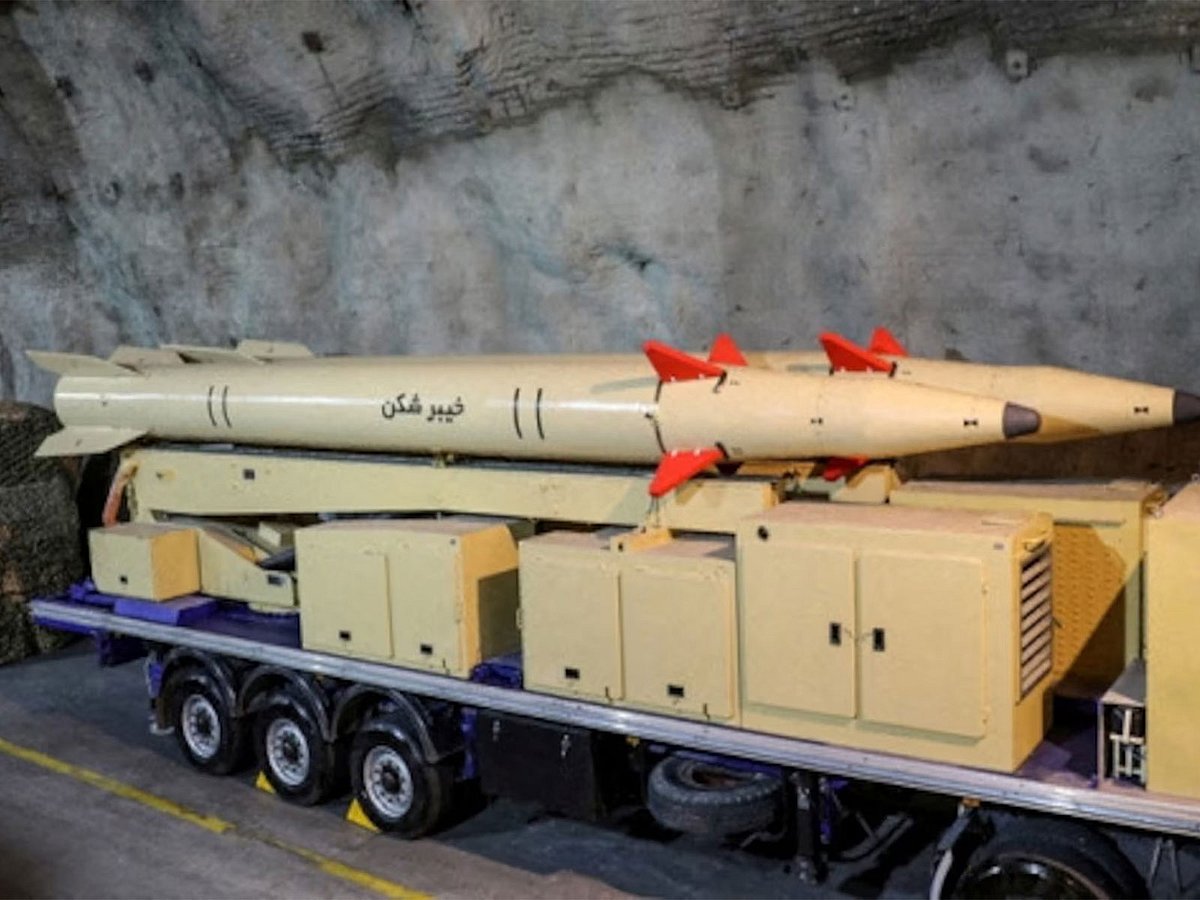
An Iranian Kheibarshekan missile at an undisclosed location in Iran. In a major escalation, Iran fired missiles and drones at the UAE on Monday, breaching the ceasefire days after Donald Trump declared hostilities over.
Gulf News file
Dubai: The ceasefire between the United States and Iran is increasingly being seen as a strategic pause that Tehran has used to rebuild its military capabilities, with media reports and intelligence assessments pointing to active efforts to restore strike power during the lull.
In a major escalation, Iran fired missiles and drones at the UAE on Monday, breaching the ceasefire days after Donald Trump declared hostilities over.
The latest escalation appears to reinforce longstanding concerns voiced by UAE officials. Senior Diplomatic Adviser to the President Dr Anwar Gargash has warned that Iran “cannot be trusted” over arrangements in the Strait of Hormuz following treacherous aggression against its neighbours — a view recent attacks are likely to deepen.
Trump’s Iran playbook: Apocalyptic threats deliver short-term results — but a strategic mess remains
According to NBC News, Iran has accelerated efforts to dig out missiles and munitions buried underground or trapped beneath rubble from US-Israeli strikes, reopening access to launch systems and repositioning assets for potential future use.
US officials told the network the activity appears aimed at rapidly reconstituting the country’s missile and drone capabilities.
Even as Iran rebuilds its missile capability, there are signs it is also testing the limits of the ceasefire. According to Associated Press reporting, Iranian forces have launched cruise missiles, drones and small-boat attacks targeting vessels in the Strait of Hormuz, prompting US forces to respond, including sinking several boats threatening commercial shipping.
The developments suggest the truce is not holding on the ground, even as diplomatic messaging continues.
Timeline — From war to fragile truce
Feb 28: US and Israel launch strikes on Iran, triggering the conflict and escalating tensions across the region.
April 8: A ceasefire comes into effect after weeks of fighting, halting large-scale military operations but leaving key issues unresolved.
April 11: US warships transit the Strait of Hormuz to ensure the waterway is clear of sea mines.
April 13: US begins naval blockade of Iranian ports, disrupting Tehran’s oil exports and tightening economic pressure.
May 1: Donald Trump says hostilities with Iran are “over,” expressing confidence in a diplomatic outcome.
Missiles dug out, capability restored
US Defence Secretary Pete Hegseth had signalled such movements earlier, saying Washington was tracking Iranian activity closely. “We know what military assets you are moving and where you are moving them,” he said, adding that Iran was “digging out” missiles and launchers from damaged facilities.
Experts cited in media reports say Iran likely preserved a significant portion of its arsenal through dispersal and concealment — hiding missiles, deploying decoys and spreading launch platforms before and during the war to ensure survivability.
This screen grab taken from undated video footage released by Iran's Revolutionary Guards (IRGC) and made available via Iran's state broadcaster (IRIB) on April 23, 2026, shows IRGC naval forces allegedly boarding a ship attempting to cross the Strait of Hormuz.
Playbook built on survival
Iran now appears to be executing a long-established military playbook shaped by the Islamic Revolutionary Guard Corps (IRGC) — one that prioritises survival, concealment and prolonged confrontation over quick victory.
Rather than relying on conventional strength, the strategy is designed to absorb strikes, disperse assets and rebuild quickly using underground storage, mobile launchers and decentralised command structures. Analysts say this model allows Tehran to retain strike capability even after sustained attacks, turning battlefield losses into temporary setbacks.
What looks like recovery is part of a deliberate effort to regroup and rearm.
Breaches and escalation in Hormuz
Iranian forces launch missiles, drones and small-boat attacks targeting vessels in the strait
US forces respond, including destroying several boats threatening commercial shipping
Drone strike hits UAE-linked oil infrastructure, sparking fire in Fujairah
Missile alerts issued in the UAE after weeks of calm
Shipping disruption continues, with vessels rerouted or stranded
Claims clash with intelligence
The gap between public messaging and intelligence assessments has added to the uncertainty. Donald Trump said Iran had lost “about 82%” of its missiles, while Marco Rubio suggested Tehran retained roughly half its arsenal but had lost production capacity.
However, intelligence cited in media reports indicates Iran may still possess more than half of its ballistic missile inventory, along with significant elements of its air force and naval fleet.
Iranian officials have reinforced that perception with defiant messaging. A lawmaker told Tasnim news agency that missile and drone stockpiles were “sufficient to sustain years of war,” adding that Tehran had “not yet shown our new cards.”
Iran’s negotiating posture has done little to signal urgency for a deal. Even as talks continue, officials have emphasised strength over compromise, with repeated assertions that Tehran retains significant capabilities. Analysts say such positioning can help preserve leverage — and buy time under pressure.
A familiar pattern under pressure
The pattern, analysts say, is not new.
Iran has previously curtailed access for international nuclear inspectors and limited oversight at key facilities, drawing repeated concerns from the International Atomic Energy Agency. Such steps have often coincided with periods of heightened pressure, raising concerns that reduced transparency can provide space to reposition sensitive capabilities.
The current ceasefire, some analysts warn, risks following a similar trajectory — offering breathing room at a time when oversight is limited and military activity is shifting underground.
Power shifts to hardliners
At the same time, internal dynamics appear to be hardening. Analysts say the IRGC has consolidated influence over wartime decision-making, shaping a posture that emphasises endurance and readiness over compromise.
On the domestic front, authorities have maintained tight controls, including a near-total internet shutdown affecting tens of millions, while state-backed mobilisation campaigns promoting sacrifice and wartime readiness have been amplified.
The ceasefire, in effect, may not be slowing the conflict — but giving Iran the space to rebuild, test responses and recalibrate for the next phase. If the latest attacks are any indication, that next phase may already be taking shape.

A Senior Associate Editor with more than 30 years in the media, Stephen N.R. curates, edits and publishes impactful stories for Gulf News — both in print and online — focusing on Middle East politics, student issues and explainers on global topics. Stephen has spent most of his career in journalism, working behind the scenes — shaping headlines, editing copy and putting together newspaper pages with precision. For the past many years, he has brought that same dedication to the Gulf News digital team, where he curates stories, crafts explainers and helps keep both the web and print editions sharp and engaging.
Sign up for the Daily Briefing
Get the latest news and updates straight to your inbox
Network Links
GN StoreAbout Gulf NewsTerms & ConditionsReach by GNSitemapContact usPrivacy PolicyGN FocusHave your sayWork with usAdvertise with usGulf News epaperPrinting Services
Download our app
© Al Nisr Publishing LLC 2026. All rights reserved.