Trump says US has ‘total control’ of Strait of Hormuz
Tensions surge as strategic shipping lane faces renewed threats
Highlights
We are closing this live coverage. For the latest updates, click here:
Iran blockade: US Navy redirects 4 more ships near Hormuz as Tehran's oil lifeline chokes
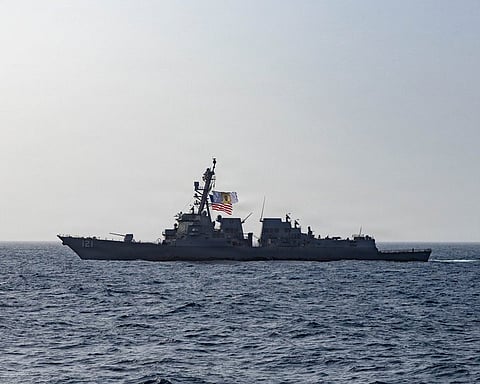
Four more Iran-linked ships were "redirected" by the US Central Command on Wednesday as American forces continue to enforce the “steel wall” naval blockade against Iran.
This brings the total of ship redirections to 59 commercial vessels, 3 “disabled”, and 2 boarded as of August 12, 2026.
The previous day’s figures (August 11) stood at 55 redirected, 3 disabled, and 2 boarded, indicating continued interdiction activity.
The blockade targets vessels attempting to enter or leave Iranian ports and coastal areas. CentCom has repeatedly stated that the Strait of Hormuz itself remains open for neutral transit to or from non-Iranian destinations, with US forces assisting commercial traffic through the waterway while enforcing restrictions solely on Iran-bound or Iran-origin shipping.
Hormuz remains blocked; claims don't change reality: Iran dismisses Trump's 'total US control' claims
Iran has rejected President Donald Trump's claim that the United States has "total control" over the Strait of Hormuz, saying the strategic waterway remains blocked and will not be reopened until Tehran's conditions are accepted. The Iranian regime said Trump's claims and repeated statements by US officials that the Strait of Hormuz was no longer blocked did not change the situation. "Claims and repeated posts by US officials that the Strait of Hormuz is no longer blocked do not change the reality: the Strait of Hormuz remains blocked and will not be reopened until Iran's conditions are accepted," the PGSA said.
US on track for record natural gas production in 2026: EIA
US natural gas production is on track to hit a new annual record in 2026, with output forecast to average 122.5 billion cubic feet per day (Bcf/d), according to the latest Short-Term Energy Outlook (STEO) from the US Energy Information Administration (EIA). That would eclipse the previous annual record of 118.5 Bcf/d set in 2025, marking an increase of about 4 Bcf/d, or 3.4%, in just one year.
Global oil demand expected to decline by 1.6 mb/d in 2026: IEA
World oil demand is forecast to decline by 1.6 mb/d in 2026, 510 kb/d more than estimate in last month’s report, as the ongoing closure of the Strait of Hormuz and elevated fuel prices continue to weigh on oil consumption, according to the International Energy Agency (IEA) Oil Market Report (OMR) for August, released on Wednesday (August 12, 2026). The monthly report noted that annual contractions will nevertheless ease from 4.9 mb/d in 2Q26 to 2.8 mb/d in 3Q26, before returning to growth in the final quarter. Global oil demand is projected to expand by 2.4 mb/d in 2027.
Iran blockade: US military redirects 59 vessels
The US Central Command (CentCom) said that US forces have redirected 59 commercial vessels, disabled three and boarded two others as part of efforts to enforce a blockade against Iran.
The command stated: "As of August 12, US forces have redirected 59 commercial vessels, disabled 3 and boarded 2 to ensure full compliance with the blockade." Earlier in the day, President Donald Trump claimed that the US exercised "total control" over the Strait of Hormuz, and he "will keep it" amid stalled negotiations with Iran regarding the reopening of the strategic conduit.
Trump’s secret plane switch triggered by a 'credible missile threat'
US President Donald Trump was secretly moved from the Air Force One after US officials identified a specific and credible threat involving an Iranian-linked group in Turkey, US media reported.
New details from the New York Times reported just how serious the Iranian threat was to Air Force One, including a surface-to-air missile threat against the plane. CNN, meanwhile, reported that the threat involved a shoulder-fired missile and was serious enough to prompt the Secret Service and military to devise a covert evacuation plan. Another report stated the Iranians knew where he was staying in Ankara.
Trump switched planes via catering truck on his way back from Turkey via the UK.
Kpler: Chokepoint traffic rises as risks persist
Maritime traffic through the Strait of Hormuz and Bab el-Mandeb increased on August 11, but both corridors remain vulnerable to disruption, according to Kpler.
Hormuz crossings rose to 14, with 11 vessels using Iran's unilateral transit scheme and none using the traditional TSS route. Bab el-Mandeb recorded 40 crossings, including dark, sanctioned and shadow fleet movements.
A new confirmed vessel attack also took the cumulative total to 65, with routing restrictions, security incidents and diplomatic tensions continuing to weigh on shipping.
Get updated faster and for FREE: Download the Gulf News app now - simply click here.
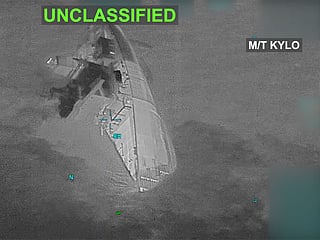
Oil spill off Oman reportedly reaches mainland
An oil spill from a tanker that ran aground off Oman's coast has reportedly begun reaching the mainland, as monsoon winds obstructs containment efforts, the United Nations' maritime agency said Wednesday.
An AFP investigation had earlier found that the ship had been stranded for weeks near Oman's al-Qibliyyah island after it was rocked by explosions.
Read more here.
Trump: US has ‘total control’ over Strait of Hormuz
US President Donald Trump said the US has “total control” over the Strait of Hormuz, claiming Washington’s naval blockade had become a “wall of steel” that Iran could not challenge.
In a post on Truth Social, Trump said Iran had no effective navy or air force and claimed the country’s remaining forces were weakened and its leadership uncertain. He also accused Tehran of relying on “fake news” and facing severe economic problems.
Kuwait foils terrorist plot targeting vital facility
The Kuwaiti Ministry of Interior on Wednesday foiled a terrorist plot targeting a vital facility in the country and arrested a Kuwaiti national affiliated with Daesh before executing his plan, following intensive security monitoring and surveillance.
This came in a statement by the ministry carried by the Kuwait News Agency. The statement said investigations revealed that the suspect had received training related to the manufacture of explosives and drones and had built a drone with the intention of using it to carry out his terrorist plot and target a vital facility.
26 countries condemn in 'strongest terms' Iran executions
Twenty-six nations, including France, the UK and Canada, on Wednesday condemned the use of capital punishment by Iranian authorities, saying in a joint statement the Islamic republic was executing protesters to "silence dissent".
The countries, joined by the European Union's top diplomat, "condemn in the strongest terms the ongoing executions of protesters and use of the death penalty" by Iran. "The use of capital punishment to silence dissent, intimidate communities, and punish individuals exercising their human rights can never be justified".
US consumer inflation falls to 3.4% year-on-year in July
US consumer inflation slowed slightly to 3.4 per cent in July despite turbulent oil prices due to the Iran war, government data showed, with the data likely giving the Federal Reserve room to breathe on interest rates.
The consumer price index (CPI) rose 0.1 percent from a month earlier, but fell on a year-on-year basis, according to data released by the US Bureau of Labor Statistics. The data was in line with analyst expectations.
Japan urges Iran to ease tensions, reopen Hormuz
Japan’s Prime Minister Sanae Takaichi spoke by phone with Iranian President Masoud Pezeshkian on Wednesday, urging Tehran to help ease military tensions and ensure safe navigation through the Strait of Hormuz.
During the roughly 20-minute call, which began at 4.20pm on August 12, Takaichi said the situation around the strait had reached a critical phase and called for an early de-escalation, according to Japan’s Foreign Ministry.
She stressed the importance of maintaining free and safe navigation through Hormuz without additional costs and urged Iran to discuss the issue closely with the international community, including countries using the waterway.
Takaichi also raised concerns over the Bab el-Mandeb Strait, citing Houthi attacks on commercial vessels and oil-related facilities and its declared naval blockade against Saudi Arabia. She asked Pezeshkian to urge the Houthis to exercise restraint.
The Japanese prime minister also renewed a request for an early resolution to the case of a Japanese national released on bail in Iran in April.
Pezeshkian outlined Iran’s exchanges with Oman over the Strait of Hormuz and the outlook for reopening the waterway. On the Bab el-Mandeb, he said Iran was working to resolve the issues through dialogue with Saudi Arabia.
The two leaders agreed to maintain close communication as they work towards an early de-escalation.
Iran’s borders ‘completely secure’, border guards commander says
Iranian Border Guards commander Brigadier General Ali Akbar Javidan has dismissed the prospect of a US ground offensive as “illusory”, saying the country’s borders remain secure.
“The actions of the enemies can never undermine the authority and security of the country,” Javidan said, according to Iran’s Tasnim news agency.
He added that Iran’s borders were “completely secure and impenetrable”, crediting the vigilance of border guards and support from residents in border areas.
Mideast war impact on travel bookings fading, TUI says
German travel giant TUI said Wednesday that bookings were returning to normal levels despite the ongoing Mideast war, as it presented its latest financial results.
Tourism in Europe is experiencing a turbulent summer marked by soaring jet fuel prices because of the US and Israeli war against Iran, as well as heatwaves and wildfires in Spain, France, Portugal and Greece.
Though booked revenue for the summer was down six percent from the same season last year, TUI -- the world's largest travel group -- said bookings over the past four weeks had risen seven percent.
But TUI shares were down than three percent in early Frankfurt trading, after it reported net profit of 124.2 million euros ($143.1 million) in the latest quarter, down 44.7 percent from the period last year.
IEA cuts 2026 oil demand forecast again as Hormuz remains shut
The International Energy Agency on Wednesday sharply reduced its forecast for global oil demand this year, as supplies remain crimped by the closure of the Strait of Hormuz and high prices deter buyers.
Demand is expected to slump by 1.6 million barrels per day (mb/d), compared with its forecast slump of one million barrels in its previous monthly report in July.
Crude prices have remained well above levels seen before the US and Israeli attacks on Iran in late February, sparking a war that has seen oil infrastructure damaged in several Gulf countries.
Tehran also responded by effectively shutting down tanker and cargo traffic in the Strait of Hormuz, through which around one-fifth of global oil supplies usually transit.
"The ongoing closure of the Strait of Hormuz and elevated fuel prices continue to weigh on oil consumption," the Paris-based IEA said.
Oil prices rise, stocks mixed ahead of crucial US inflation data
Oil prices rose again Wednesday and stock markets were mixed, with eyes on the release of key US inflation data that could guide the Federal Reserve on its plans for interest rates.
Traders trod nervously ahead of the consumer price index (CPI) figures, which follow a report last week showing the world's top economy lost more than 20,000 jobs last month, suggesting the labour market was slackening.
With inflation stubbornly elevated above the Fed's two percent target for more than five years -- compounded by the Iran war since February -- monetary policymakers are increasingly considering lifting borrowing costs.
The bank's July meeting saw three board members call for an increase, dissenting from the final decision to hold rates, and investors are betting they will announce one before the end of the year, with some eyeing at least two.
Pakistan says interior minister in Iran to discuss regional security
Pakistan's interior minister is visiting Iran to discuss regional security, stability and other developments, the foreign office said on Wednesday.
"He is discussing bilateral relations, security, regional security and stability, and constructive engagement amongst the parties in the region and regional developments," foreign ministry spokesman Tahir Andrabi, whose government has been mediating to end the fighting in the Middle East, told reporters in Islamabad.
Pakistan says 3 citizens killed in Houthi strike in Red Sea
Three Pakistani citizens were killed in an attack by Houthi rebels on a vessel in the Red Sea, the South Asian nation's foreign minister said on Wednesday.
"Three Pakistani nationals have lost their lives and one has sustained injuries in the incident," minister Ishaq Dar posted on X, a day after Yemen's coastguard confirmed Houthi strikes on a vessel killed at least six people off the country's coast.
Iraq preparing a showdown with Iran-backed militias — ISW
Iraq may be moving toward its most serious confrontation yet with powerful Iranian-backed militias, with US pressure, attacks on Gulf states and growing concerns over Iraqi sovereignty pushing Prime Minister Ali al-Zaidi toward possible action.
The Institute for the Study of War (ISW) and Critical Threats Project cited “some observed indicators” suggest Baghdad is considering a major crackdown that could include Iraqi security forces entering militia-controlled strongholds and attempting to reassert state control.
Such an operation would be far more consequential than previous limited crackdowns because many of the militias are heavily armed, politically connected and deeply embedded in Iraq's security and political structures.
Trump says US has ‘total’ control of Hormuz as Iran standoff continues
President Donald Trump said Tuesday that the United States has “total” control of the Strait of Hormuz, as Washington and Tehran remained at an impasse over conditions for reopening the vital waterway.
“Iran is going fine, doing just absolutely fine. We totally control the Strait of Hormuz, we have control over it. Nobody else, just us,” Trump told reporters at Joint Base Andrews.
“Our Navy is unbelievable and things are going great for our country,” he added. “We have total control over the Hormuz Strait right now. They do not have control, we have control, we own it,” he said.
Trump also said he had little trust in Iran as negotiations over the strait remained unresolved.
“I do not trust Iran. I am the last person to trust Iran. They lied to me constantly,” Trump said.
Trump said the United States was “in a very good position” and argued that Iran was no longer “the bully of the Middle East.”
“At some point they might do something and they get blown away, but right now we are in a very good position,” he said.
Trump confirms secret plane 'switch' after Nato summit in Turkey amid Iran threat
President Donald Trump has confirmed that US security officials secretly moved him to a different aircraft after the Nato summit in Turkey last month because of a potential threat linked to Iran. Trump said the decision was made by the Secret Service and the military.
The disclosure follows reporting that Trump was covertly transferred from the presidential aircraft to a smaller military jet at Ankara airport. He was reportedly moved inside an airport catering truck to conceal the operation.
Trump had appeared to board the familiar Air Force One after the NATO summit. But the aircraft was reportedly used as a decoy, while Trump was secretly moved to another plane.
US officials previously told CBS News that intelligence had identified a credible Iranian threat, including a possible missile attack against the presidential aircraft. Trump said he did not ask for detailed information about the threat.
US helicopter fired on ship that tried to break Iran ports blockade
A US helicopter fired missiles on Tuesday into the engine room of a Panama-flagged cargo ship that attempted to break the American blockade of Iran's ports, the United States military said.
The US Navy MH-60 helicopter fired on and disabled the M/V Vela Nova "after the ship's civilian crew ignored repeated warnings from American forces," US Central Command (CENTCOM) said on X, adding that the vessel "is no longer transiting to Iran in violation of the US blockade."
It was the third time the United States, in a months-long war against Iran, has forcibly halted a vessel since reinstating the ports blockade on July 14.
CENTCOM said it has redirected 55 ships that tried to run the blockade and boarded two others as of Tuesday.
Get updated faster and for FREE: Download the Gulf News app now - simply click here.
US‑Israel war on Iran: Recent developments
Day 161: Tehran: Hormuz stays shut as US-Iran diplomacy push continues
Day 160: Tehran reshuffles military
Day 159: Netanyahu rejects Gaza plan
Day 158: Trump says Iran can’t ‘go on much longer’
Day 157: Iran says Oman deal alone won’t reopen Hormuz
Day 156: Iran says new Strait of Hormuz shipping route agreed with Oman
DAY 155: Resolving US-Iran conflict in 'progressive stages'
Day 154: Trump says Iran talks ongoing as IRGC warns of readiness