Saudi Arabia’s economy reaches $1.31 trillion, non-oil sectors drive growth
FDI inflows rise to $35.5bn as over 700 firms establish regional HQs
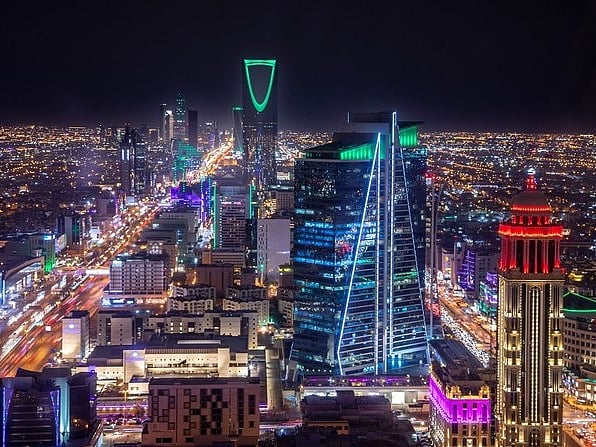
Dubai: Saudi Arabia’s economy reached a new milestone in 2025 as real gross domestic product expanded to $1.31 trillion, driven increasingly by non-oil sectors that now account for 55 per cent of economic output, according to the National Transformation Program (NTP) 2025 Annual Report.
The report highlighted broad-based progress across investment, tourism, digital transformation, environmental sustainability and quality of life indicators. Foreign direct investment inflows rose to $35.5 billion in 2025, nearly five times the level recorded in 2017, while non-oil GDP expanded by 4.9 per cent during the year.
Get updated faster and for FREE: Download the Gulf News app now - simply click here.
Saudi Arabia’s efforts to position itself as a regional business hub also gathered pace, with more than 700 international companies establishing regional headquarters in the Kingdom, reflecting growing confidence in its regulatory and investment environment.
Tourism emerged as one of the strongest-performing sectors. The Kingdom attracted 123 million tourists in 2025, while international Umrah arrivals exceeded 18 million pilgrims, surpassing the annual target of 15 million and reinforcing Saudi Arabia’s growing role as both a religious and leisure tourism destination.
Social indicators also showed notable improvements. Homeownership climbed to 66.24 per cent, compared with 47 per cent in 2016, while life expectancy reached 79.7 years, bringing the Kingdom within touching distance of its Vision 2030 target of 80 years.
The report said implementation momentum across Vision 2030 programmes remained strong. Some 93 per cent of key performance indicators met or exceeded annual targets, while 90 per cent of initiatives were either completed or progressing according to schedule.
A total of 935 initiatives have been completed since the launch of Vision 2030, with a further 225 progressing as planned. More than 2,200 reforms and policy measures have also been introduced over the past decade as part of the transformation programme.
Environmental achievements featured prominently. More than one million hectares of degraded land have been restored across the Kingdom, equivalent to roughly six times the area of Riyadh, while more than 151 million trees have been planted under the Saudi Green Initiative.
Saudi Arabia also strengthened its international environmental standing, with five protected areas added to the International Union for Conservation of Nature’s Green List. The Farasan Islands Reserve became the first Saudi protected area to be included under the Ramsar Convention on Wetlands of International Importance.
The Kingdom’s social development agenda continued to gather momentum. Volunteer participation surpassed 1.7 million people, exceeding Vision 2030 targets, while volunteers contributed more than 59 million hours of service, generating an estimated economic return of more than $266 million.
Digital transformation remained another key pillar of growth. Internet coverage reached 99 per cent nationwide, while Saudi Arabia improved its global standing in digital governance, ranking seventh worldwide in the United Nations E-Participation Index and sixth in the UN E-Government Development Index.
Launched in 2016 as the first Vision Realisation Programme under Vision 2030, the National Transformation Program oversees more than 313 initiatives and leads 34 strategic objectives representing more than one-third of the Vision’s goals. Progress is measured through 78 key performance indicators.
The report concluded that the achievements demonstrate Saudi Arabia’s continued progress towards building a diversified economy, improving quality of life and strengthening its position as a global destination for investment, tourism, innovation and sustainable development.
The momentum has continued into 2026.
According to preliminary estimates released by the General Authority for Statistics (GASTAT), Saudi Arabia’s GDP grew by 3 per cent in the first quarter of 2026 compared with the same period a year earlier, supported primarily by non-oil activities.
Non-oil sectors contributed 1.7 percentage points to overall economic growth, while oil activities added 0.8 percentage points. Government activities and net taxes on products contributed 0.3 and 0.2 percentage points respectively.
GASTAT said both oil and non-oil activities expanded by 2.9 per cent year-on-year during the quarter, while government activities increased by 1.5 per cent.
Finance, insurance and business services recorded the strongest annual growth among major sectors, rising by 5.4 per cent, followed by manufacturing activities excluding oil refining, which expanded by 4 per cent. Crude oil and natural gas activities grew by 3.6 per cent compared with the first quarter of 2025.
On the expenditure side, government final consumption expenditure increased by 11.3 per cent year-on-year, while private final consumption expenditure rose by 5.3 per cent. Gross fixed capital formation expanded by 3.9 per cent during the quarter.
However, seasonally adjusted data showed that real GDP declined by 1.2 per cent compared with the fourth quarter of 2025, largely reflecting a 6.8 per cent quarterly decline in oil activities.
Despite the quarterly slowdown, the latest figures suggest that Saudi Arabia’s economic transformation continues to gain traction, with non-oil sectors playing an increasingly central role in driving growth and reshaping the Kingdom’s long-term economic future.
Network Links
GN StoreDownload our app
© Al Nisr Publishing LLC 2026. All rights reserved.