13,500-year-old human settlement discovered in Saudi Arabia
Findings highlight early human adaptation and long-distance exchange networks
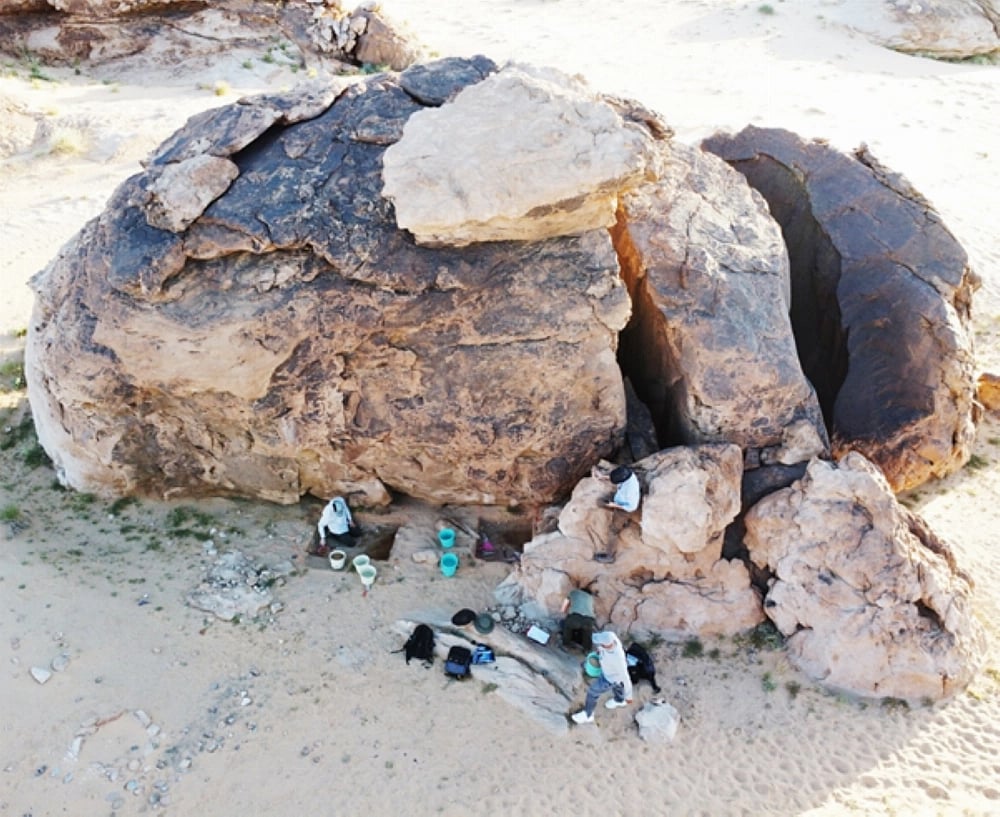
Dubai: Saudi Arabia’s Saudi Heritage Commission has announced new archaeological findings that provide evidence of early human settlement in northern Arabia dating back around 13,500 years.
The discovery was detailed in a scientific study published in the journal Nature titled “The Natufian Epipalaeolithic and Pre-Pottery Neolithic in the desert of northern Arabia.”
The research is based on excavations and scientific analysis conducted at the Sahout archaeological site, located on the southern edge of the Nefud Desert between the Arnan Mountains and Al Misma Mountains.
Settlement
Researchers said the site occupies a strategic geographic position linking desert environments with settlement networks connected to the Levant, offering valuable insight into human movement during the late Ice Age and the early Holocene period.
Excavations uncovered distinctive stone tools, including Helwan bladelets, finely crafted implements believed to have been used as arrowheads or hunting tools.
Archaeologists said the artefacts are closely associated with the Natufian culture and confirm the presence of communities with advanced technical skills capable of adapting to harsh desert environments.
The study also identified a later settlement phase dating between about 10,300 and 8,700 years ago, marked by denser habitation and more advanced stone-tool industries.
Jabal Al Abyad
Among the finds were Abu Salem points, a distinctive type of hunting arrowhead.
Geochemical analysis of obsidian used in the tools showed that the material originated from Jabal Al Abyad, about 190 kilometres south of the site.
Researchers said this indicates the existence of long-distance exchange networks, suggesting that early communities travelled considerable distances to obtain valuable resources.
Network Links
GN StoreDownload our app
© Al Nisr Publishing LLC 2026. All rights reserved.