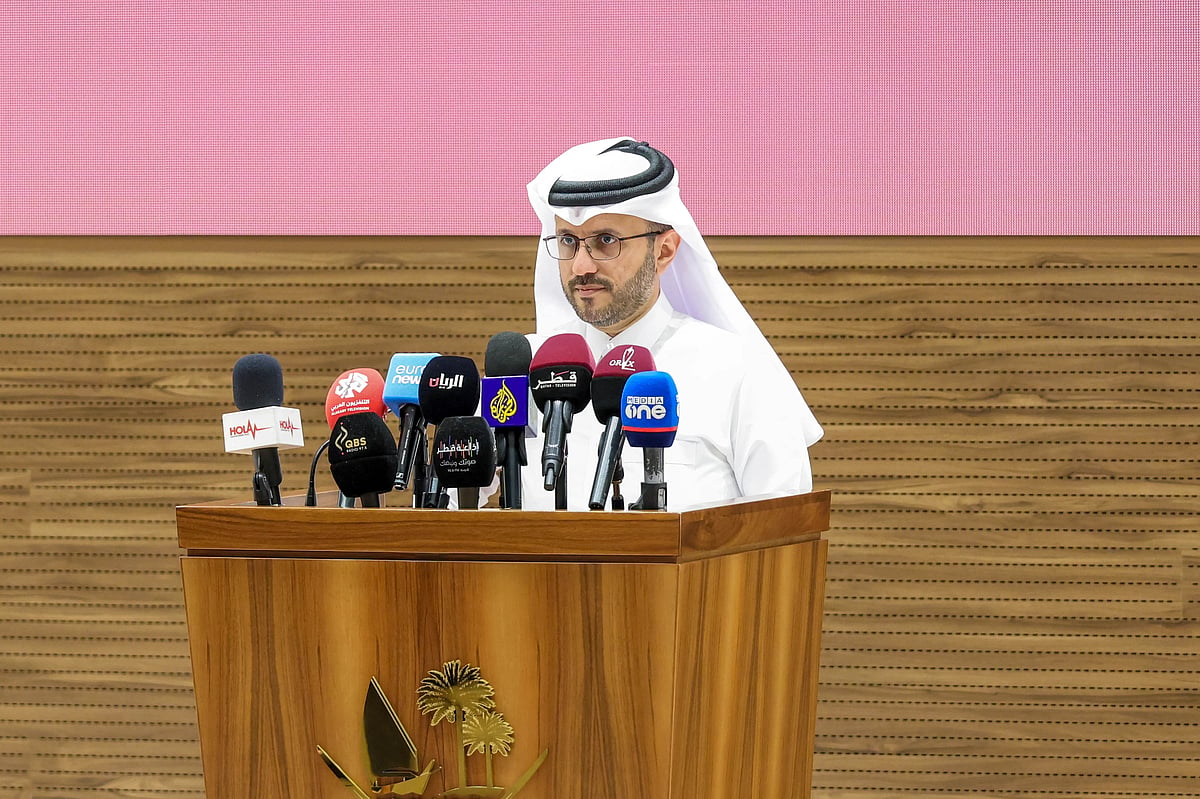
Qatar on Thursday warned that the closure of the Strait of Hormuz had become an international crisis affecting energy security, supply chains and global economic stability.
Foreign Ministry spokesperson Majed Al Ansari called for collective international action and renewed diplomacy with Iran.
Speaking at the Mediterranean Dialogues 2026 Forum in Naples, Al Ansari said the consequences of the war extended beyond the region and required a "coordinated response".
Qatar warned that the closure of the Strait of Hormuz has become a global crisis affecting energy security and supply chains, urging diplomacy and international cooperation to end the war.
Get it: Fast, verified news for FREE ... download the Gulf News app — simply click here
Qatar’s warning comes as the United States and Iran remain locked in a conflict that has already disrupted shipping and raised concerns about a wider regional war.
The Strait of Hormuz is a vital route for global oil and gas shipments. Its closure has disrupted energy flows and pushed up freight and fuel costs worldwide.
For global markets, the closure of Hormuz is not just a regional issue. It affects energy prices, supply chains and economic stability.
The crisis is also a test of Qatar's role as a mediator. Doha has positioned itself as a key player in efforts to de-escalate tensions between Washington and Tehran.
Al Ansari said negotiations and diplomatic solutions remained the best way forward to reduce tensions and strengthen regional security. He called for stronger international cooperation and continued diplomatic engagement.
The key question is whether the mediators can secure a deal that ends the war and reopens the strait.
The closure of Hormuz means higher costs and uncertainty for businesses and consumers. For policymakers, it is a reminder that regional conflicts can have global consequences.
Network Links
GN StoreDownload our app
© Al Nisr Publishing LLC 2026. All rights reserved.