UK confronts Iran over Hormuz, citizens, Saudi Arabia
UK seeks Hormuz de-escalation while demanding protection for citizens
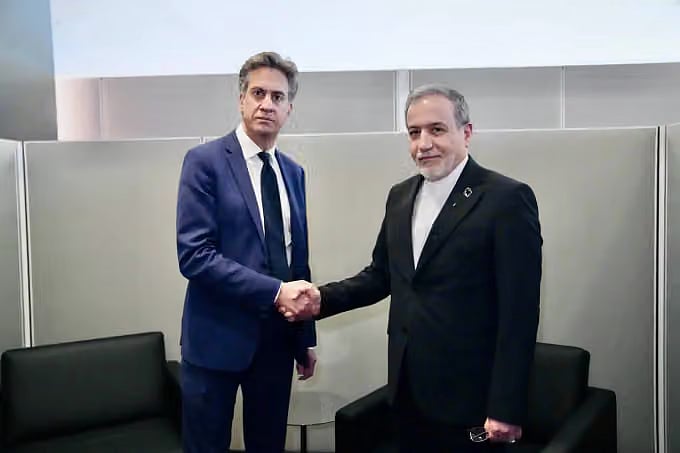
British Foreign Secretary Ed Miliband pressed Iran over the Strait of Hormuz, threats linked to Iranian groups in Britain and the detention of British nationals during talks with Iranian Foreign Minister Abbas Araghchi in New York on Thursday.
The meeting came as the strategic waterway remains at the centre of the wider US-Iran conflict and as Tehran has set conditions for reopening the strait.
Miliband made clear that Britain supports freedom of navigation through Hormuz and wants a diplomatic solution to the conflict.
Get it: Fast, verified news for FREE ... download the Gulf News app — simply click here
He also reaffirmed London's support for Saudi Arabia, a key British ally that has come under attack from Iran-backed Houthi forces in Yemen.
Britain has provided limited defensive air-to-air refuelling support to Saudi Arabia following a request from Riyadh, as Houthi attacks have intensified.
Miliband also warned Tehran over activities linked to Iran in Britain.
The UK Foreign Office said he told Araghchi that Britain would “not tolerate intimidation, threats or hostile activity on UK soil” by groups linked to Iran. Concerns include threats against Jewish communities in Britain.
Miliband also pressed for consular access to a British couple sentenced to 10 years in prison in Iran. The issue adds another layer of tension to already strained UK-Iranian relations.
The New York meeting was the first face-to-face meeting between British and Iranian foreign ministers in about a year.
It also came two months after Britain formally proscribed Iran's Islamic Revolutionary Guard Corps (IRGC) as a terrorist organisation in July, further worsening relations between London and Tehran.
The talks took place as Araghchi has been holding a series of meetings in New York amid diplomatic efforts to resolve the conflict.
Iranian officials have presented Washington with conditions for reopening Hormuz, including demands relating to US military pressure and sanctions.
Tehran had submitted its proposal through mediators on September 16 and said it could reopen the strait within a week if Washington eased military pressure and lifted its blockade.
Hormuz remains the key pressure point
The Strait of Hormuz is one of the world's most important energy chokepoints, linking the Arabian Gulf with the Gulf of Oman and Arabian Sea.
Its disruption has pushed oil prices sharply higher and complicated energy supplies to major Asian economies.
The diplomatic track remains uncertain. US and Iranian negotiators held lengthy discussions in New York earlier this week, but US officials have cautioned against describing them as a major breakthrough. Iran, meanwhile, says its conditions for reopening Hormuz remain in place.
For Britain, the stakes extend beyond shipping and energy: London is simultaneously seeking de-escalation with Tehran, supporting Gulf allies and demanding protection for British citizens and communities at home.
Network Links
GN StoreDownload our app
© Al Nisr Publishing LLC 2026. All rights reserved.