Part of the mechanism of The Great Clock of Westminster is pictured inside the mechanism room of the Elizabeth Tower, commonly known by the name of the clock's largest bell, Big Ben, at the Houses of Parliament in central London on October 22, 2025.
UK clocks go back on Oct 25: What the end of British Summer Time means for you
Daylight shifts as UK returns to Greenwich Mean Time on October 25
Last updated:
3 MIN READ
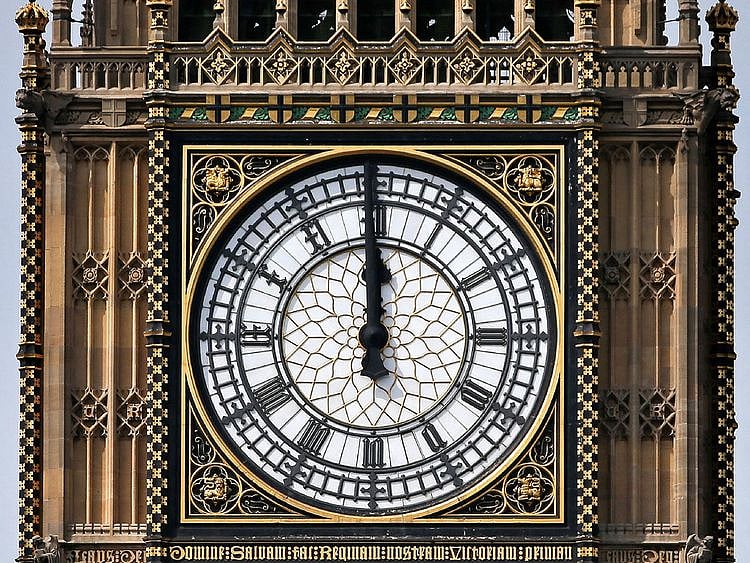
In this file photo taken on August 14, 2017 One of the four faces of the Great Clock of the Elizabeth Tower, commonly referred to as Big Ben, is pictured at the Houses of Parliament at midday in central London.
AFP
The UK will switch back to Greenwich Mean Time (GMT) on Sunday, October 25, as clocks go back by one hour, marking the end of British Summer Time (BST).
At 2am on Sunday, clocks will move back to 1am, giving people an extra hour in bed and bringing more daylight to the mornings, but darker evenings.
Get updated faster and for FREE: Download the Gulf News app now - simply click here.
In a social media post, UK Parliament said its clock mechanics would carry out maintenance on the Great Clock in the Elizabeth Tower, which houses Big Ben.
“At 2am on Sunday morning, all the UK’s clocks will go back, including the Great Clock in the Elizabeth Tower,” UK Parliament said.
The maintenance work will affect the clock’s appearance on Saturday evening. From 6pm on Saturday, the dial lights will be switched off and the hands will not show the correct time until 2am on Sunday, the parliamentary account said.
When do the clocks go back?
The clocks will go back by one hour at 2am on Sunday, October 25, returning the UK to GMT from BST.
According to the UK government website, clocks go forward by one hour at 1am on the last Sunday in March and go back at 2am on the last Sunday in October.
According to the BBC, the next clock change will take place on Sunday, March 28, 2027, when clocks move forward by one hour to mark the return of BST.
What is British Summer Time?
British Summer Time is the period when UK clocks are one hour ahead of GMT. It begins in spring and ends in autumn.
The arrangement provides more daylight in the evenings during the warmer months, while the autumn clock change shifts an hour of daylight back towards the morning.
When the clocks go back in October, the UK returns to GMT.
Why does the UK change its clocks?
The twice-yearly clock change is intended to make better use of natural daylight.
The practice was introduced during the First World War, when Germany moved its clocks forward in 1916 in an effort to save energy. The UK and other countries subsequently adopted similar arrangements.
Under the current system, clocks move forward in March and back in October.
What happens to daylight when clocks go back?
The change means sunrise and sunset occur about an hour earlier according to the clock.
Mornings will become lighter, while evenings will grow darker earlier. The shift can be noticeable for commuters and people travelling home from work or school.
Most smartphones, computers and other internet-connected devices should update automatically, provided their time settings are correct. Traditional clocks, watches and some household appliances may need to be adjusted manually.
Could the UK stop changing its clocks?
The possibility of keeping British Summer Time throughout the year has been debated, with supporters pointing to the potential benefits of lighter evenings. However, permanent summer time would also mean darker winter mornings, particularly in Scotland.
The BBC reports that there are currently no plans in the UK to end the twice-yearly clock change.
Do all countries change their clocks on the same day?
While the UK and much of Europe will turn their clocks back on October 25 this year, North America generally makes the change later, on the first Sunday in November.
Daylight saving time is not observed everywhere. Only some countries and regions in Asia, Oceania, South America and Africa change their clocks seasonally.
Sources: BBC, GOV.UK and Wales247.
Network Links
GN StoreAbout Gulf NewsTerms & ConditionsReach by GNSitemapContact usPrivacy PolicyGN FocusHave your sayWork with usAdvertise with usGulf News epaperPrinting Services
Download our app
© Al Nisr Publishing LLC 2026. All rights reserved.