An 18-KWp on-grid system with net metering at a customer site in Bulacan, Philippines.
Philippines speeds up rooftop solar rollout with simpler rules, faster approvals — no need for Barangay permit — how it may work for you
Multi-site net metering lets families use excess solar to offset bills across homes
Last updated:
6 MIN READ
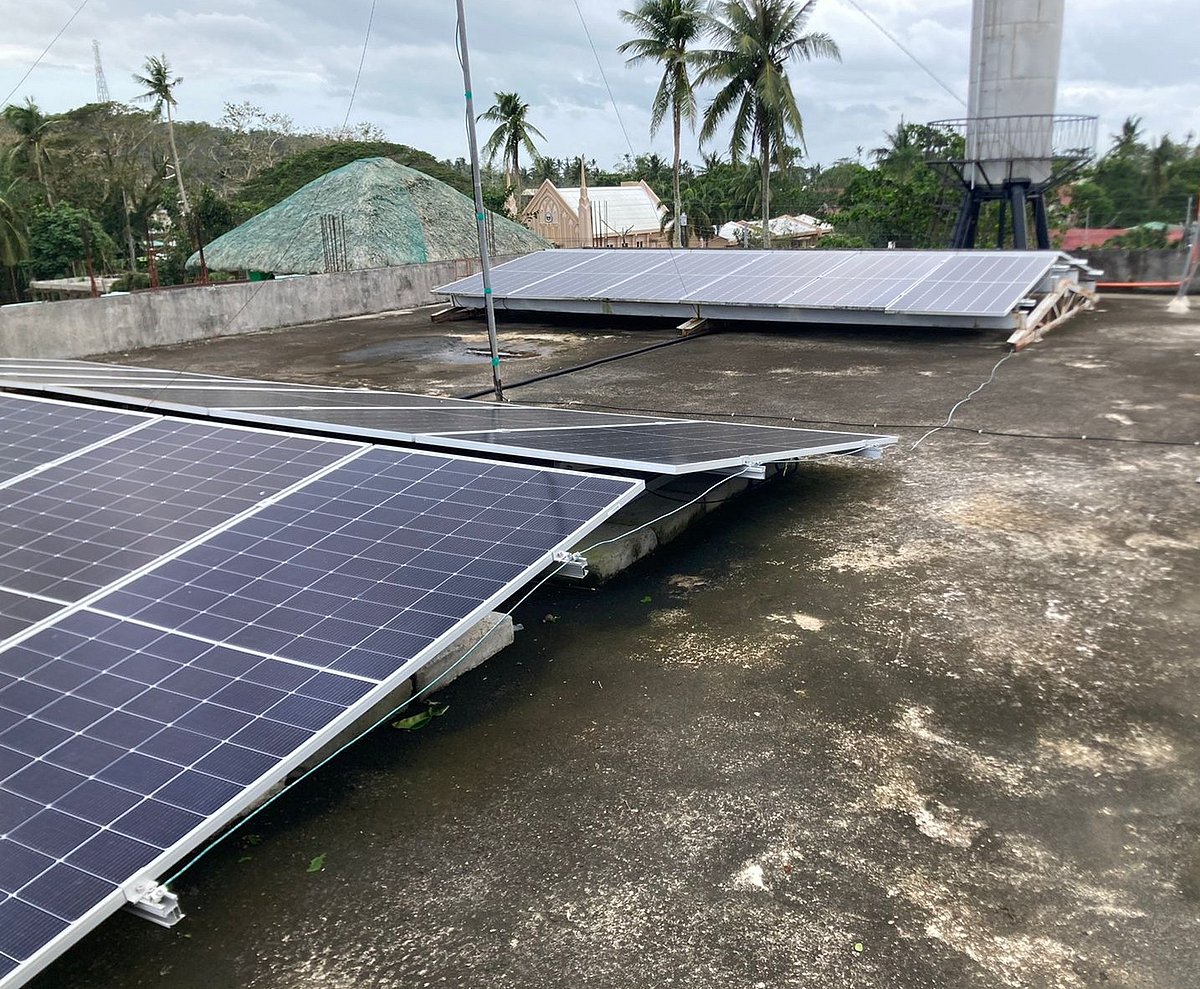
A rooftop solar installation in the Philippines. Under new rules set out by the Department of Energy (DoE) and the Energy Regulatory Commission (ERC), distribution utilities, including electric cooperatives, must process complete net-metering applications within 10 working days, down from approval periods that previously stretched for weeks or even months. If utilities fail to act within the prescribed period, the application may be "deemed approved".
Jay Hilotin | Gulf News
Manila: The Philippine government has rolled out sweeping reforms aimed at making rooftop solar installations faster, cheaper and easier for households.
The move forms part of the government's drive to ramp up renewable energy adoption and reduce electricity costs for consumers.
And there's no need to secure a Barangay (village) clearance for residents to install a rooftop solar system, Gulf News can confirm.
The changes centre on the country's amended net-metering rules published by the Philippine Energy Regulatory Commission (ERC), aimed to cut red tape for homeowners who install solar panels and want to export excess electricity back to the power grid.
There's a clincher: the new ERC rules set time-bound processing of applications.
That means Local Government Units (LGUs) are mandated to issue electrical permits within 3 working days (upon receipt of application) and Certificates of Final Electrical Inspection (CFEIs) within 7 working days upon complete submission.
That's a total of a 10-working day cap (two weeks) which the national government mandates local governments to observe when handling rooftop solar application permits.
Get updated faster and for FREE: Download the Gulf News app now - simply click here
The reforms form part of the government's broader push to boost renewable energy's share of the country's power mix while improving household energy security.
It is also aimed at addressing the chronic under-voltage (less than the 220-volt standard in the country) power distributed in many provincial areas served by under-capitalised electric cooperatives as well as frequent power outages that knockout home appliances.
WHAT IS NET METERING? In the Philippines, net metering lets you export excess solar energy to the grid in exchange for peso credits on your monthly electric bill. Managed under the Renewable Energy Act of 2008, the scheme is limited to renewable energy facilities up to 100 kW, such as residential rooftop solar.
What's new?
Under the revised framework introduced by the Department of Energy (DOE) and the Energy Regulatory Commission (ERC):
Distribution utilities must process complete net-metering applications within 10 working days, down from approval periods that previously stretched for weeks or even months.
If utilities fail to act within the prescribed period, the application may be deemed approved under the new rules.
Homeowners no longer need to have the revised net-metering agreement notarised
Electronic signatures are now accepted, eliminating another administrative hurdle.
Government agencies have streamlined permitting requirements through a joint circular intended to standardise approvals among local governments and utilities.
The reforms also introduce multi-site and aggregate net metering, allowing consumers with multiple properties under the same distribution utility to use excess electricity generated at one location to offset power bills at another.
Simpler rules
In addition, the DOE is studying an even simpler regulatory framework for households installing rooftop solar systems without exporting electricity to the grid, a move that could exempt many self-consuming homeowners from parts of the existing registration process.
Officials have said the proposal is intended to encourage more families to adopt rooftop solar even if they do not participate in net metering.
How consumers benefit
For homeowners, the policy changes could substantially improve the economics of investing in rooftop solar.
Consumers enrolled in the net-metering program can continue to use electricity generated by their own systems during the day while receiving bill credits for excess power exported to the local distribution utility.
Philippine government agencies have streamlined permitting requirements through a joint circular intended to standardize approvals among local governments and utilities.
Those credits are deducted from future electricity bills, helping shorten the payback period for solar investments.
The faster approval process also means new solar installations can begin generating savings much sooner. Previously, prolonged permitting and interconnection delays often discouraged homeowners despite declining solar equipment prices.
Industry analysts say the reforms are particularly attractive as Philippine electricity prices remain among the highest in Southeast Asia, making rooftop solar increasingly cost-effective for households with high daytime electricity consumption.
Broader energy strategy
The reforms support the government's long-term target of raising renewable energy's share of the country's installed power capacity to 50% by 2030.
Rooftop solar is viewed as a key component because it can be deployed quickly without requiring new transmission infrastructure while reducing pressure on the national grid during peak demand.
Officials say simplifying net-metering procedures is expected to encourage wider adoption among residential consumers, helping lower electricity bills while reducing dependence on imported fossil fuels.
Although upfront installation costs remain the biggest hurdle for many households, the government's latest reforms are widely seen as removing one of the sector's biggest non-financial barriers: bureaucracy.
With approvals now measured in days rather than months, rooftop solar is expected to become a more practical option for thousands of Filipino homeowners.
Do Filipino consumers need permit from Barangay officials to install solar power system at home?
No.
Not specifically from the Barangay.
Under the Philippines' latest streamlined rules for residential rooftop solar and "net metering", homeowners are generally not required to obtain a separate permit or approval from barangay officials simply because they are installing solar panels. Instead, permits are handled through the city or municipal government's Office of the Building Official (OBO) and the distribution utility if the system will export electricity to the grid.
However, there is an important distinction:
No separate barangay approval for solar: The 2026 Joint Memorandum Circular issued by the Departments of Energy, Interior and Local Government, and Public Works directs LGUs to streamline net-metering applications, prohibits imposing additional documentary requirements beyond those prescribed, and sets strict timelines for permit processing. The reforms are intended to reduce local bureaucratic hurdles.
LGU permits may still be required: Homeowners may still need an electrical permit and, depending on the nature of the installation, a building or structural permit from the Office of the Building Official. These are issued by the city or municipal government—not the barangay.
Net-metering requires utility approval: If the system will export excess electricity to the grid, the homeowner must apply for a net-metering interconnection agreement with the local distribution utility (such as Meralco or an electric cooperative). Zero-export or off-grid systems generally do not require this utility approval.
Why do some installers still ask for a barangay clearance?
This is where confusion arises.
Historically, some LGUs included a Barangay clearance as part of their local building permit checklist, and older DOE guidance even listed barangay clearances among documentary requirements in certain cities such as Makati and Pasig.
Those were local government requirements, not a national solar requirement.
The new 2026 reforms aim to standardise procedures nationwide and prevent LGUs from asking for unnecessary additional documents beyond those authorised under the joint circular.
For most Filipino homeowners today:
You do not normally need a separate permit from Barangay officials just because you are installing rooftop solar.
You may still need permits from your city or municipal Office of the Building Official, particularly electrical and structural permits.
If you plan to sell excess power to the grid through net metering, you'll also need approval from your distribution utility (or local electric cooperative).
Because building permit procedures can still vary slightly among LGUs, homeowners should confirm the exact documentary requirements with their city's Office of the Building Official or use a licensed solar installer familiar with local regulations.
Key changes: New rules
These are the key changes under Resolution No. 15, Series of 2025 issued by by the Energy Regulatory Commission (ERC) aimed to simplify renewable energy adoption.
The amended net-metering rules introduce several key provisions to benefit qualified end-users (QEs) and streamline processes:
Banking and Rollover of Credits: Consumers can now carry forward unused net-metering credits to offset electricity usage in subsequent billing periods.
Credit Transfers: In the event of a property ownership change, existing credits can be transferred to the new owner, provided specific conditions like a conforme letter from the original owner are met.
Voluntary REC Meters: Installing a Renewable Energy Certificate (REC) meter is now optional. If waived, the generated energy will be computed using a prescribed formula after submitting an affidavit.
Streamlined Permitting: A whole-of-government initiative sets time-bound processing rules. Local Government Units (LGUs) are mandated to issue electrical permits within 3 working days and Certificates of Final Electrical Inspection (CFEIs) within 7 working days upon complete submission.
Enhanced Transparency: Distribution Utilities (DUs) are required to publish application procedures, requirements, and quarterly hosting capacities on their
Sign up for the Daily Briefing
Get the latest news and updates straight to your inbox
Network Links
GN StoreAbout Gulf NewsTerms & ConditionsReach by GNSitemapContact usPrivacy PolicyGN FocusHave your sayWork with usAdvertise with usGulf News epaperPrinting Services
Download our app
© Al Nisr Publishing LLC 2026. All rights reserved.