Sibling senators: Senator Mark and Senator Camille Villar sitting as senator-judges during the impeachment trial of Vice President Sara Duterte. The chamber has 24 members, of which one (Senator Jinggoy Estrada) has been detained over plunder charges, and another (Senator Bato dela Rosa) is in hiding over crimes against humanity charges.
Philippines: Filipino tycoon Manny Villar's family offers land donation to break LRT-1 Cavite extension deadlock, reviving completion goal
ROW woes, flyover dilemma linger despite Villar family’s land donation plan
Last updated:
4 MIN READ
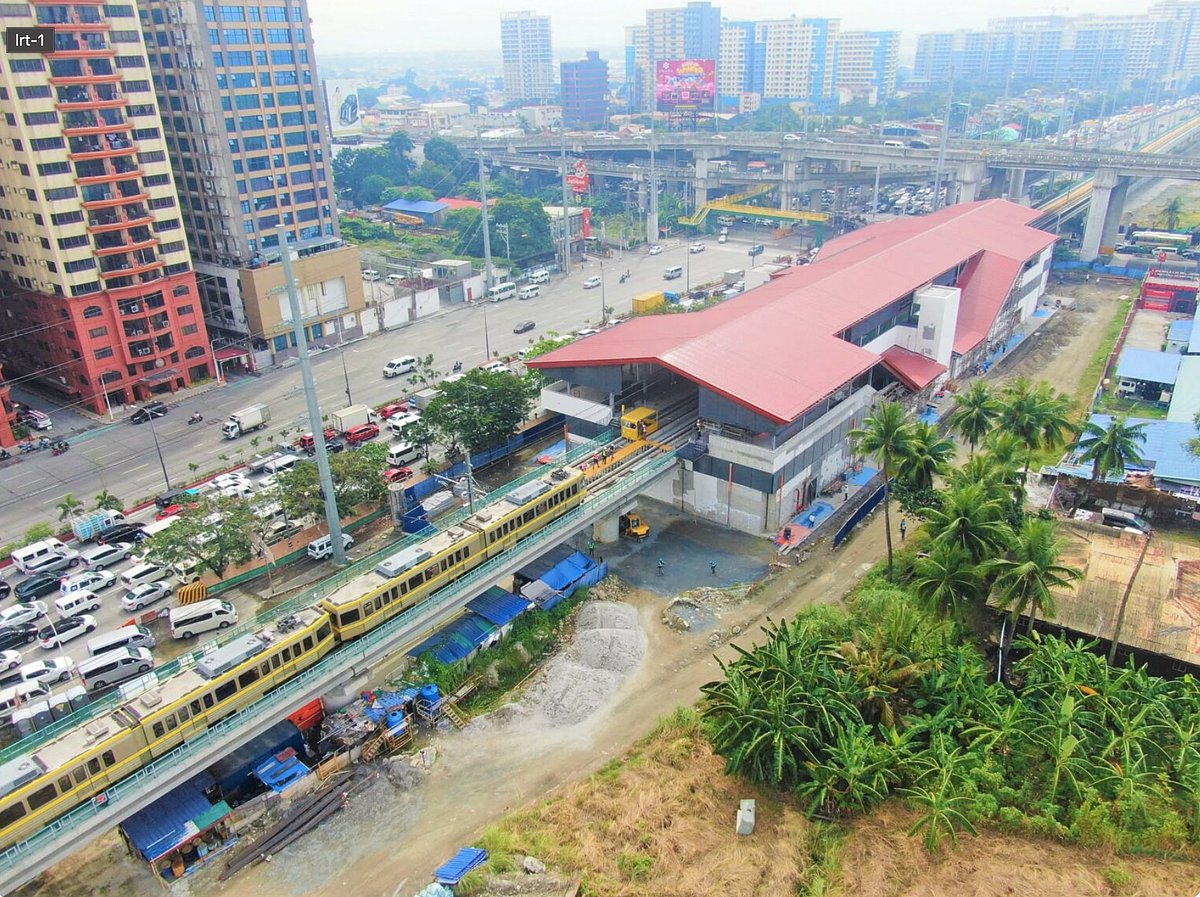
Photo shows ongoing construction of the LRT-1 Cavite Extension project, which will connect Baclaran in Manila to Bacoor in Cavite. The photo was taken on December 19, 2023 and released on December 20, 2023.
(Courtesy: LRT-1 Light Rail Manila Corporation)
Manila: The family of billionaire businessman Manny Villar Jr. is willing to donate land needed for the Light Rail Transit Line 1 (LRT-1) Cavite Extension, Transportation Secretary Giovanni "Banoy" Lopez said, potentially removing one of the biggest obstacles that has delayed the multibillion-peso rail project for years.
He also dismissed reports that right-of-way (ROW) acquisition remains a key obstacle preventing the southern extension from reaching Cavite.
“As a matter of fact, the Villar family wants to donate their land,” Lopez told local radio DZRH’s "Dos for Dos" on July 22.
If finalised, the donation could unlock construction of the remaining section of the ₱64.9-billion extension, which the government now aims to complete before President Ferdinand Marcos Jr.'s term ends in 2028.
Whether the Villars' goodwill gesture leads to signed agreements and the long-awaited turnover of key properties could determine whether one of the Philippines' most critical railway projects finally extends into Cavite after decades of delays.
Lopez's remarks came as the Office of the Ombudsman reportedly investigates allegations that Senators Mark Villar and Camille Villar sought to influence the alignment of the extension project.
Both senators have denied the accusations and said they welcome any investigation.
The transportation secretary's statement also follows President Marcos' directive last month ordering the Department of Transportation (DoTC) to immediately resolve the project's lingering right-of-way issues so construction can proceed to Cavite.
Project delayed for years
The Cavite Extension has become one of the country's longest-running rail infrastructure projects, with repeated delays caused by right-of-way acquisition problems, utility relocation, pandemic disruptions and coordination among government agencies.
The Manila Light Rail Transit Line 1 (LRT-1), first opened in 1984, is the first and oldest rapid transit line in Southeast Asia, connecting the cities of Quezon City, Caloocan, Manila, Pasay, and Parañaque. Spanning roughly 26 km of fully elevated route, it operates on a crucial north-to-south axis to help commuters avoid Metro Manila's heavy road traffic.
The Cavite extension was conceived to expand Metro Manila's oldest light rail system beyond Baclaran into southern Metro Manila and Cavite, serving one of the country's fastest-growing commuter corridors.
Construction formally began in 2019 under a public-private partnership with Light Rail Manila Corp. (LRMC), although preparations and planning stretched back more than a decade.
The first operational segment, known as Phase 1, opened in November 2024.
It extended the railway from Baclaran to Dr. Santos Station in Parañaque through five new stations:
Redemptorist-Aseana
MIA Road
PITX
Ninoy Aquino Avenue
Dr. Santos
That section added approximately 6 km to the line and immediately reduced travel times for commuters from southern Metro Manila.
The remaining portion — Phases 2 and 3 — covers about 5.8 kilometers into Cavite, including three stations:
Las Piñas
Zapote
Niog
These stations remain unfinished because of unresolved ROW constraints.
The LRT-1 Cavite Extension, a flagship project originally conceptualised around the year 2000, aims to add eight stations from Baclaran in Metro Manila to Bacoor, Cavite. Construction has been nearly complete in some sections. However, progress at the planned Las Piñas station has been blocked for roughly six years by the ₱300-million Quirino flyover (also referred to as the C-5 Quirino Highway Flyover completed in 2024) along the originally planned rail alignment
Why the project has been delayed
Transportation officials have repeatedly identified land acquisition as the primary reason the Cavite leg has fallen behind schedule.
The delays stem from several overlapping issues:
Right-of-way acquisition (under the old ROW law) involving privately-owned properties along the alignment.
Utility relocation, including power lines, water facilities and telecommunications infrastructure.
COVID-19 pandemic disruptions, which slowed construction between 2020 and 2022.
Engineering adjustments and coordination with local governments.
Legal and administrative disputes over properties required for elevated guideways and stations.
In recent months, controversy has also emerged over proposals to modify portions of the alignment, prompting criticism from lawmakers who warned that changing the route after substantial government spending would further delay completion.
Flyover proposal still under study
Lopez addressed proposals to demolish the C-5 Quirino flyover to accelerate construction. He said no decision has been made because a comprehensive traffic impact study must first determine whether removing the flyover would worsen congestion.
The transportation chief suggested another option: allowing the elevated railway and flyover to coexist, potentially avoiding costly demolition work.
Lawmakers warn against changing the alignment
Las Piñas Rep. Mark Anthony Santos recently cautioned that altering the original alignment could significantly increase costs already borne by taxpayers.
He said government records show more than ₱926 million has already been paid for ROW settlements covering the Las Piñas and Zapote station areas.
According to Santos, delays have already generated more than ₱4 billion in additional costs.
Why the extension matters
LRT-1 is Metro Manila's oldest urban rail line, opening in 1984 as Southeast Asia's first modern light rail system.
Today it stretches from Fernando Poe Jr. Station in Quezon City to Dr. Santos Station in Parañaque.
Once the Cavite Extension reaches Niog, the line will span roughly 33 km with 28 stations, becoming one of the capital region's longest rail corridors.
The completed extension is expected to:
Cut travel time between Baclaran and Niog from around one hour and 10 minutes by road to roughly 25–30 minutes by rail.
Increase daily ridership to more than 800,000 passengers over time.
Ease chronic traffic congestion along Aguinaldo Highway and other major roads linking Cavite to Metro Manila.
Improve access to commercial centers, the Parañaque Integrated Terminal Exchange (PITX), and residential communities in southern Metro Manila and Cavite.
Timeline: LRT-1 Cavite Extension
1990s–2000s: Initial proposals to extend LRT-1 into Cavite.
2015: Government awards the concession to Light Rail Manila Corp.
2019: Civil works begin.
2020–2022: Pandemic and right-of-way issues slow construction.
November 2024: Phase 1 opens from Baclaran to Dr. Santos Station.
2025–2026: Remaining Cavite section delayed by unresolved right-of-way concerns and alignment issues.
June 2026: President Marcos orders the DOTr to resolve remaining right-of-way problems.
July 2026: Transportation Secretary Lopez says the Villar family is willing to donate land needed for the extension.
Target: 2028: Manila government aims to complete the entire Cavite Extension before the end of the Marcos administration.
Sign up for the Daily Briefing
Get the latest news and updates straight to your inbox
Network Links
GN StoreAbout Gulf NewsTerms & ConditionsReach by GNSitemapContact usPrivacy PolicyGN FocusHave your sayWork with usAdvertise with usGulf News epaperPrinting Services
Download our app
© Al Nisr Publishing LLC 2026. All rights reserved.