MRT-4: Everything you need to know about Manila's next rail line
How the new Ortigas–Taytay metro line aims to cut commutes to under 30 minutes
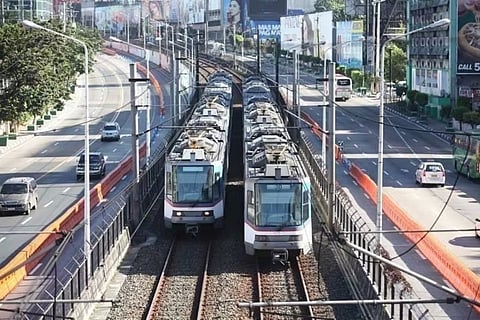
Manila: The long-awaited Metro Rail Transit Line 4 (MRT-4) is set to provide a direct rail connection between Rizal province and EDSA-Ortigas, running along Ortigas Avenue Extension to ease traffic congestion on one of Metro Manila's busiest transport corridors.
The 13.4-km elevated railway will connect Taytay, Rizal to Ortigas Avenue in Quezon City, serving thousands of daily commuters from Taytay, Cainta, Pasig and nearby areas.
Designed with 10 stations, MRT-4 is expected to significantly reduce travel times, improve access to Metro Manila's central business districts, and integrate with existing rail networks, including MRT-3 at EDSA-Ortigas.
MRT-4 is one of the Philippines' biggest planned railway projects, designed to provide a fast, high-capacity rail connection between eastern Metro Manila and the rapidly-growing province of Rizal.
Once completed, the line is expected to dramatically cut travel times along the heavily congested Ortigas Avenue corridor, one of the country's busiest roads.
Originally conceived as the Philippines' first monorail, MRT-4 has since been redesigned as a full metro rail system.
The goal: accommodate higher passenger demand and future expansion.
The project is being developed by the Department of Transportation (DOTr) with financing support from the Asian Development Bank (ADB).
Project at a glance
Length: Approximately 13.4 kilometers
Type: Fully elevated metro rail
Stations: 10
Route: Ortigas Avenue (EDSA) to Taytay, Rizal
Expected daily ridership: More than 400,000 passengers
Estimated end-to-end travel time: Less than 30 minutes, compared with one to three hours by road during rush hour
Funding: Asian Development Bank (ADB) loan and Philippine government counterpart funding.
MRT-4 ROLLOUT: The project is expected to decongest traffic along Ortigas Avenue, encourage greater use of public transportation, and support economic growth in eastern Metro Manila and neighbouring Rizal province as the government continues expanding the country's urban mass transit system.
Why MRT-4 is needed
Every day, tens of thousands of commuters travel between Pasig, Cainta and Taytay using buses, jeepneys, UV Express vans and private vehicles along Ortigas Avenue.
The switch from monorail to metro rail allows larger trains, higher passenger capacity, easier maintenance, better interoperability with future railway expansion, officials said.
Traffic congestion has become one of Metro Manila's worst bottlenecks, particularly around:
Ortigas Center
Tiendesitas
Rosario
Cainta Junction
Taytay
MRT-4 is intended to shift a significant number of commuters from road-based transport to rail, reducing congestion, travel time, fuel consumption and air pollution.
According to ADB, the railway is expected to improve accessibility to jobs, schools and commercial centers while supporting more sustainable urban development.
The route
The line begins at the EDSA-Ortigas interchange in Mandaluyong/Pasig, where passengers will be able to connect with MRT-3.
From there, it follows Ortigas Avenue eastward through Pasig before entering Cainta and terminating in Taytay, Rizal.
Unlike earlier proposals, the current alignment no longer extends west toward San Juan and Quezon City. That section was dropped after the project was redesigned.
Planned stations
The current MRT-4 alignment includes 10 stations:
1. EDSA
2. Meralco
3. Tiendesitas
4. Rosario
5. Brookside
6. Cainta
7. Monteverde
8. Tikling
9. Manila East Road
10. Taytay
DoTr plans the western terminus at EDSA Station to provide a direct interchange with MRT Line 3, allowing passengers from Rizal to continue toward Makati, Bonifacio Global City (via future links), and Quezon City.
Design
MRT-4 will be:
Fully elevated
Barrier-free and accessible
Equipped with elevators and escalators
Designed for future capacity expansion
Built using metro rail technology rather than monorail technology.
Latest updates
The project remains in the pre-construction stage.
According to the ADB, MRT-4 is now an active project under preparation. The railway's detailed engineering design has been completed, and negotiations between the Philippine government and ADB on the project's financing continue.
DOTr officials have also acknowledged that the project's estimated cost has increased after the decision to upgrade it from a monorail to a full metro rail system.
Updated financing arrangements are being finalised with the ADB before construction can proceed.
Current project targets indicate:
loan approval and financial close after funding negotiations;
start of civil works once financing is finalized;
full construction over several years before passenger operations begin.
Capacity
Once operational, MRT-4 is expected to carry over 400,000 passengers daily, making it one of the busiest rail corridors outside EDSA.
The line is expected to substantially reduce traffic along Ortigas Avenue while encouraging commuters to shift from private cars and buses to rail transport.
Integration with Metro Manila's rail network
MRT-4 will become an important east-west connection within the expanding rail network.
Passengers will be able to connect with:
MRT-3 at EDSA-Ortigas;
The future Metro Manila Subway and North-South Commuter Railway through subsequent transfers elsewhere in the network;
Existing bus, jeepney and UV Express routes serving eastern Metro Manila and Rizal.
Together with the Manila Subway, MRT-7, the North-South Commuter Railway and future LRT extensions, MRT-4 forms part of the government's long-term strategy to create an integrated metropolitan railway system.
Why commuters are watching it closely
For residents of Pasig, Cainta and Taytay, MRT-4 promises one of the biggest improvements in daily commuting in decades.
A trip that can currently take up to three hours during peak traffic could be reduced to well under 30 minutes by rail.
As eastern Metro Manila and Rizal continue to grow, MRT-4 is expected to become a critical transport corridor.
It is expected to support economic activity, curb congestion on Ortigas Avenue and provide hundreds of thousands of commuters with a faster, safer and more reliable alternative to road travel, according to the Presidential Communications Office (PCO).


