Pakistan hosts key regional summit, urges Afghan action on terrorism
ECO ministers gather in Islamabad to discuss regional trade, connectivity
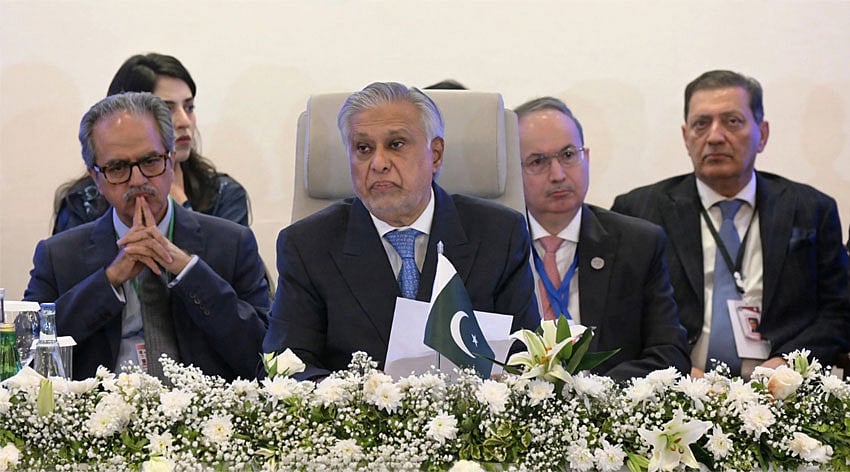
Dubai: Pakistan on Monday called for stronger regional cooperation, improved trade links and greater economic integration as foreign ministers and senior officials from across the region gathered in Islamabad for a major conference aimed at unlocking the economic potential of Central and South Asia.
Addressing the 30th Council of Ministers meeting of the Economic Cooperation Organisation (ECO), Deputy Prime Minister and Foreign Minister Ishaq Dar outlined an ambitious agenda for regional development while warning that terrorism, unresolved disputes and insecurity continued to undermine economic progress.
Dar also urged Afghanistan to address the legitimate security concerns of neighbouring countries, particularly the threat of terrorism, saying lasting regional prosperity depended on peace, stability and mutual trust.
ECO Vision 2035
The high-level conference, attended by Iranian Foreign Minister Abbas Araghchi and delegations from ECO member states, is focused on expanding regional trade, improving transport connectivity and developing a long-term framework for economic cooperation.
A major item on the agenda is ECO Vision 2035, a 10-year strategy designed to strengthen regional connectivity, economic integration and sustainable development.
Pakistan, which is taking over the ECO chairmanship for 2026-27, is seeking to give fresh momentum to the organisation under the theme Reviving Regionalism for a Resilient ECO.
Afghanistan’s role in regional stability
Speaking at the conference, Dar said Pakistan wanted Afghanistan to become a peaceful and economically integrated member of the regional community.
“Pakistan desires a peaceful, prosperous, and stable Afghanistan, fully integrated within the ECO framework and at peace with itself and its all neighbors,” he said.
He added that such an outcome would benefit not only Afghanistan but the entire region by creating opportunities for trade, transit and economic cooperation.
However, Dar stressed that meaningful progress required the Afghan authorities to address security concerns, particularly terrorism, Radio Pakistan reported.
He said regional connectivity depended on more than physical infrastructure and required trust between countries and respect for international commitments.
“Regional connectivity rests on more than the routes that link us. It depends upon trust between states and confidence that international commitments will be honored,” he said.
Five priorities
Dar presented five key priorities that Pakistan intends to pursue during its ECO chairmanship.
These include expanding trade and investment, strengthening regional connectivity, advancing the ECO Trade Agreement, improving regional resilience and promoting human development.
He said the ECO region possessed enormous economic potential because of its natural resources, energy reserves, agricultural capacity and strategic geographical position.
However, he emphasised that translating this potential into economic growth required efficient transport networks, simplified customs procedures and reliable cross-border trade arrangements.
Pakistan would particularly focus on improving connections between Central Asia, South Asia and Pakistani ports on the Arabian Sea, opening new opportunities for regional and international commerce.
Dar also called for greater involvement of businesses, particularly small and medium-sized enterprises, in regional trade and investment.
“Closer interaction among our business communities can help translate commercial potential into greater trade and investment,” he said.
Roadmap
The Islamabad conference brings together representatives of the ECO’s 10 member countries: Pakistan, Afghanistan, Azerbaijan, Iran, Kazakhstan, Kyrgyzstan, Tajikistan, Turkiye, Turkmenistan and Uzbekistan.
The proposed ECO Vision 2035 is expected to provide a roadmap for expanding economic cooperation, improving connectivity and addressing shared development challenges over the next decade.
Dar said Pakistan would also support efforts to modernise the ECO Trade Agreement and establish a more inclusive and digitally enabled regional trade framework.
Climate change, water security, disaster preparedness and sustainable infrastructure were also identified as important areas for cooperation.
He emphasised that investment in education, vocational training, research and innovation would help prepare the region’s young population for emerging economic opportunities.
Diplomatic engagements
The conference has also provided an opportunity for diplomatic engagement among participating countries and regional organisations.
Iranian Foreign Minister Abbas Araghchi arrived in Islamabad for the meeting and was received by senior Pakistani Foreign Office officials.
Delegations from Turkiye, Azerbaijan and Kazakhstan also participated, alongside representatives of the Organisation of Islamic Cooperation (OIC) and Shanghai Cooperation Organisation (SCO).
Dar hosted a welcome dinner for visiting foreign ministers and heads of delegations on Sunday, highlighting the importance of closer regional partnerships.
On the sidelines, he met ECO Secretary General Dr Asad Majeed Khan and reaffirmed Pakistan’s commitment to strengthening trade, connectivity and economic integration.
Pakistan also reiterated its commitment to hosting the ECO Summit in 2027.
In a separate meeting with the OIC secretary general, Dar discussed regional developments and opportunities for closer cooperation.
The OIC chief appreciated Pakistan’s diplomatic efforts during the Iran-US conflict to promote peace and stability.
Stronger regional partnerships
Ahead of Monday’s ministerial session, senior ECO officials met on November 15 to finalise the conference agenda and draft Islamabad Communiqué.
The preparatory meeting, chaired by Pakistan’s Foreign Secretary Asim Iftikhar Ahmad, reviewed the organisation’s ongoing programmes, financial matters and proposals for improving institutional effectiveness.
The Islamabad conference comes at a time when regional countries are seeking to diversify trade routes, improve access to international markets and strengthen economic partnerships.
For Pakistan, the gathering provides an opportunity to position itself as a trade and transit gateway connecting landlocked Central Asian economies with the Arabian Sea.
Dar said closer cooperation among ECO members could help transform the region’s considerable economic potential into tangible benefits for its people.
Network Links
GN StoreDownload our app
© Al Nisr Publishing LLC 2026. All rights reserved.