Islamabad set for crucial three-nation defence summit
Pakistan, Saudi Arabia and Turkiye to meet this month to advance landmark defence pact.
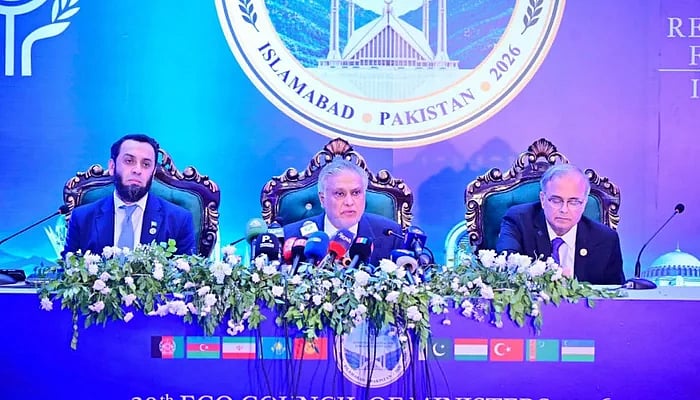
Dubai: Pakistan will host a high-level security meeting with Saudi Arabia and Turkiye later this month to advance a landmark trilateral defence agreement aimed at strengthening collective security and responding to military threats across the region.
Deputy Prime Minister and Foreign Minister Ishaq Dar announced on Monday that the apex committee overseeing the Makkah Defence Agreement was expected to meet in Islamabad by the end of November.
The meeting comes amid heightened tensions in the Middle East, where continuing hostilities involving Iran, attacks on Saudi Arabia and threats to vital shipping routes have raised concerns about regional stability.
Speaking at a press briefing following a ministerial meeting of the Economic Cooperation Organisation (ECO) in Islamabad, Dar said preparations were underway to establish a joint security framework and an implementation mechanism for the agreement.
“The apex committee of this body... will be actually meeting, hopefully, end of this month in Islamabad,” he said.
Attack on one considered attack on all
The agreement, signed in Makkah on August 7, commits Pakistan, Saudi Arabia and Turkiye to mutual assistance if any member faces an armed attack or military aggression. Dar explained that its central principle was that an attack against one signatory would be treated as an attack against all three.
He stressed, however, that the arrangement was defensive and should not be interpreted as an attempt to confront or threaten other countries.
The agreement is based on Article 51 of the United Nations Charter, which recognises the right of countries to individual and collective self-defence.
Dar said regional countries needed to develop their own security architecture to address emerging challenges and maintain peace and stability.
Military coordination
The proposed framework would strengthen military coordination, intelligence sharing and cooperation in responding to external threats.
According to Dar, work has already begun on establishing the institutional structure required to implement the agreement.
The first meeting under the framework was held in Istanbul on August 31, while the upcoming Islamabad meeting is expected to advance discussions on operational arrangements.
A working committee comprising Foreign Ministry officials, three secretaries and a military representative will oversee implementation and coordination among the participating countries.
The agreement also envisages cooperation in defence production, military training, logistics, counterterrorism, intelligence sharing and advanced defence technologies.
Under its provisions, the three countries would assess the nature of any threat and determine the assistance required, with each contributing according to its available resources and military capabilities.
10-year commitment
The pact includes a minimum 10-year commitment, during which members cannot withdraw. After that period, any country seeking to leave must provide three months’ written notice.
It also contains provisions protecting classified information and requiring unanimous approval for amendments.
Regional tensions add urgency
The planned Islamabad meeting follows an emergency gathering in Riyadh earlier this month, where the three countries agreed on measures to facilitate the rapid deployment of military forces and capabilities in Saudi Arabia amid attacks by Yemen’s Houthi rebels.
Turkiye has offered military technology support to Riyadh and agreed to participate in a Saudi-led coalition to protect navigation in the Red Sea. Its formal approval of the defence agreement remains subject to parliamentary ratification, Geo News reported.
The broader security environment remains volatile as fighting involving Iran continues to affect countries across the Middle East.
Restrictions on maritime traffic through the Strait of Hormuz, a crucial route for global energy supplies, have further increased concerns about regional security.
For Pakistan, the Islamabad summit represents an important step towards translating the Makkah agreement into practical defence cooperation, while strengthening its security partnerships with Saudi Arabia and Turkiye. The meeting is also expected to clarify how the three countries intend to coordinate their responses to future threats while maintaining the agreement’s stated defensive character.
Network Links
GN StoreDownload our app
© Al Nisr Publishing LLC 2026. All rights reserved.