According to reports, Khairnar allegedly bought the leaked paper from a Pune-based suspect for Rs10 lakh and later sold it in Haryana for Rs15 lakh, pocketing a Rs5 lakh profit.
Inside the NEET leak: Nashik student, WhatsApp trails, 45-hour head start
CBI widens probe to 10 states, including Kerala, in NEET leak case after student's arrest
Last updated:
4 MIN READ
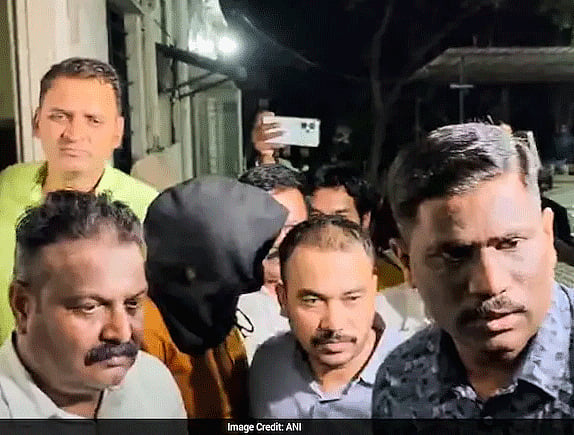
A major breakthrough in the investigation came after the detention of Shubham Khairnar, a 30-year-old Bachelor of Ayurvedic Medicine and Surgery (BAMS) student from Nashik.
ANI
Dubai: A leaked “model paper”, encrypted WhatsApp trails and a 45-hour head start have pushed India’s biggest medical entrance exam into crisis, with investigators tracing the NEET-UG 2026 leak from a Nashik printing press to coaching hubs and student networks across multiple states.
The National Testing Agency (NTA) on Tuesday cancelled the examination for over 22 lakh students after the alleged paper leak triggered arrests in Rajasthan, Maharashtra and Haryana and prompted a widening CBI investigation spanning at least 10 states
Authorities believe the leaked paper was circulated nearly 45 hours before the examination through encrypted messaging platforms and disguised as a “model question paper” to avoid suspicion, Indian media reports said.
The controversy has reignited questions over the credibility of India’s competitive examination system and intensified calls for dismantling the NTA.
Origin: Nashik printing press
According to investigators, the original NEET paper may have been leaked directly from the Nashik printing facility where this year’s exam papers were printed — a significant shift from earlier paper leak cases that typically occurred during transportation or distribution.
The leak first surfaced after a student from Rajasthan’s Sikar, studying in Kerala, reportedly sent a PDF of a “guess paper” to his father, who operates a PG accommodation facility in Sikar, a major coaching hub.
After the exam, teachers allegedly discovered that 90 Biology questions and nearly all Chemistry questions in the “guess paper” matched the actual NEET paper.
Highlights
NEET-UG 2026 cancelled for over 22 lakh students
Leak allegedly originated from Nashik printing press
Paper circulated nearly 45 hours before exam
CBI expands probe to 10 states
15 arrested in Rajasthan, including alleged masterminds
Telegram and WhatsApp used to circulate papers
“Model paper” reportedly matched actual exam questions
Supreme Court petition seeks overhaul of NTA
The matter was escalated to the NTA and later to intelligence agencies, eventually leading Rajasthan’s Special Operations Group (SOG) to uncover what officials describe as a sophisticated interstate racket.
Investigators claim the leaked paper was modified into a “model paper” format before being circulated in states including Rajasthan, Haryana, Kerala, Telangana, Andhra Pradesh and Bihar through Telegram and WhatsApp groups.
The papers were reportedly sold for amounts ranging from Rs25,000 to Rs2 lakh.
Who is Shubham Khairnar?
A major breakthrough in the investigation came after the detention of Shubham Khairnar, a 30-year-old Bachelor of Ayurvedic Medicine and Surgery (BAMS) student from Nashik.
According to reports, Khairnar allegedly bought the leaked paper from a Pune-based suspect for Rs10 lakh and later sold it in Haryana for Rs15 lakh, pocketing a Rs5 lakh profit.
CBI officials detained him on Tuesday while he was reportedly travelling to a temple for prayers.
Investigators alleged that Khairnar had altered his appearance by cutting his hair in an attempt to evade arrest. However, authorities reportedly tracked him using technical surveillance and older photographs.
His father, Madhukar Khairnar, denied the allegations, calling them baseless, while also demanding a fair investigation.
Rajasthan emerges as key hub
Rajasthan has emerged as the central node in the investigation.
The SOG has so far arrested 15 people, including alleged masterminds Manish Yadav and Rakesh Mandwaria, who is suspected to have links with a consultancy centre in Sikar.
Officials claim select coaching institutes in Sikar instructed students to prepare using the leaked “guess papers”, while some aspirants reportedly received physical copies instead of PDFs.
Investigators are also probing the involvement of medical students and intermediaries who allegedly helped circulate the paper across multiple states.
Kerala angle deepens
The probe has now expanded to Kerala after Rajasthan Police shared details of nearly 200 students suspected of accessing the leaked paper.
The CBI is investigating possible links in two Kerala districts and examining the role of a Rajasthan-based medical student studying in the state, who is suspected of helping distribute the material among aspirants.
Officials believe Kerala may have been one of several states where the modified “model papers” were quietly circulated before the exam.
Supreme Court plea seeks overhaul of NTA
The scandal has now reached the Supreme Court, where a petition has sought suo motu intervention into repeated NEET paper leaks and alleged systemic failures within the NTA.
The plea urged the court to order a CBI or SIT-monitored investigation and replace the NTA with an independent national examination authority with stronger technological safeguards and statutory accountability.
The petition argued that repeated leaks, impersonation rackets and cybersecurity failures had “destroyed public confidence” in India’s examination system.
The NTA, meanwhile, said the May 3 examination “could not be allowed to stand” after investigative agencies flagged serious concerns over the integrity of the process.
Fresh dates for the re-conducted NEET-UG 2026 examination are expected to be announced later.
-- with IANS inputs

A Senior Associate Editor with more than 30 years in the media, Stephen N.R. curates, edits and publishes impactful stories for Gulf News — both in print and online — focusing on Middle East politics, student issues and explainers on global topics. Stephen has spent most of his career in journalism, working behind the scenes — shaping headlines, editing copy and putting together newspaper pages with precision. For the past many years, he has brought that same dedication to the Gulf News digital team, where he curates stories, crafts explainers and helps keep both the web and print editions sharp and engaging.
Sign up for the Daily Briefing
Get the latest news and updates straight to your inbox
Network Links
GN StoreAbout Gulf NewsTerms & ConditionsReach by GNSitemapContact usPrivacy PolicyGN FocusHave your sayWork with usAdvertise with usGulf News epaperPrinting Services
Download our app
© Al Nisr Publishing LLC 2026. All rights reserved.