A view of five precast-prestressed heavy portal beams (girders) over the Amdavad–Vadodara railway line in Maninagar for the Mumbai-Ahmedabad Bullet Train project, on Tuesday, May 05, 2026.
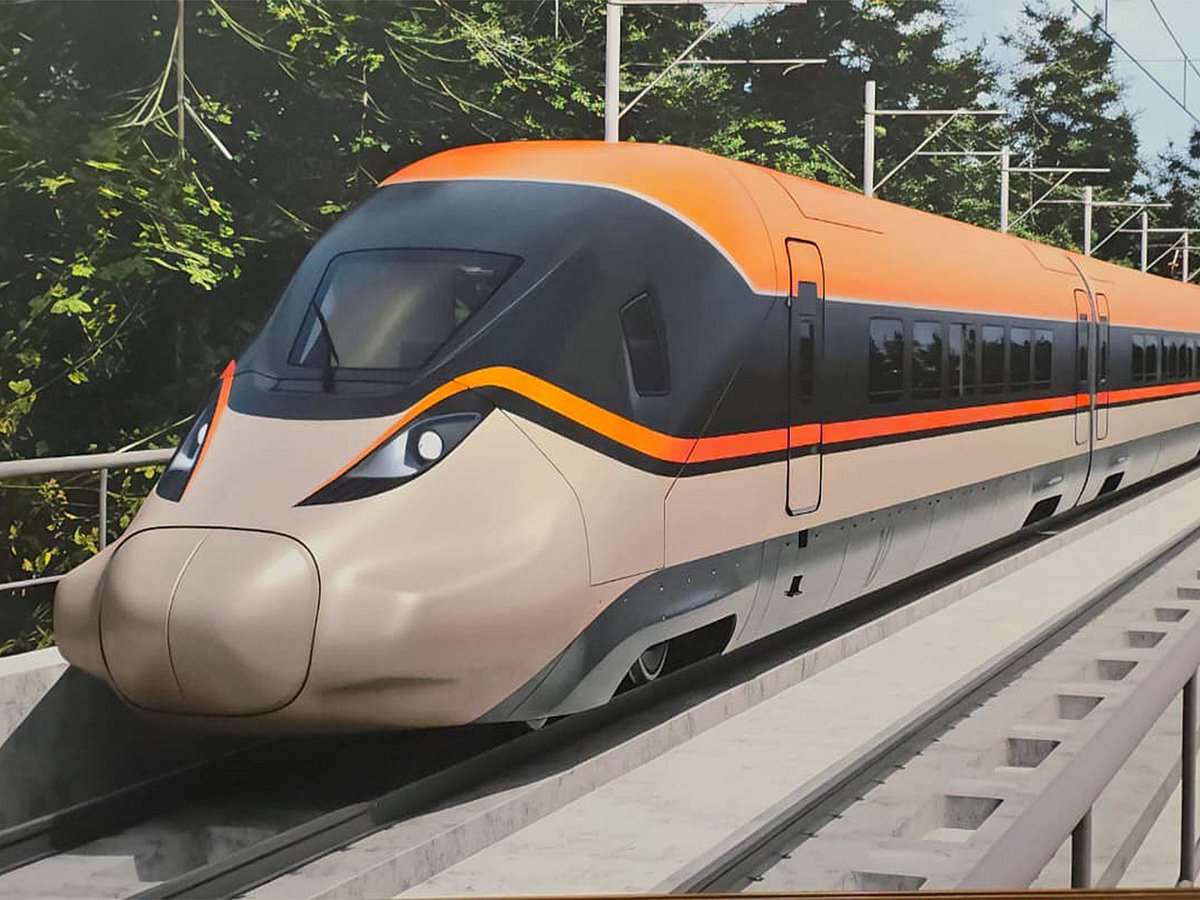
Dubai: India has unveiled the first visual design of its much-awaited Mumbai-Ahmedabad bullet train project, offering an early glimpse of the country’s first high-speed rail service ahead of its planned launch in 2027.
The image of the aerodynamic train was installed at Gate No. 4 of the Railway Ministry building in New Delhi, drawing attention to one of India’s biggest infrastructure projects currently under development.
The 508-kilometre Mumbai-Ahmedabad High-Speed Rail corridor is being developed by the National High Speed Rail Corporation Limited (NHSRCL) using Japan’s renowned Shinkansen technology, known for its speed, safety and reliability.
Once operational, the bullet train is expected to reduce travel time between Ahmedabad and Mumbai to under two hours. Officials said the first operational stretch between Ahmedabad and Vapi is targeted to open by August 2027.
Union Railway Minister Ashwini Vaishnaw had earlier said the initial phase would cover around 100 kilometres, while the full Ahmedabad-Mumbai corridor is expected to become operational by 2029.
The unveiling comes shortly after NHSRCL announced progress on tunnel construction in Mumbai, where the first Tunnel Boring Machine cutterhead was lowered at Vikhroli for underground work linked to the corridor.
A general view of the Mumbai-Ahmedabad bullet train project construction site in July 2025, showing the breakthrough achieved in a 2.7km section of the 21km undersea tunnel between Ghansoli and Shilphata in Maharashtra.
Authorities say the project will transform rail travel in western India by boosting connectivity, tourism and business travel, while strengthening India’s technology partnership with Japan.
With inputs from Agencies
Network Links
GN StoreAbout Gulf NewsTerms & ConditionsReach by GNSitemapContact usPrivacy PolicyGN FocusHave your sayWork with usAdvertise with usGulf News epaperPrinting Services
Download our app
© Al Nisr Publishing LLC 2026. All rights reserved.