'We're on the brink of a World War that ends with the use of nuclear weapons': Tucker Carlson says Trump agreed with his warning over Gulf, Israel and Iran
Trump's ex-ally argues Iran war aids Israel’s edge while eroding US influence in Gulf
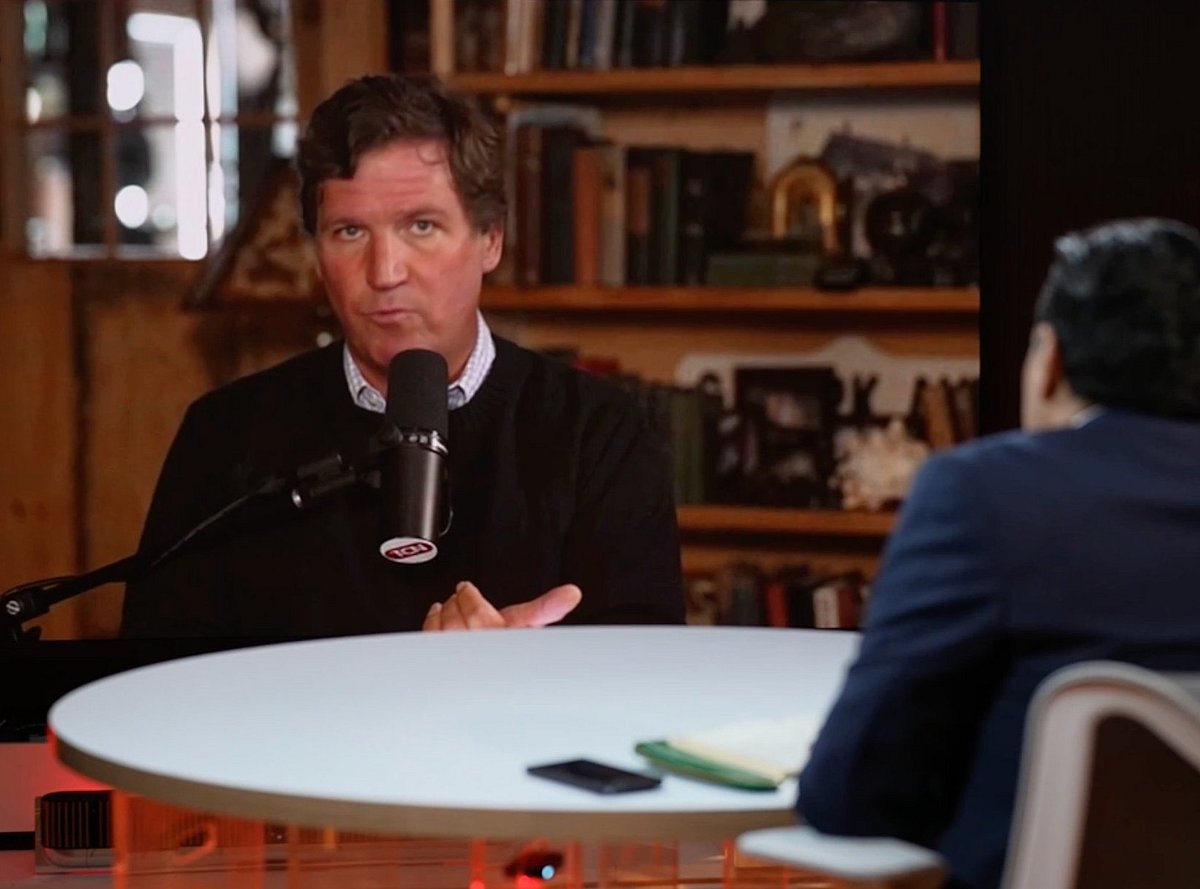
Conservative US commentator Tucker Carlson has offered a bleak assessment of the US-Iran war, warning that an unresolved conflict could spiral into a broader regional confrontation — potentially involving nuclear weapons.
Carlson, 57, said he had privately warned President Donald Trump that a prolonged war with Iran could destabilise Gulf Arab states, strengthen Israel’s regional position and ultimately erode US influence in the Middle East.
He claimed Trump agreed with that assessment.
The White House has not publicly confirmed the account.
Get it: Fast, verified news for FREE ... download the Gulf News app — simply click here
The claim highlights how dramatically Carlson’s relationship with Trump has changed.
The former Fox News anchor is known for popularising populist, far-right, and nationalist perspectives in mainstream American media.
In an interview with Going Underground and recorded in the Gulf, Carlson said he raised the argument directly with Trump in the Oval Office around Feb. 20, 2026, about a week before the US-Israeli military campaign against Iran began.
Carlson said he had just returned from the Gulf Cooperation Council (GCC) states and told Trump that the conflict could have consequences beyond Iran.
“I said that to Trump and he agreed. So yes, he knew exactly,” Carlson said.
In special episode of Going Underground, Carlson examined the forces reshaping global power: the Iran war, the Ukraine conflict, the rise of China, the growing influence of BRICS and the question hanging over American foreign policy — can the United States still impose its will abroad?
Carlson discussed whether US military pressure on Iran can achieve Washington’s objectives or instead deepen regional instability, disrupt oil flows and draw Gulf states into a conflict they cannot control.
The debate comes as the Strait of Hormuz remains a focal point of market anxiety, with attacks on shipping and threats to alternative oil routes keeping global crude prices above $107/barrel as of 12.27 pm on Monday (Sept. 14).
Carlson also said Trump personally likes the leaders of Saudi Arabia, the United Arab Emirates and Qatar, making the president's decision to enter the conflict difficult for him to understand.
“He likes them personally. That's real,” Carlson said, describing Trump as a supporter of the Gulf states and their leaders.
He added that he had been “tormented” by the question of why Trump would pursue a policy that could damage countries with which the president has cultivated close personal and diplomatic relationships.
“Why did he do that? That is the question that the American media studiously ignore.”
Carlson's argument about Israel and the Gulf
Carlson framed the conflict within a broader theory of regional power.
He argued that, like other nuclear-armed powers, Israel seeks to dominate its surrounding strategic environment.
According to Carlson, weakening Iran as a regional power, destabilising the GCC and reducing the US military footprint in the Gulf could ultimately serve Israel's strategic interests.
He compared this with Russia's influence over neighbouring states, China's claims involving Taiwan and the South China Sea, and the US "Monroe Doctrine."
Carlson alleged that Israel has an "interest" in preventing Iran from remaining a major regional power and in limiting the growing influence of the wealthy GCC states.
He pointed particularly to the UAE, Saudi Arabia and Qatar, which have developed into major economic, financial, aviation and tourism hubs.
Carlson comments, however, are his analysis rather than an established finding of US or Israeli policy.
There is no evidence in the material provided that Israel's objective was to deliberately "weaken" the GCC states.
The interview nevertheless illustrates the widening debate within Trump's political movement over the strategic purpose and consequences of the Iran war.
Carlson's relationship with Trump has undergone a striking transformation.
Before 2024: Carlson was not always a Trump loyalist. He reportedly expressed deep hostility toward Trump privately in earlier years, even while becoming increasingly aligned with the MAGA movement on immigration, trade, foreign policy and cultural issues.
2024 campaign: After leaving Fox News in 2023, Carlson became an increasingly influential independent conservative voice. He ultimately became one of Trump's most prominent media supporters. At the 2024 Republican National Convention, Carlson endorsed Trump and described him as a person he knew well and admired. He also appeared with Trump at campaign events.
Late 2024: The relationship appeared exceptionally close. Trump appeared with Carlson at his live event in Arizona, while Carlson became an important bridge between Trump and the populist, anti-interventionist wing of the Republican movement.
2025: The first major rupture came over Iran. As Trump considered military action against Iran, Carlson argued that US involvement would violate the “America First” principles that had helped bring Trump back to the White House. The disagreement became public and Carlson clashed with other Republican hawks, including Sen. Ted Cruz.
Trump subsequently dismissed Carlson as “kooky,” although the two briefly repaired their relationship.
February 2026: The relationship deteriorated again when Trump launched a new military campaign against Iran with Israel. Carlson became one of the most prominent voices on the American right opposing the war.
March-April 2026: The disagreement became personal and political. Trump said Carlson was no longer aligned with MAGA, while Carlson increasingly portrayed the war as a betrayal of the movement's anti-interventionist principles. By April, Carlson publicly expressed regret for having supported Trump in 2024 and apologised to listeners who had followed his recommendation.
By mid-2026: Carlson went further, saying he was “out” of the Republican Party, underscoring how far he had moved from being one of Trump's most influential media allies.
Why Carlson's spilt with Trump matters
The Carlson-Trump split is significant because Carlson was not simply another conservative critic. He was one of the most influential voices in the populist media ecosystem that helped shape the modern MAGA movement.
His break with Trump reflects a larger ideological fight inside Trump's coalition: whether “America First” means supporting Trump's foreign-policy decisions, or opposing US military intervention even when Trump orders it.
That debate has become particularly acute over Iran.
Other conservatives view Trump's Iran campaign, launched alongside Israel in early 2026, has evolved into a prolonged conflict resembling the post-9/11 “forever wars” that Trump had campaigned against.
The conflict has also generated economic and political costs, including higher fuel prices and growing opposition at home.
Carlson's latest comments add another dimension: his claim that he personally warned Trump before the war about the potential consequences for the Gulf.
If Carlson's account of that Oval Office conversation is accurate, it would mean that the disagreement was not merely a reaction to Trump's decision to go to war.
Carlson says he directly presented Trump with an alternative interpretation of the conflict — one in which the war could weaken not only Iran but also some of America's closest Gulf partners.
That helps explain why Carlson's break with Trump has become more than a disagreement over one military operation: it has become a fundamental dispute over what “America First” means, who benefits from US power in the Middle East, and whether Trump himself has departed from the foreign-policy philosophy that helped propel him back to the White House.
Network Links
GN StoreDownload our app
© Al Nisr Publishing LLC 2026. All rights reserved.