US one-month truce plan faces reality check as Iran rejects talks
‘Don’t call your failure an agreement… not now, not ever’: Iran rebuffs US truce push
Dubai: A US push for a one-month ceasefire in the Iran war is running into an immediate reality check — with Tehran publicly rejecting talks, Israel showing no sign of alignment, and growing uncertainty over whether Iran’s own leadership can even respond.
The proposal — part of a broader 15-point framework — was conveyed to Tehran through Pakistan, according to a report by The New York Times citing officials briefed on the diplomacy. It is said to cover Iran’s nuclear and missile programmes, as well as the reopening of the Strait of Hormuz, a critical artery for global energy supplies.
US envoys have floated a one-month truce as a starting point, during which both sides could negotiate a wider agreement.
What’s in the US 15-point plan?
According to reports, the framework combines military demands, nuclear restrictions and economic incentives.
Key elements reportedly include:
A 30-day ceasefire to allow negotiations
Dismantling of Iran’s nuclear facilities at Natanz, Isfahan and Fordow
A permanent commitment by Iran not to develop nuclear weapons
Transfer of enriched uranium stockpiles to the International Atomic Energy Agency (IAEA)
Full monitoring access for inspectors and an end to domestic uranium enrichment
Limits on Iran’s missile programme
Ending support for regional proxy groups
Reopening the Strait of Hormuz
Lifting of US and UN sanctions
US support for civilian nuclear energy at Bushehr
While sweeping in scope, the plan appears to bundle long-standing US and Israeli demands into a single framework.
The plan, however, appears to be running ahead of political reality.
Tehran pushes back
Iran’s military has dismissed the very idea of negotiations, underscoring the gap between Washington’s outreach and Tehran’s public stance.
“Don’t call your failure an agreement,” a spokesperson for Iran’s Khatam Al-Anbiya Central Headquarters said, adding that Iran would “not now, not ever” come to terms with the United States.
In a further sign of hardening positions, Iranian state television reported on Wednesday that Tehran had rejected a US peace proposal.
Citing an unidentified senior official, Press TV said Iran had “responded negatively” to the American plan, adding: “The end of the war will occur when Iran decides it should end, not when Trump envisions its conclusion.”
At a glance
No clear negotiator: Strikes have disrupted Iran’s leadership, and communication gaps may delay or block any response from key commanders.
Israel not aligned: Israeli officials show no sign of backing the plan and say military operations will continue.
Uncertain endgame: Diplomacy is underway, but with no alignment between the US, Iran and Israel, the truce proposal lacks traction.
The rejection comes as Iran continues missile and drone attacks across the region, even as US and Israeli strikes target its military and nuclear-linked infrastructure.
Yet there are faint signs that backchannel space may still exist. An Iranian source told CNN that Tehran is willing to listen to “sustainable” proposals to end the war, while a possible meeting between US and Iranian officials in Islamabad later this week remains under discussion, though many remain sceptical it will materialise.
No negotiations
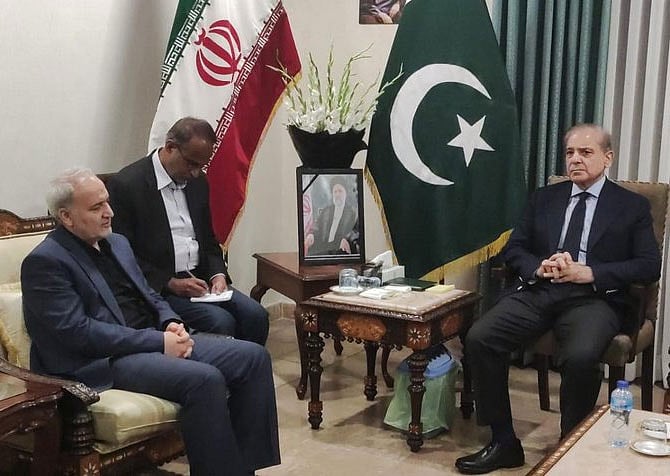
However, mixed signals continue to emerge. Iran’s ambassador to Pakistan, Reza Amiri Moghadam, said there had been no negotiations with the United States — directly or indirectly — contradicting suggestions of diplomatic progress.
“According to my information — and contrary to Trump’s claims — so far no negotiations… have taken place between the two countries,” he said, adding that while friendly nations may be engaging both sides, no formal talks were underway.
At the same time, Iranian representatives have signalled preferences over who they would engage with, indicating reluctance to re-enter talks with US envoy Steve Witkoff and Jared Kushner, and instead favouring contact at the level of the vice president, according to regional sources.
No clear partner for talks
Even with these tentative signals, a deeper problem remains: it is not clear who in Iran can actually engage with the proposal.
Weeks of sustained strikes have disrupted the country’s leadership structure, with top officials killed early in the conflict. Decision-making authority remains opaque, and competing centres of power — from the military to political leadership — may not be fully aligned.
Compounding that challenge, Iranian officials are struggling to communicate internally and are wary of convening in person, fearing further strikes — raising the possibility that the proposal may not even reach key commanders quickly.
There is also no indication that Israel is aligned with the US initiative, with Israeli officials signalling that operations will continue even as Washington explores diplomatic options.
Unclear endgame
The uncertainty extends to Washington’s own posture.
While President Donald Trump and his aides have insisted the conflict will not become a “forever war,” they have maintained strategic ambiguity over the possible use of ground forces. Reports of additional troop preparations — including elements of the 82nd Airborne Division — underscore a lack of clarity over how the conflict is meant to end, even as diplomatic outreach continues.
A plan without traction
The result is a proposal that exists largely on paper — without clear buy-in from any of the main actors.
The United States is signalling a willingness to negotiate. Iran is rejecting the premise. Israel is continuing its campaign. And within Tehran itself, the chain of command remains uncertain.
Even as backchannel diplomacy gathers pace, the battlefield tells a different story.
For now, the one-month truce remains less a pathway to peace — and more a test of whether there is anyone, on any side, ready to take it.

Sign up for the Daily Briefing
Get the latest news and updates straight to your inbox
Network Links
GN StoreDownload our app
© Al Nisr Publishing LLC 2026. All rights reserved.