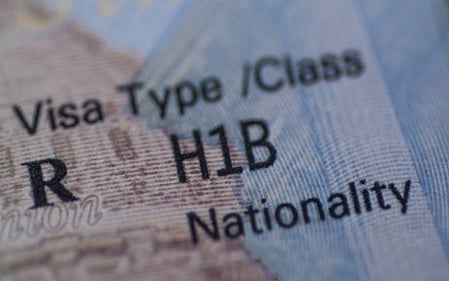
US Citizenship and Immigration Services (USCIS) has announced that premium processing fees for several immigration benefits, including the H-1B visa, will increase starting March 1, 2026.
The agency said the hike, reflecting June 2023–June 2025 inflation, affects employment-based and nonimmigrant filings used by foreign professionals in the US.
Court fast-tracks $100K H‑1B fee challenge
Earlier this week, a US appeals court fast-tracked an appeal by business and research groups challenging President Donald Trump’s $100,000 H-1B fee for highly skilled foreign workers. Oral arguments are now scheduled for February, ahead of the annual H-1B visa lottery in March.
According to Reuters, the US Chamber of Commerce said a speedy review is essential: “Employers’ ability to participate in the H-1B program this year hinges on the outcome of this appeal; without relief by March, it will be too late.”
The appeal challenges a December 24 district court ruling that the fee fell within the president’s broad powers to regulate immigration.
What H-1B visas cost now
Before the increase, H-1B visa fees typically ranged from $2,000 to $5,000. The program allows U.S. employers to hire foreign workers with specialized training, particularly in technology, engineering, finance, and healthcare. It offers 65,000 visas annually, plus 20,000 for advanced-degree holders.
The Trump administration has justified the fee increase by citing alleged abuses, saying some employers use the program to replace American workers with lower-paid foreign talent.
Updated premium processing fee schedule
Employment-based visas:
H-2B or R-1 (Form I-129): $1,685 → $1,780
H-1B, L-1, O-1, P-1, TN (Form I-129): $2,805 → $2,965
I-140 immigrant petitions: $2,805 → $2,965
Status extensions and work authorisation:
I-539 (F, J, M visas): $1,965 → $2,075
I-765 (employment authorization, including OPT/STEM-OPT): $1,685 → $1,780
USCIS: Fee revenue to improve services
USCIS said the increased fees will fund agency operations, including:
Providing premium processing services
Improving adjudication processes
Addressing backlogs
Supporting other USCIS adjudication and naturalisation services
New lottery system and implications
Separately, the Department of Homeland Security is replacing the random H-1B lottery with a system that prioritizes higher-paid and higher-skilled workers, effective February 27.
Higher fees will raise costs for employers and applicants, including companies filing multiple H-1B, L-1, or O-1 petitions, entrepreneurs using E-1 and E-2 visas, and students relying on OPT or STEM-OPT extensions.
Applicants submitting premium processing requests before March 1 can pay the old fee; those filing on or after that date must pay the new rate.
Impact on professionals and students
Foreign professionals and students are among the biggest users of U.S. employment-based visas, including H-1B, L-1, and employment-based green cards. Students often rely on OPT and STEM-OPT extensions as a bridge to longer-term work visas.
The fee hike will impact those seeking faster approvals for job changes, extensions, travel, and start dates.
Rising cost of fast-track immigration services
Immigration experts say the hikes highlight the growing expense of premium processing in the US. While the service offers certainty and speed, companies and applicants will need to evaluate whether the extra cost is justified, particularly as overall immigration costs continue to climb.
Network Links
GN StoreDownload our app
© Al Nisr Publishing LLC 2026. All rights reserved.