US aircraft carrier arrives in Middle East as Iran tensions rise
The USS Abraham Lincoln arrives as Iran intensifies its crackdown on protesters
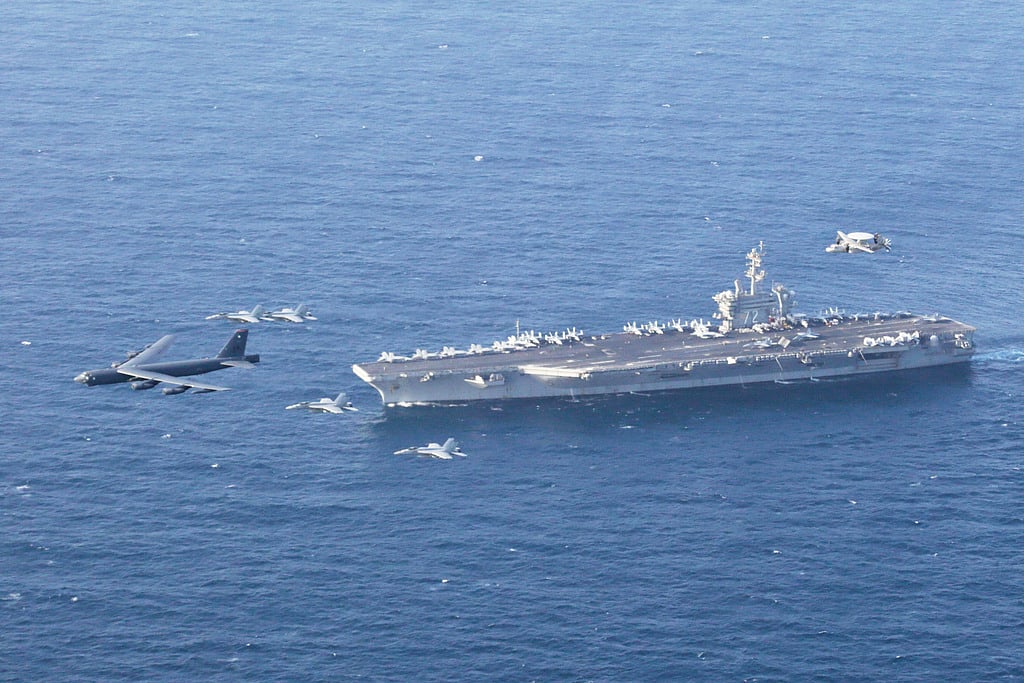
Washington: The USS Abraham Lincoln carrier strike group has arrived in the Middle East, the US military said on Monday, significantly boosting American firepower in the region.
The carrier and its accompanying ships were ordered to the region as Iran intensified its crackdown on mass protests. While President Donald Trump has since stepped back from immediate military action against Tehran, he has insisted that all options remain on the table.
The strike group is “currently deployed to the Middle East to promote regional security and stability,” US Central Command, which oversees American forces in the region, said in a post on X.
Trump signals pressure and talks
Trump told Axios in an interview on Monday that the United States has “a big armada next to Iran”, but added that Tehran appears keen to engage diplomatically. “They want to make a deal. I know so. They called on numerous occasions,” he said.
A senior US official also told reporters during a call that Washington is “open for business” if the Iranians “want to contact us”.
Protests and crackdown
Protests in Iran began in late December over economic grievances but evolved into a broader movement against the Islamic republic. Large street demonstrations were reported for several days from January 8.
Rights groups have accused Iranian authorities of launching an unprecedented crackdown, including shooting directly at protesters under the cover of an internet shutdown.
The US-based Human Rights Activists News Agency said on Monday it had confirmed nearly 6,000 deaths in the protests suppressed by Iran’s security forces, while stressing that the actual toll could be significantly higher.
Political uncertainty
Despite the unrest, the clerical leadership that came to power after the 1979 Islamic revolution remains in place. Many opponents of the system see outside intervention as the most likely catalyst for change.
Trump has repeatedly warned Iran that the United States would intervene militarily if protesters were killed and urged Iranians to take control of state institutions, saying “help is on the way”.
However, he pulled back from ordering strikes earlier this month, saying Tehran had halted more than 800 executions under pressure from Washington.
Iran dismisses US move
Iranian foreign ministry spokesman Esmaeil Baghaei warned against foreign intervention, saying the country was “confident in its own capabilities”.
In an apparent reference to the USS Abraham Lincoln, he added: “The arrival of such a battleship is not going to affect Iran’s determination and seriousness to defend the Iranian nation.”
Network Links
GN StoreDownload our app
© Al Nisr Publishing LLC 2026. All rights reserved.