Trump’s Iran warning raises questions over how far the US would go to help protesters
Trump’s remarks come as protests widen in Iran and pressure builds on authorities
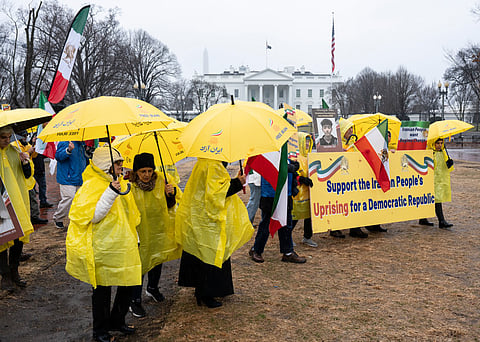
Dubai: President Donald Trump says the United States is “ready to help” Iranians seeking freedom, while a close ally has gone further, saying “help is on the way” — language that has prompted fresh questions about how far Washington may be prepared to go as protests spread across Iran.
With the internet down in Iran and phone lines cut off, gauging the demonstrations from abroad has grown more difficult.
But the death toll in the protests has grown to at least 72 people killed and over 2,300 others detained, according to the US-based Human Rights Activists News Agency. Iranian state TV is reporting on security force casualties while portraying control over the nation.
Supreme Leader Ayatollah Ali Khamenei has signaled a coming clampdown, despite US warnings. Tehran escalated its threats Saturday, with the Iran’s attorney general, Mohammad Movahedi Azad, warning that anyone taking part in protests will be considered an “enemy of God,” a death-penalty charge. The statement carried by Iranian state television said even those who “helped rioters” would face the charge
Trump’s statement that the US is “ready to help” Iranian protesters came as unrest intensified across Iran and security forces moved to crush demonstrations.
The message was amplified by Republican Senator Lindsey Graham, a close ally of Trump, who said “help is on the way” for Iranians challenging clerical rule — language that, taken together, suggests Washington may be signalling more than moral support.
The uncertainty has been sharpened by a Wall Street Journal report that US officials have held preliminary discussions about military contingencies involving Iran, even as the administration insists there is no decision to launch an attack.
So what is the Trump administration signalling — and does “ready to help” mean the United States is moving closer to direct military action?
What does Trump’s Iran messaging really mean?
Trump’s remarks come amid Iran’s most serious wave of unrest in years, driven by economic hardship and anger at clerical rule. His statement that the US “stands ready to help” was followed by comments from allies framing the protests as a potential turning point.
Trump said Friday that Iranian leaders appear “in big trouble” and reiterated that military strikes could be ordered.
“It looks to me that the people are taking over certain cities that nobody thought were really possible just a few weeks ago,” he said.
As CNN has observed in past Iran crises, such language often serves as political and strategic signalling rather than a declaration of imminent action.
What did the Wall Street Journal report?
The Wall Street Journal reported that US officials have held preliminary discussions about potential military options related to Iran’s Islamic regime, including identifying possible targets, citing unnamed officials.
One option discussed was a large-scale aerial strike on Iranian military sites, though officials emphasised there was no consensus and no decision to proceed.
Do these discussions mean the US is preparing to attack Iran?
Not necessarily.
Officials told the Wall Street Journal that the talks were part of routine contingency planning, which US administrations regularly conduct during major international crises.
CNN has previously reported that such planning does not imply intent, but ensures options exist should conditions sharply deteriorate.
How serious are the protests inside Iran?
The protests are among the largest in recent years and have spread to multiple cities. Demonstrators have increasingly voiced demands that go beyond economic relief to challenge the clerical system itself.
According to AFP, crowds in parts of Tehran and other cities have chanted slogans against Iran’s ruling structure, while Reuters has reported strikes, arrests and sporadic violence.
How is Iran’s leadership responding?
Iran’s military and the Islamic Revolutionary Guard Corps have warned that safeguarding the revolution is a “red line.”
State media, cited by Reuters, reported arrests, internet restrictions and threats to prosecute protesters under severe national security laws.
Human rights groups say the internet shutdown is intended to limit coordination and obscure the scale of repression.
What does 'US ready to help' mean in practical terms?
Analysts cited by CNN say the phrase does not point to US ground forces or invasion.
Instead, it suggests a mix of:
Diplomatic and economic pressure
Support for secure communications and internet access
Cyber and intelligence capabilities
Coordination with allies, including Israel
The focus would be on pressure and leverage, not occupation or regime change imposed from outside.
What could change Washington’s posture?
Trump has publicly drawn a line at mass violence against protesters.
“If the Iranian regime forces start killing people, the US will hit them really hard,” he said in an interview with radio host Hugh Hewitt.
Whether Washington escalates will likely depend less on protest size than on how forcefully Iranian authorities respond.
Bottom line
For now, the Trump administration appears to be signalling resolve while stopping short of commitment — supporting protesters rhetorically, warning Iran’s leaders against repression, and quietly reviewing contingency plans.
Planning, officials stress, does not equal policy. But the message to Tehran is clear: how it treats its own people may shape what comes next.


