Israel–US strikes on Iran: How did we get here — what set the stage for this crisis?
Diplomacy faltered, an armada moved closer and warnings intensified before strikes
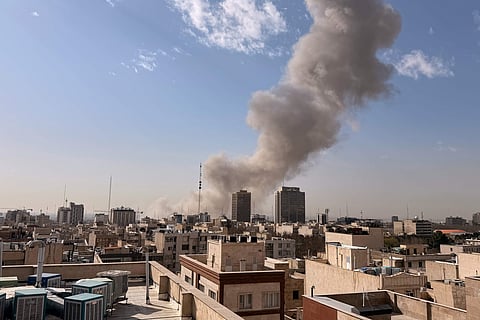
Dubai: Tensions between Washington and Tehran have simmered for years, but the current escalation traces back to the collapse of the nuclear agreement.
The original 2015 nuclear deal — formally known as the Joint Comprehensive Plan of Action (JCPOA) — placed limits on Iran’s nuclear programme in exchange for sanctions relief. The agreement began unraveling after the US withdrew during President Donald Trump’s first term.
Subsequent efforts to revive the deal faltered amid disputes over uranium enrichment levels, sanctions relief and regional security issues.
What changed when Trump returned for a second term?
After returning to office in 2025, Trump reimposed a “maximum pressure” posture toward Iran.
He insisted that Iran must:
Abandon uranium enrichment
Halt nuclear weapons ambitions
Curb missile development
At the same time, he signaled openness to talks, creating a pattern of mixed messaging — warning of military action while saying diplomacy remained possible.
Were negotiations underway?
Yes.
Indirect talks between US and Iranian officials were taking place in Geneva in recent weeks. Trump publicly said on January 22 at the World Economic Forum in Davos:
“Iran does want to talk, and we’ll talk.”
However, he also said that the US had an “armada” moving toward Iran “just in case,” adding that Washington was watching Tehran “very closely.”
The dual messaging — preparing for war while speaking of dialogue — heightened uncertainty in the region.
What role did Iran’s domestic unrest play?
Trump cited Iran’s crackdown on anti-government protests as a justification for possible action.
Protests erupted in late December and were met with a forceful security response.
The US-based Human Rights Activists News Agency (HRANA) said at least 5,520 protesters had been killed. Iranian authorities put the death toll at 3,117, including civilians, security forces and what they described as “terrorists.” Independent verification of those figures has not been possible.
The protests have since subsided following what observers describe as the deadliest crackdown in the Islamic Republic’s history.
How did military tensions escalate?
Over the past several weeks, the United States repositioned military assets across the Middle East.
Additional naval forces, aircraft and defensive systems were deployed closer to Iran.
The visible buildup increased concerns that Washington was preparing strike options even as negotiations continued.
What triggered the strikes?
Trump on Friday said he was “not happy” with the progress of negotiations and insisted Iran cannot have nuclear weapons or enrichment capabilities.
On Saturday, Israel and the United States launched coordinated strikes targeting Iranian regime and military sites.
US officials say the strikes are focused on military targets and aimed at addressing the Iranian military threat and protecting US forces in the region.
One official declined to provide operational details due to the ongoing nature of the campaign.
What is the US objective?
Trump described the operation as “massive and ongoing.”
He said the goal was to prevent Iran from threatening American lives and to stop Tehran from rebuilding its nuclear capabilities following a June 2025 US bombing run on nuclear facilities.
US officials say measures were put in place in advance to protect American military personnel in the region.
What happens next?
Iran has signaled it is preparing retaliation.
According to reports, sirens continue to sound in Jerusalem, the surrounding area, and across northern Israel amid waves of Iranian ballistic missile attacks.
Analysts say Tehran has several options, including missile strikes on US bases in the region, attacks on Israeli targets, or actions against US naval vessels.
Whether the conflict remains limited or expands regionally will depend largely on Iran’s response in the coming days.


