Trump: US must 'finish up' war with Iran the 'nice way or the not-so-nice way'
US pushes Iran for nuclear concessions amid escalating Middle East tensions
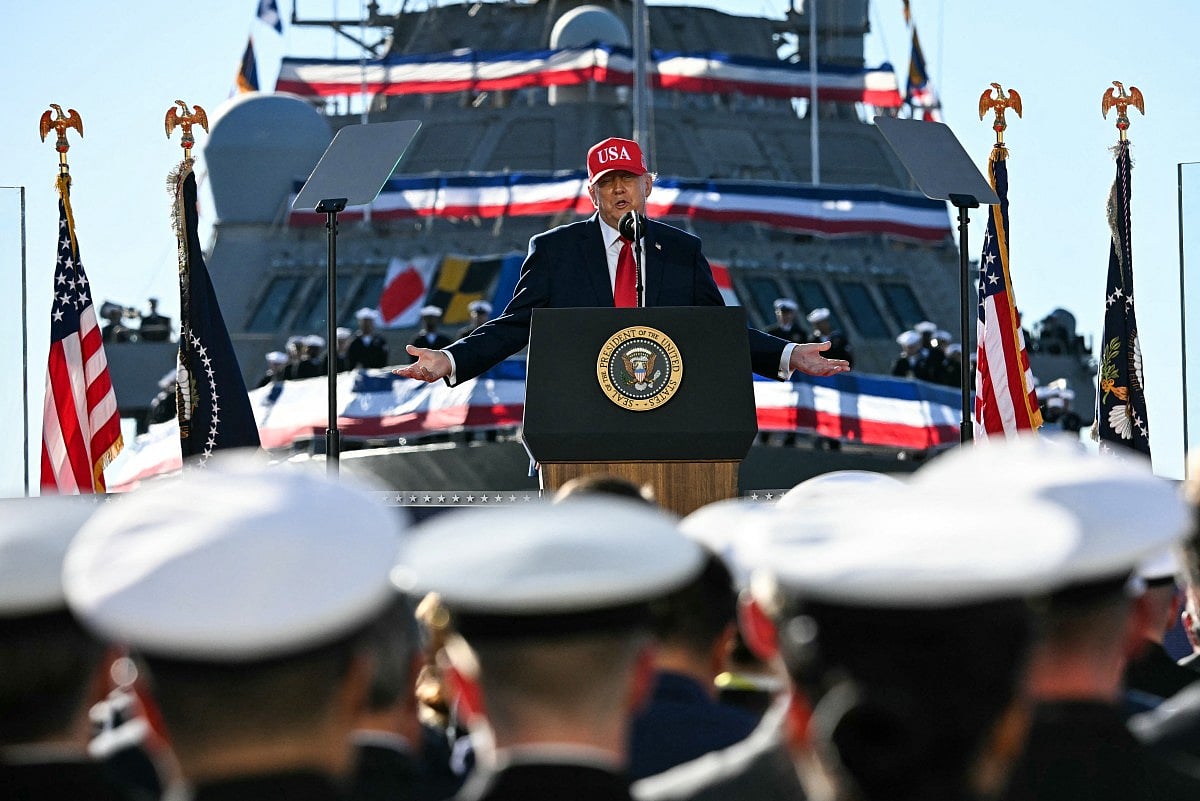
US President Donald Trump stated that the US must "finish up" the war with Iran, adding that Washington will soon decide whether to bring the conflict to an end the "nice way or the not-so-nice way."
During an address at an Anduril Industries event in Sparrows Point, Maryland, on October 6, 2026, Trump told attendees that the US was doing "extremely well" against Iran.
He declared that its military capabilities had been effectively neutralised: "They have no military in sight. The whole place is shot. They were the bully of the Middle East, and they're not so much the bully anymore."
By giving a choice between the "nice way or the not-so-nice way," Trump implied an upcoming choice between a diplomatic settlement or an intensified military campaign aimed at forced resolution.
Trump reiterated that Tehran will not be allowed to obtain a nuclear weapon and addressed domestic concerns over rising energy costs, calling higher gas prices a "small price to pay for keeping the world safe" while promising prices would fall sharply once the war concludes.
Get it: Fast, verified news for FREE ... download the Gulf News app — simply click here
Trump and Anduril unveiled plans Tuesday for a new “software-defined” shipyard that will help build attack submarines for the Navy faster.
The announcement comes as the Navy aims to boost its undersea arsenal, which could play a key role in a potential future conflict, even as Trump seeks to enhance domestic manufacturing.
Trump also stated in a press exchange on October 6, 2026, that his "biggest problem" in dealing with the conflict with Tehran is that "nobody knows who the hell is running" Iran after successive tiers of Iranian leadership were eliminated.
Speaking to reporters before boarding Marine One at the White House, Trump remarked: "Their leaders are gone, their second group of leaders are gone, and the biggest problem I have is nobody knows who the hell is running the country."
The comments come eight months into the active US-Israeli conflict with Iran that began in late February 2026.
Supreme Leader Ali Khamenei was killed at the onset of the conflict, and his designated successor, Mojtaba Khamenei, was severely injured in the same strike and has not been seen in public since. Subsequent leadership structures and high-ranking military commanders have also been targeted.
Iranian Foreign Ministry spokesman Esmaeil Baghaei pushed back on Trump's statements during a press conference.
Baghaei asserted that Washington knows full well how Iran's decision-making structure works.
Baghaei pushed the fault back onto Washington, citing "contradictory positions and mixed messaging from US officials".
Iranian President Masoud Pezeshkian called talks with the US "meaningless" as strikes on ships transitting Hormuz Strait continue while the Central Command's naval blockade squeezes Irans economy.
Trump's shifting statements on timeline and objectives come as energy prices surge across global markets, adding domestic political pressure ahead of the upcoming US midterm elections.
Meanwhile, US Vice President JD Vance stated in an interview with journalists late on Tuesday (Oct. 6, 2026), that Iran must make a "meaningful" and "significant" reduction in its nuclear enrichment capacity to satisfy Washington's demands and bring an end to the ongoing conflict.
Vance emphasised that Washington remains open to a diplomatic agreement, but Iran must demonstrate concrete nuclear concessions — specifically scaling back its uranium enrichment infrastructure — to secure a permanent ceasefire.
The demand for enrichment reductions comes after earlier claims by administration officials that Iran's nuclear capabilities had been largely dismantled in initial strikes, highlighting ongoing concerns over underground infrastructure and surviving stockpiles.
Both nations have exchanged diplomatic proposals in recent weeks targeting an end to hostilities and the reopening of the Strait of Hormuz, a critical bottleneck for global energy shipping. However, President Donald Trump recently rejected Tehran's latest proposal as insufficient.
After 220 days of war, disruptions in energy markets and rising gas prices have added intense domestic pressure on the administration as the US midterm elections approach.
Iranian President Masoud Pezeshkian previously characterized peace talks as "meaningless" while US-Israeli strikes continue, though foreign ministry officials have maintained that Washington is well aware of Iran's negotiating channels.
Sign up for the Daily Briefing
Get the latest news and updates straight to your inbox
Network Links
GN StoreDownload our app
© Al Nisr Publishing LLC 2026. All rights reserved.