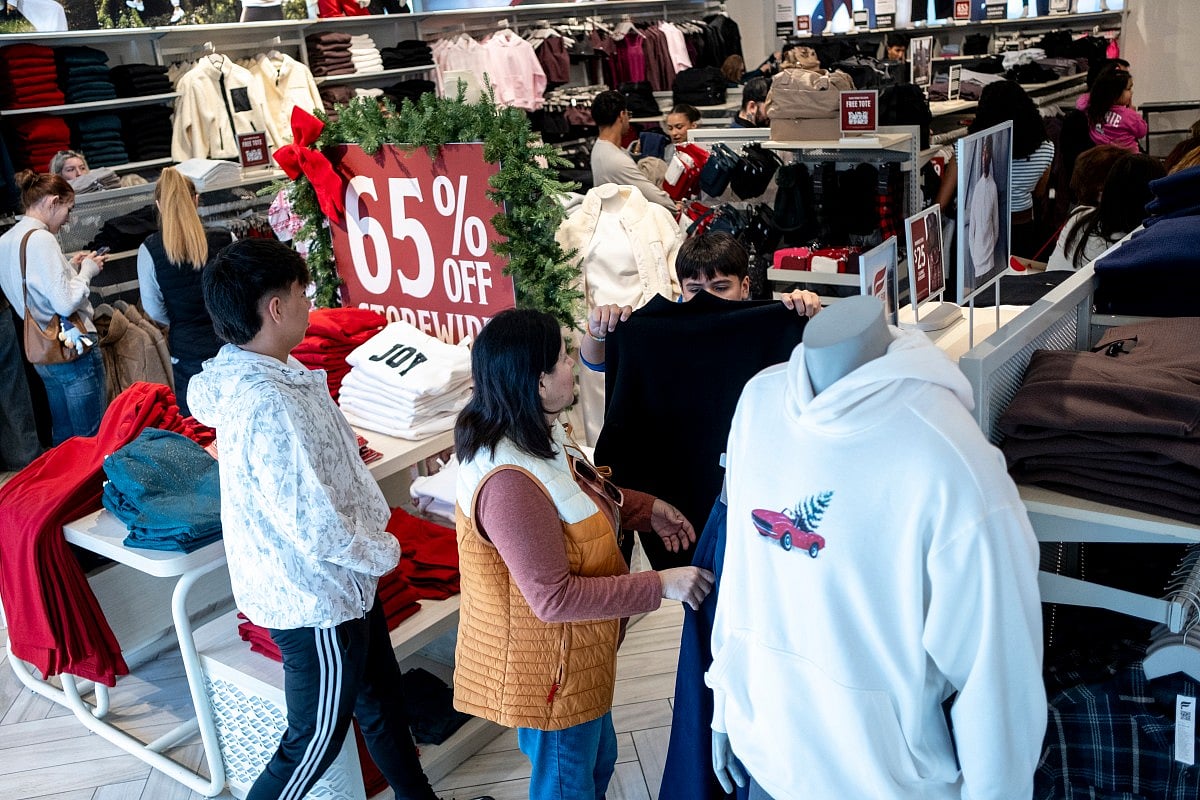
US consumers spent a record amount online on Black Friday, while fewer people shopped in person on one of the busiest days for brick-and-mortar retailers, according to preliminary figures released on Saturday.
Excluding purchases of petrol and automobiles, retail sales across stores and online rose 5.8% compared with Black Friday last year, according to Mastercard SpendingPulse, which tracks payments made through all methods, including cash.
Get updated faster and for FREE: Download the Gulf News app now - simply click here.
Adobe Analytics, which tracks e-commerce activity, said online sales reached $13.1 billion, exceeding its forecast and marking an 11% increase from a year earlier.
Higher prices, which have frustrated American consumers as the Iran war affects petrol and some consumer goods, did not account for all the sales growth. Salesforce said the volume of Black Friday orders increased 5% year on year.
Global online sales also reached a record $82.7 billion on Friday, up 5% from last year, Salesforce said. The figure included $19.1 billion in US sales.
Adobe and Salesforce use different datasets, which may explain the difference in their online sales estimates. Salesforce's figures were based on global shopping data from more than 1.5 billion consumers, while Adobe analysed more than 1 trillion visits to US retail websites.
Fewer shoppers visit stores
Physical stores still account for most Black Friday sales, but they recorded fewer visitors this year. RetailNext, which measures real-time store footfall, said preliminary data showed customer numbers down 2.9% compared with 2025.
Black Friday store traffic has declined in recent years as more US consumers turn to online shopping. Bad weather across the country may also have contributed to this year's drop.
Another factor could be household budgets being squeezed by essentials such as petrol, groceries and rent. This is changing how consumers plan their shopping trips, said Joe Shasteen, RetailNext's global manager of advanced analytics.
Sensormatic Solutions, another store-traffic tracking company, reported a 4.2% year-on-year decline in footfall. However, traffic was up 250% compared with the previous Friday.
Mastercard SpendingPulse found that in-store spending rose 3.8%, its strongest increase since 2022.
Michelle Meyer, chief economist at the Mastercard Economics Institute, said the organisation expects inflation to account for half of the forecast growth in holiday-season sales this year.
Electronics lead online purchases
While retailers promote the period from Thanksgiving week through the following Monday as a major holiday shopping event, practical purchases also contributed to Black Friday spending, Adobe said.
Gaming and electronics products, including consoles, video games, smartphones, headphones and smart glasses, were among the popular purchases. Online shoppers also used discounts to stock up on essentials such as clothing, baby products, pet supplies and household cleaning items.
Technology was the strongest-performing category overall, according to Mastercard SpendingPulse, with spending on electronics and software rising nearly 8% from 2025.
Network Links
GN StoreDownload our app
© Al Nisr Publishing LLC 2026. All rights reserved.