Takahiro Mogi
How this Japanese expat is creating learning opportunities beyond the UAE workplace
He redefines success not by how fast a business grows, but by how many people grow with it
Last updated:
4 MIN READ
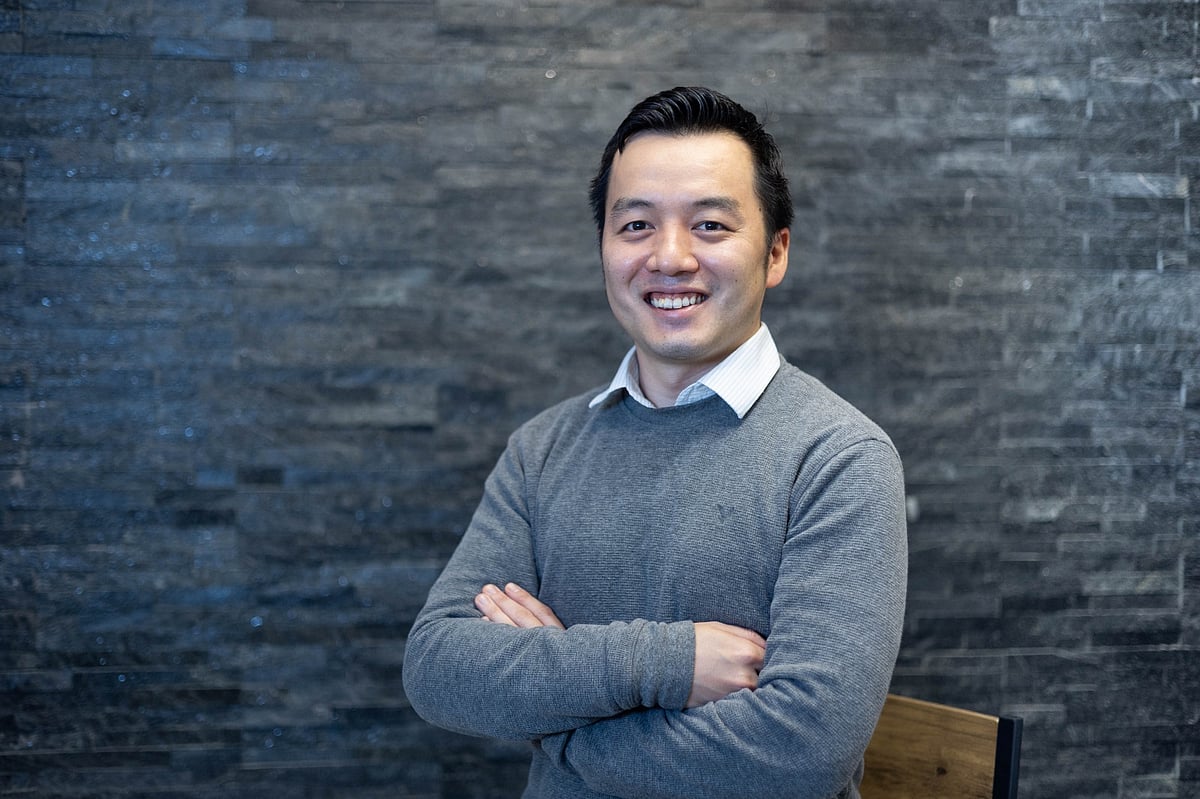
Takahiro Mogi, group CEO of TKI Group
Supplied
Dubai: He arrived in the UAE with experience, but no shortcuts. Instead of stepping into an office or leadership role, Takahiro Mogi walked into a kitchen in Dubai and started from the ground up, learning, observing, and rebuilding everything he thought he knew about the food business.
Today, the Japanese expatriate leads a growing hospitality portfolio under TKI Group, but his real focus has never been just restaurants or revenue. It has been people and what they can become.
“I did not come here only to open restaurants. I came here to build something meaningful, to introduce Japanese food and culture in an authentic way, and to create opportunities for the people who became part of our team,” Mogi told Gulf News.
Get updated faster and for FREE: Download the Gulf News app now - simply click here.
Decision to start over
When Mogi left Japan in 2018, it has not been driven by urgency but by curiosity. Raised in a structured Japanese environment, he has wanted something less predictable.
The UAE has become the place where that search turned into a full reset.
“I wanted to experience different markets, different people, and different ways of doing business,” exclaimed Mogi.
Going back to basics
Despite his background in the food industry abroad, Mogi has chosen not to step into management upon arrival. Instead, he has started at the operational level, inside kitchens, on the floor, and close to daily service.
Those early days have been more valuable than any formal business plan.
“When I arrived, I did not begin as an owner or as someone with everything already prepared. I started from the basic level, working inside the kitchen and learning how the local market really moved,” recalled Mogi.
He has studied customer expectations in the UAE, team behaviour under pressure, and what makes Japanese dining concepts succeed in a highly competitive market.
“Those early days were very important to me. I was not only working. I was observing.”
Learning the hard way
What followed has not been instant success, but a slow build shaped by licensing challenges, location decisions, cost pressures, and constant adaptation.
The UAE market, he says, does not reward assumptions. It rewards attention to detail, discipline, and the willingness to keep learning.
“You cannot depend only on your previous experience. You have to keep learning, keep observing, and stay flexible,” stated Mogi.
Over time, that mindset has helped transform early operational experience into a structured business, spanning Japanese restaurant concepts and wagyu trading operations under the group.
Growth should not stop
But the most significant shift in Mogi’s journey is not business expansion, it is what happens inside the company. Having started from entry-level work in the UAE himself, he has understood the uncertainty many expatriate workers face.
This is why he has placed strong emphasis on training and development as a form of investment.
“For me, a company should not only be a place where people come to work and earn a salary. It should also be a place where they can discover their potential, improve their skills, and prepare for a better future,” explained Mogi.
Takahiro Mogi (centre in orange blazer) with some of his staff
His employees have been offered free training and education across culinary, customer service, leadership, operations, accounting, HR, and creative fields such as photography and social media.
“We want our staff to learn beyond their daily roles. I always believe that when employees grow, the company also grows.”
Many of his employees are expatriates with long-term ambitions, some have been aiming for hospitality careers, others for management roles, and some eventually to start their own businesses. He believes supporting those paths is part of leadership.
“My hope is that our team members will not see their work only as a job, but as a step toward a better life.”
From left to right: Fatima De Guzman, Ken Barona, and Rodessa Marie Alivarvar, three leaders who advanced to management through Mogi’s free training and education programmes
Creating spaces of stability
Mogi has credited the UAE with shaping both his business discipline and worldview. The country’s diversity and fast-paced environment have forced entrepreneurs to evolve continuously.
At the same time, he has acknowledged the need for constant adaptation in a competitive and sometimes uncertain regional environment. That includes practical adjustments in operations, supply chains, and cost management.
Beyond business operations, Mogi has regarded hospitality as a form of community responsibility.
“A restaurant is not only a place to eat. It is a place where people gather, feel welcome, and experience a sense of comfort,” described Mogi.
During uncertain times, consistency, respect, and stability matter as much as food quality. For him, that responsibility extends to protecting jobs and supporting staff development even during challenges.
Final lesson
Looking back, Mogi has highlighted that his journey in the UAE was never about moving up quickly but about building steadily, with intention. And that same philosophy now defines how he leads others.
In a country built on ambition and speed, his message is to start small, stay disciplined, and invest in people.
“The UAE has given me a platform to build, to learn, and to serve. That is why I remain grateful, and that is why I continue to build my future here,” said Mogi.
Because for an entrepreneur who once started in a Dubai kitchen, success is no longer just about what he has built, but about how many others are now building their future alongside him.
Network Links
GN StoreAbout Gulf NewsTerms & ConditionsReach by GNSitemapContact usPrivacy PolicyGN FocusHave your sayWork with usAdvertise with usGulf News epaperPrinting Services
Download our app
© Al Nisr Publishing LLC 2026. All rights reserved.