'Why women are still afraid to question their doctors': Samantha Ruth Prabhu talks at the 1 Billion Summit
From data gaps to conditioning, experts explain why silence persists in women’s healthcare
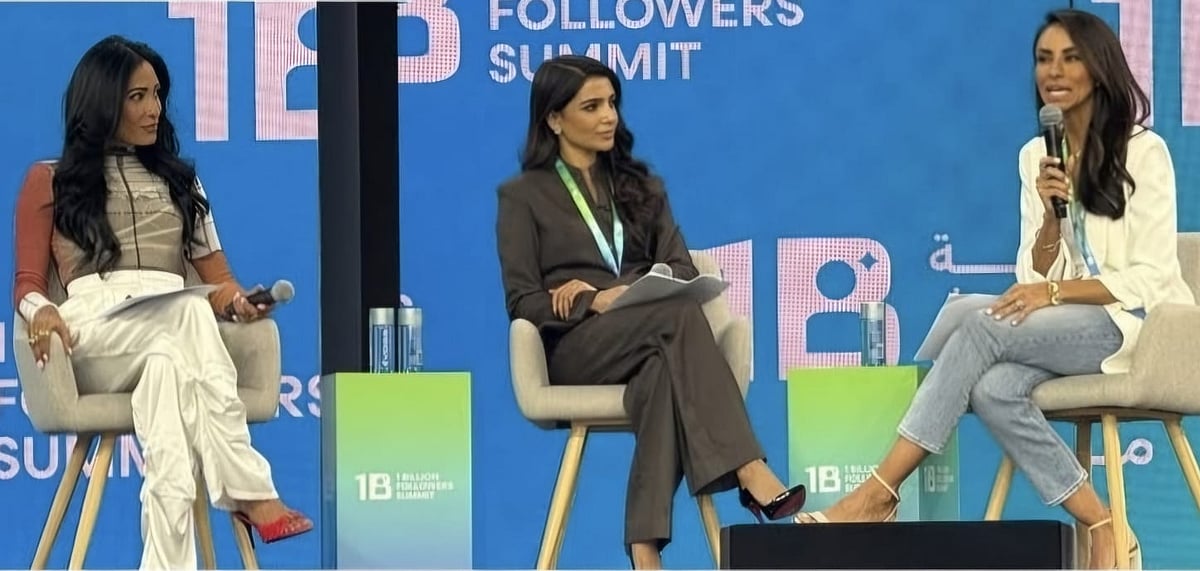
Dubai: Despite growing conversations around women's health, many women still hesitate to question their doctors, seek second opinions, or openly discuss their symptoms.
At Dubai's 1 Billion Followers Summit 2026, Indian actor and wellness entrepreneur Samantha Ruth Prabhu, nutritionist and healthcare founder Mona Sharma, and holistic healer Shayoon Mendeluk explored why this fear persists. The discussion revealed how deeply it is embedded in both culture and healthcare systems.
The power imbalance in medical spaces
Speaking during the panel The Female Creators Redefining Health, Prabhu was clear about her stance. "Every woman should feel enabled to ask questions and demand equality from their healthcare providers," she said.
She pointed to the power imbalance that often defines medical spaces. For many women, that imbalance leads to silence rather than clarity. This happens even when their intuition signals that something is wrong.
Prabhu's journey into health advocacy was shaped by personal experience. "For context, I started because of my autoimmune disease and eventually quit my job for two years so that I could process all this fragmented knowledge," she shared.
Her admission highlights an uncomfortable truth. Understanding your own health often requires time, financial security, and access to information that many women simply don't have.
The guilt of asking questions
Even when information is available, asking questions can feel emotionally loaded. "When I started my podcast there was a lot of guilt I had to overcome for asking certain questions," Prabhu admitted.
That guilt, she suggested, is not accidental. It's conditioned. This happens particularly in environments where doctors are treated as unquestionable authorities. Women are expected to comply rather than inquire.
When Prabhu publicly shifted her focus toward healthcare, the backlash was swift. "I know firsthand because of all the trolling I faced with the pivot to healthcare, how shaky this ground is when you start to ask questions," she said.
The reaction showed how threatening it can be when women claim space in conversations traditionally dominated by institutions and experts.
The data gap problem
Mona Sharma added a systemic perspective to the discussion. She highlighted how fear is reinforced by data gaps in medicine itself.
"Women especially with darker complexions are underrepresented in data," she noted. This lack of representation often results in symptoms being dismissed or misdiagnosed. Women are left feeling unheard and reluctant to speak up in future consultations.
Sharma stressed an important point. Many women experience symptoms but struggle to articulate them to healthcare providers. This isn't because they lack awareness. It's because the system has repeatedly failed to reflect their realities.
When medical research doesn't include diverse female bodies, trust erodes. Silence becomes a form of self-protection.
Generations of learned silence
Shayoon framed this reluctance as part of a much older pattern. "We were taught to suppress our voices," she said.
She described how generations of women learned that compliance was safer than curiosity. Over time, that suppression manifests physically, emotionally, and psychologically. It shapes how women interact with authority figures, including doctors.
Rather than encouraging confrontation, Shayoon urged women to reframe their approach to health. "My biggest advice to women understanding their health will be to create a space to replace fear with curiosity," she said.
Curiosity, she argued, allows women to ask questions without shame. It helps them view healthcare as a collaborative process rather than a hierarchical one.
Three key problems
Together, Prabhu, Sharma, and Shayoon revealed that women's fear of questioning doctors is not rooted in ignorance. It stems from conditioning, underrepresentation, and systemic imbalance.
The conversation highlighted several key points. First, the medical system has historically been designed around male bodies. Women's health concerns remain underrepresented in research and data.
Second, cultural conditioning has taught many women to defer to authority rather than trust their own instincts.
Third, when women do speak up, they often face dismissal or backlash. This reinforces the cycle of silence.
What needs to change
The solution isn't simple, but it starts with awareness. Women need to know that their questions are valid. Their symptoms deserve attention. Seeking a second opinion isn't disrespectful. It's responsible.
Healthcare providers need to recognise the power dynamics at play. They need to create environments where patients feel safe to speak openly.
Education also plays a role. The more women understand about their bodies and health conditions, the more equipped they are to advocate for themselves.
But as Prabhu's experience shows, accessing that knowledge often requires resources and time that not everyone has.
Addressing the research gap
Perhaps most importantly, the medical community needs to address the data gap. Research must include diverse female bodies, particularly women of colour. This ensures symptoms are properly recognised and treated.
Without this foundational change, many women will continue to feel invisible in healthcare settings.
The way forward
As Prabhu made clear, asking questions is not a challenge to authority. It is a necessary step toward equitable, effective healthcare.
For women navigating their health today, that shift may be the most powerful form of advocacy there is.
Change happens when women speak up, share their experiences, and refuse to accept silence as the only option.
Whether it's questioning a diagnosis, seeking additional opinions, or simply asking for more information, these small acts of agency matter. They contribute to a larger movement toward better healthcare for all women.
Network Links
GN StoreDownload our app
© Al Nisr Publishing LLC 2026. All rights reserved.