Why UAE's February 'Snow Moon' is a must-see this Sunday
Also watch for Jupiter stealing the show as the brightest point beside the moon
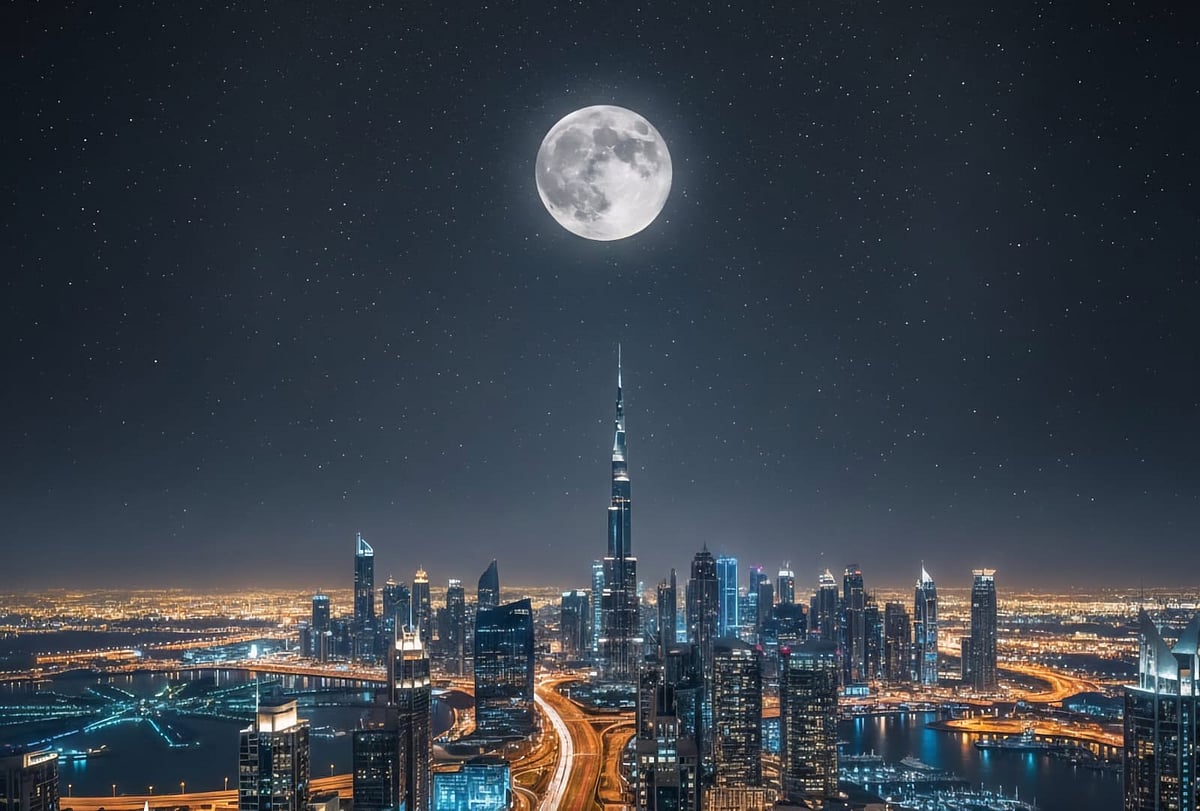
Dubai: The second full moon of the year, known as the Snow Moon, will illuminate the night sky on February 1, 2026, offering residents of the UAE and observers worldwide a celestial treat worth stepping outside to witness. This lunar event provides an excellent opportunity for both seasoned astronomers and casual stargazers to connect with the rhythms of our natural world.
The Snow Moon earns its name from a straightforward connection to winter weather patterns in the Northern Hemisphere. According to the Old Farmer's Almanac, February is typically the snowiest month of the year in much of North America and Europe, where heavy snowfall blankets the landscape during this period.
While UAE residents won't experience the snow that inspired the name, the full moon itself remains a spectacular sight in the clear desert skies. For those in Dubai and across the UAE, the Snow Moon will reach peak illumination at approximately 5:36 pm Gulf Standard Time on February 1, 2026.
However, the moon will appear full to the naked eye for about two days before and after this peak moment, giving observers flexibility in their viewing plans. The moon will rise in the east-northeast at sunset and remain visible throughout the night, setting early the following morning. Unlike some celestial events that require precise timing or specialised equipment, a full moon rewards anyone who simply steps outside and looks up.
The Snow Moon rises near the constellation Leo. Above the moon, observers will also spot Jupiter, currently one of the brightest objects in the night sky. This planetary companion adds an extra dimension to the viewing experience, as Jupiter appears as a brilliant star-like point even to the unaided eye.
To make the most of viewing the Snow Moon, sky enthusiasts recommend finding a location away from urban light pollution when possible. While the full moon's brightness can wash out fainter celestial objects like distant galaxies and star clusters, it provides an ideal introduction to astronomy for beginners and young observers.
Those with binoculars or telescopes can explore the lunar surface in detail, observing craters, mountain ranges, and the dark plains called maria, or "seas." The moon often appears larger when viewed near the horizon, an optical illusion that makes it particularly photogenic during moonrise and moonset.
Network Links
GN StoreDownload our app
© Al Nisr Publishing LLC 2026. All rights reserved.