US/Israel-Iran war: What UAE residents need to know today (Nov 17, 2026)
Iranian drone attacks intercepted, US military build-up keeps Gulf security on alert
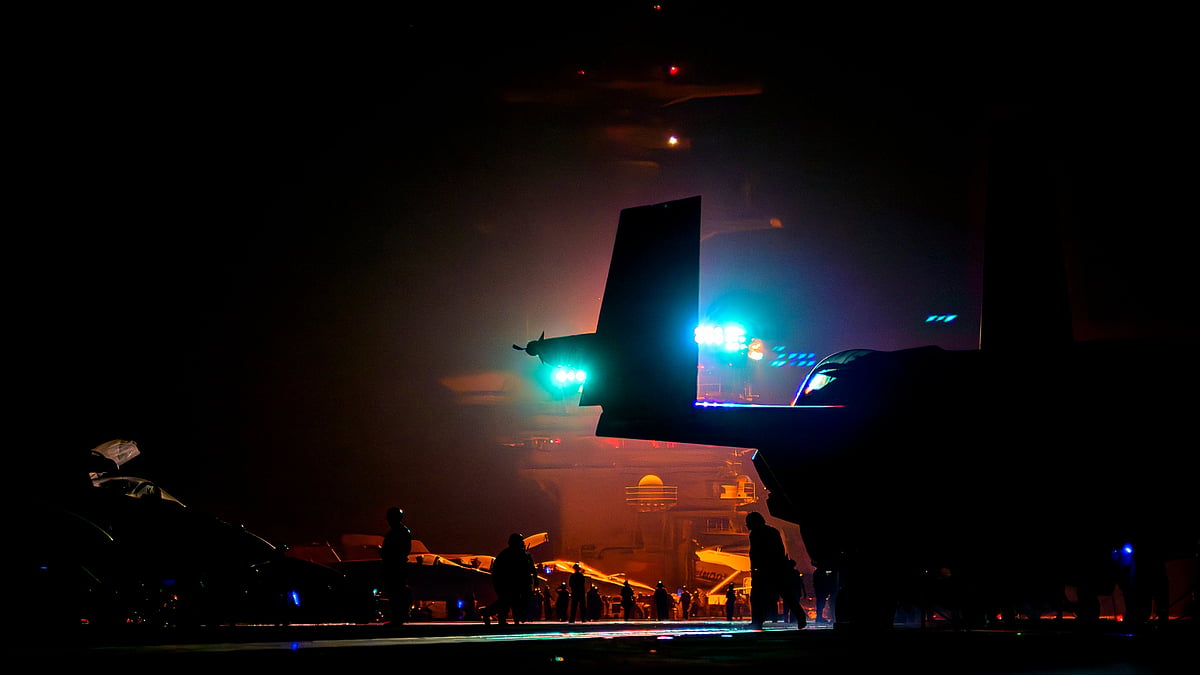
UAE residents are facing renewed concerns over regional security, aviation and energy supplies as the US/Israel-Iran conflict continues to threaten critical infrastructure and shipping routes across the Gulf.
Two commercial tankers were attacked in the Strait of Hormuz on Monday (Nov. 16, 2026), while Iran claimed that other vessels caught fire after "hitting naval mines".
Get it: Fast, verified news for FREE ... download the Gulf News app — simply click here
Details of the incidents could not be independently confirmed, and came as shipping through the strategic waterway slowed sharply, though diplomatic efforts to end the conflict have not completely come to an end amid military escalation.
Bahrain also reported intercepting Iranian aerial attacks, while the arrival of a third US aircraft carrier in the Middle East signalled a further reinforcement of Washington's military presence.
Following are the latest developments as of Tuedsay (Nov. 17):
What UAE residents need to know today
For UAE residents, the immediate issues are maritime security, possible flight disruptions, oil-market volatility and the risk of further escalation involving Gulf countries.
Hormuz shipping: Two tanker attacks reported by the UK Maritime Trade Operations agency on Monday; shipping traffic has slowed sharply.
Bahrain security: Bahraini authorities reported intercepting Iranian aerial attacks targeting the kingdom.
US military build-up: USS Theodore Roosevelt has joined two other US aircraft carriers in the region.
Regional energy infrastructure: A drone alert was reported over Iraq's Khor Mor gas field.
UAE aviation: Travellers should expect possible schedule changes and check airline updates, particularly for services to affected regional destinations.
Airspace advisory: Europe's aviation safety agency has extended its Gulf conflict-zone advisory through January 31, 2027.
Iran's Araghchi travels to Oman as diplomatic efforts continue
Diplomatic efforts have not completely stopped despite the military escalation. Iranian Foreign Minister Abbas Araghchi is travelling to Muscat, Oman, for discussions with Omani officials.
Pakistan is also awaiting a US response to Iran's latest proposals, according to The National's November 17 regional updates. Oman has historically served as an intermediary in communications between Washington and Tehran.
There is no confirmed breakthrough or agreement to end the conflict. The key issues remain the US naval blockade, Iran's conditions for reopening the Strait of Hormuz, sanctions and the future of the country's nuclear programme.
Tanker attacks raise shipping concerns
The Strait of Hormuz remains the most immediate economic and security concern, given its importance to oil exports and international energy shipments.
The UK Maritime Trade Operations (UKMTO) reported two tanker attacks on Monday, No casualties were reported in the incidents, but the extent of the damage and any environmental impact remained unclear.
The IRGC Navy separately claimed that two tankers caught fire “after striking naval mines” while attempting to cross the southern part of the strait. Iran's regular navy reported another tanker had been immobilised after hitting a mine.
These claims have not been independently verified.
Shipping data underline the growing disruption. According to Kpler data, only five commodity-carrying vessels crossed the Strait of Hormuz on Saturday, November 14, while none were recorded on Sunday, compared with 31 during the preceding weekend.
The UAE previously reported attacks on three vessels operated by Abu Dhabi National Oil Company (ADNOC).
Before the conflict, more than 130 ships a day traversed the waterway. Hormuz handled approximately one-fifth of global crude oil and liquefied natural gas shipments.
Prolonged disruption could affect oil exports, shipping insurance, freight costs, fuel markets and prices of imported goods.
Bahrain intercepts Iranian attacks; UAE expresses solidarity
Bahrain remains on heightened alert following renewed Iranian drone attacks.
Iran's IRGC claimed responsibility for targeting a US radar installation at Riffa Air Base, saying six drones were involved. Bahraini authorities said their air defences intercepted Iranian attacks.
The reported damage to the facility has not been independently verified.
The UAE Ministry of Foreign Affairs condemned the renewed attacks on Bahrain on November 15, describing them as violations of the kingdom's sovereignty and threats to its security and stability.
Abu Dhabi reaffirmed its solidarity with Bahrain and support for measures to safeguard its security.
Third US aircraft carrier arrives in the Middle East
The arrival of the USS Theodore Roosevelt in the US Central Command area brings the number of American aircraft carrier strike groups operating in the region to three.
It joins:
USS George H.W. Bush
USS George Washington
USS Theodore Roosevelt
The deployment strengthens Washington's naval presence as the US maintains its blockade of Iranian ports.
The US naval build-up comes amid reports that Washington and Israel are considering renewed strikes against Iranian economic and energy infrastructure.
Iranian Deputy Foreign Minister Kazem Gharibabadi has warned that Tehran would not necessarily wait for another US attack before retaliating.
The additional military deployment raises the stakes for regional security, particularly around the Gulf's maritime routes and military facilities.
Oil prices fall despite Gulf security risks
Oil prices declined on Tuesday as expectations of increased global supply outweighed concerns about attacks on Gulf shipping.
Brent crude fell to $91.71, down 72 cents or 0.78%, while WTI crude dropped 78 cents to $84.94, or 0.91% per barrel, according to latest OilPrice.com data at 2.04pm Singapore time.
The decline reflects expectations that recovering Middle Eastern exports could exceed demand in the fourth quarter. The International Energy Agency (IEA) has also forecast a return to a global oil supply surplus during the quarter.
Drone alert at Iraq's major gas field
Security concerns have extended beyond the Gulf's shipping lanes. Sirens sounded at Iraq's Khor Mor gas field in the Kurdistan region on Monday after a drone was detected flying over the facility.
Khor Mor is a major source of natural gas for electricity generation in the Iraq's Kurdish region.
There were no immediate reports of a strike or damage from the latest incident.
Production at the gas field had already been halted the previous week following a suspected drone attack that caused a fire. The disruption affected approximately 2.8 gigawatts of electricity generation, according to UAE-based Dana Gas, one of the facility's operators.
The incident highlights the vulnerability of energy infrastructure across the wider Middle East.
What UAE residents should watch next
The following developments are particularly important over the coming days:
Strait of Hormuz: Whether tanker attacks continue and whether commercial shipping resumes.
Bahrain: Any further Iranian drone or missile activity targeting military or civilian infrastructure.
US military movements: Whether the additional aircraft carrier presence is followed by new military action.
Oman diplomacy: Whether Araghchi's visit produces progress towards negotiations.
Oil markets: Whether lower crude prices persist despite disruptions to Gulf exports.
Air travel: Whether UAE-based airlines extend, lift or introduce further route restrictions.
Energy infrastructure: Any new attacks affecting oil, gas, ports or electricity facilities.
Network Links
GN StoreDownload our app
© Al Nisr Publishing LLC 2026. All rights reserved.