Middle East conflict: 10 key developments UAE residents should know (November 8, 2026)
Key updates on Middle East tensions impacting UAE residents and regional safety

Regional tensions remain high, with fresh reports of explosions in Iran, missile interceptions in Saudi Arabia and maritime incidents around the Strait of Hormuz. Diplomatic efforts to ease the eight-month conflict are continuing, while disruptions to regional shipping and aviation remain a concern.
For UAE residents, the developments have implications for travel, maritime security and regional safety. Here are 10 key developments to follow on Sunday, November 8.
Get updated faster and for FREE: Download the Gulf News app now - simply click here.
1. UAE rescues 22 crew after Gulf of Oman ship fire
A Coast Guard unit launched the operation after receiving a distress report from the ship's crew. Specialised teams located the vessel, reached it and safely evacuated all 22 crew members.
The rescued crew, who were of Arab nationalities, received first aid before being handed over to the relevant authorities. All 22 were reported to be in stable condition.
The National Guard said the operation highlighted its readiness to respond to maritime emergencies and protect lives.
2. UAE-Saudi flights face schedule changes
Flights between the UAE and Saudi Arabia are operating with some schedule changes on Sunday.
Flydubai services between Dubai and Jeddah and Madinah are largely scheduled, with one Jeddah-bound flight in the air and an inbound Madinah service already arrived.
Etihad Airways has cancelled all passenger and cargo flights between Abu Dhabi and Dammam and Riyadh until November 19, while services to Jeddah have resumed.
Dubai International Airport has also reported cancellations and delays, including six flynas cancellations to Riyadh and Gassim. Delays have affected SpiceJet, Aeroflot, Kenya Airways and Airblue.
Passengers should check their flight status before leaving for the airport, arrive early and allow extra time for their journey.
3. Saudi Arabia intercepts Houthi ballistic missile
The Saudi-led coalition fighting Yemen's Houthis said its air defences intercepted and destroyed a ballistic missile launched towards the kingdom's Eastern Province.
Saudi Civil Defence had issued alerts warning of potential danger in Dammam and the governorates of Al Ahsa and Abqaiq. It later confirmed that the danger had passed.
The authority warned that filming, publishing or sharing information related to missile or drone attacks could result in legal action.
4. Iran reports fresh explosions across southern areas
Iranian media reported explosions on Qeshm Island in the Strait of Hormuz and in the cities of Jask, Sirik and Bandar Abbas.
The semi-official Tasnim news agency and state television reported two explosions on Qeshm Island, while state news agency IRNA reported the sound of several explosions at the port of Jask in Hormozgan province.
No damage had been reported on Qeshm Island in the initial reports. The cause of the explosions was not immediately clear.
5. US disables cargo vessel in Gulf of Oman
US Central Command (CENTCOM) said it disabled the St Kitts-flagged M/V Huda in the Gulf of Oman on November 7.
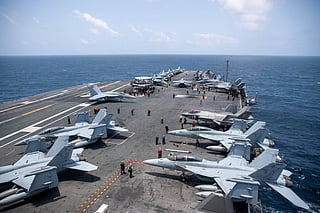
CENTCOM said the civilian crew had ignored repeated warnings and attempted to breach the US naval blockade after visiting an Iranian port.
A video released by CENTCOM showed a US military aircraft striking the vessel's stern with precision munitions. The command said the crew had been instructed to abandon the targeted areas before the strike.
6. Iran claims two oil tankers hit naval mines
Iran's Islamic Revolutionary Guard Corps (IRGC) Navy said two oil tankers caught fire after hitting naval mines while attempting to cross what it described as an unauthorised route in the Strait of Hormuz.
In a statement carried by its official news outlet Sepah News, the IRGC said one tanker struck mines east of the strait and the other while crossing the waterway.
It added that both vessels had switched off their navigation and GPS systems.
The claims have not been independently verified. The IRGC warned that vessels cooperating with the US military and entering areas it considers unauthorised would risk hitting naval mines.
7. Khamenei says US midterm results will not alter Iran's stance
Iranian Supreme Leader Ayatollah Mojtaba Hosseini Khamenei said the outcome of US midterm elections and changes between political parties would not alter Tehran’s defensive strategy or Washington’s hostility towards Iran. Warning against making concessions to the US, he said those expecting a change in American policy were “gravely mistaken”, IRNA reported.
Ayatollah Khamenei emphasised that expecting policy shifts from Washington ignores past lessons and undermines the gains achieved through Iranian national resistance.
8. US launches new task force to restrict Iran's supply routes
CENTCOM has established Task Force Iron Gate to disrupt Iran's use of land routes and the Caspian Sea to transport advanced weapons, dual-use technologies and sanctioned materials.
The team comprises approximately 20 civilian and military personnel and will coordinate with other US government agencies.
CENTCOM commander Adm. Brad Cooper said the initiative would strengthen efforts to restrict Iran's ability to finance terrorism, rebuild weapons factories and replenish its military.
CENTCOM also claimed that the US naval blockade had prevented Iran from exporting more than $25 billion worth of crude oil in recent months.
9. Iran warns of stronger military response as Hormuz closure continues
Iranian army spokesman Mohammad Akraminia said the country's armed forces were on higher alert and stronger than at the beginning of the eight-month conflict with the US.
He warned that any military response would be immediate and effective, while an IRGC spokesman said Iran's missile range continued to increase.
Iran also reiterated that the Strait of Hormuz would remain closed until its demands were met by Washington.
10. Diplomatic efforts continue as Trump confirms limited strikes
Iranian Foreign Minister Abbas Araghchi said he had held telephone conversations with foreign ministers from 12 countries over 48 hours as diplomatic efforts continued.
US President Donald Trump also spoke to Qatar's Emir Sheikh Tamim bin Hamad Al Thani about efforts to end the conflict.
Separately, Saudi Foreign Minister Prince Faisal bin Farhan discussed regional developments with Qatar's Prime Minister and Foreign Minister Sheikh Mohammed bin Abdulrahman Al Thani. Both sides discussed de-escalation and regional stability.
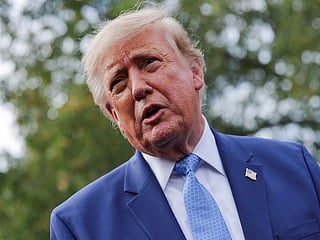
Trump, meanwhile, confirmed that the US military had carried out limited strikes against an Iranian air defence system, describing the action as "minor".
What UAE residents should keep in mind
Follow official updates: Rely on UAE government announcements and emergency authorities for verified information.
Check flight status: Monitor airline and airport announcements before travelling.
Monitor maritime advisories: Shipping operators should follow the latest security warnings.
Avoid unverified reports: Do not circulate unconfirmed videos, explosion reports or claims on social media.
Follow safety instructions: Comply with directions issued by local authorities.
What happens next?
With tensions continuing across the Gulf and Strait of Hormuz, UAE residents should remain alert to developments that could affect air travel, shipping and regional security. The UAE's rescue operation also highlights the importance of maritime emergency preparedness as incidents continue to be reported in nearby waters.
Monitor official announcements and check airline updates before travelling, as the regional situation remains fluid.