US-Iran tensions: CENTCOM rejects Iranian military commander's claims over naval operations
No toll for Hormuz transit, CENTCOM counters Iranian accusations

The US military has rejected several claims by an Iranian military commander about American naval operations, describing them as false and fabricated, as tensions continue over shipping routes and maritime security in the region.
In a statement posted on X, US Central Command (CENTCOM) denied claims that American forces had seized two Iranian oil tankers, that Iran’s navy had struck the aircraft carrier USS Abraham Lincoln, and that Washington was charging ships $2.5 million to transit the Strait of Hormuz.
Get updated faster and for FREE: Download the Gulf News app now - simply click here.
The latest exchange comes as CENTCOM says it continues to enforce a US blockade of Iranian ports, announcing that an American aircraft disabled a Palau-flagged vessel in the Gulf of Oman after it allegedly attempted to breach the restrictions.
CENTCOM rejects claims over Iranian tankers
CENTCOM denied reports that US forces had taken control of two Iranian oil tankers and that members of Iran’s Islamic Revolutionary Guard Corps (IRGC) had recaptured the vessels while American personnel were asleep.
The US command dismissed the account as fabricated and said Iran no longer had a navy.
US denies USS Abraham Lincoln was hit
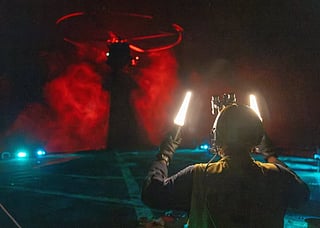
CENTCOM also rejected claims that Iranian naval forces struck the USS Abraham Lincoln (CVN 72) on the first day of Operation Epic Fury, forcing US forces to seek evacuation assistance from regional countries.
It said the aircraft carrier strike group had not been hit and had completed what it described as a historically successful combat deployment to the Middle East before returning safely to the United States last month.
No toll for Strait of Hormuz transit, says US
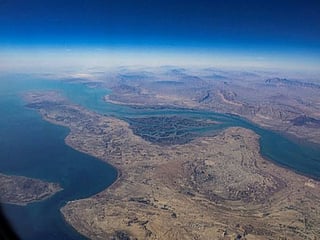
CENTCOM further denied claims that Washington was charging ships $2.5 million to pass through the Strait of Hormuz.
It said vessels were not required to pay a toll to use the international waterway and claimed US forces and regional partners had restored freedom of navigation through the strait.
The command said thousands of ships and billions of barrels of crude oil had passed through safely under US protection, despite what it described as Iranian aggression.
US says aircraft disabled ship in Gulf of Oman
Separately, CENTCOM said on Friday that US forces had disabled the Palau-flagged vessel Pacific Archer after it allegedly violated Washington’s blockade of Iranian ports.
According to the command, an American aircraft fired “precision munitions” at the ship’s stern on Thursday after it attempted to breach the blockade in the Gulf of Oman.
“The ship’s propulsion was ultimately disabled and the civilian crew was unharmed,” CENTCOM said.
The vessel had departed from Bandar Abbas, an Iranian port near the Strait of Hormuz, the statement added.
CENTCOM said it was continuing to enforce the blockade, claiming that six ships had been disabled and 158 others redirected.
Iran and US maintain competing maritime restrictions
The United States launched its blockade in mid-July following the collapse of a short-lived agreement with Iran.
Iran has also sought to impose its own restrictions on vessels transiting the Strait of Hormuz. Iranian forces have announced several incidents in recent weeks involving ships catching fire while attempting to use routes Tehran considers off-limits.
The competing restrictions and conflicting accounts have added to concerns over maritime security and commercial shipping through the Gulf and the Strait of Hormuz.