US-Iran conflict: What UAE residents need to know today, Sept. 14, 2026
Oil above $107, wider security risks: key impacts for UAE residents now
A planned Gulf-Iran meeting on the Strait of Hormuz has been postponed, while oil remains above $107 a barrel and security risks have widened from the Gulf to the Red Sea.
For UAE residents, the main issues to watch are flights, maritime security, fuel and energy prices, regional diplomacy and the risk of a broader confrontation.
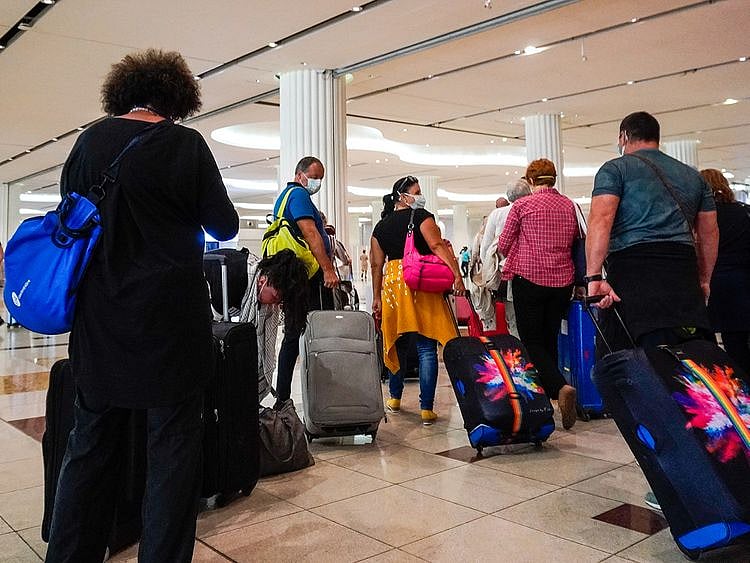
On Sunday, more than 170 flights were delayed at the UAE’s two main international airports, while two flydubai services between Dubai and Bahrain were cancelled as regional aviation disruption continued.
Regional airlines continue to operate under a volatile aviation environment following months of conflict and airspace restrictions across the Middle East.
Shipping remains under exceptional pressure: Iran requires vessels to seek permission to transit and is considering service fees, according to Gulf News reporting.
101 commercial vessels redirected: US Central Command said it had redirected 101 commercial vessels as of Sept. 13 to enforce the blockade on Iran.
Oman postponed Monday’s planned Salalah talks between Iran and Gulf states over the Strait of Hormuz, citing the need for consensus. Iran said the delay was jointly agreed with Muscat after some regional states requested it.
The US and Iran remain divided over negotiations. The Trump administration wants any talks to focus on Iran’s nuclear program, while Tehran says it will discuss nuclear issues only after Hormuz-related demands are addressed, including lifting the US naval blockade.
Saudi Arabia reportedly sought changes to an Omani-Iranian proposal, fearing it could create a new maritime arrangement in Hormuz that Riyadh and other GCC states would find unacceptable.
Regional diplomacy is continuing despite the postponement. Qatar and Oman discussed a solution to safeguard freedom of navigation, while Kuwait and Saudi Arabia also discussed securing shipping through the strait.
The US blockade remains in effect. US Central Command said American forces redirected 101 commercial vessels Sunday to enforce the blockade against Iran.
Washington believes it has the military advantage in Hormuz, but officials question how long it can maintain the large escort and naval operation.
Iran says an Oman shipping arrangement alone would not reopen Hormuz. Foreign Minister Abbas Araghchi said reopening depends on Washington meeting Tehran’s conditions.
Trump said Iran wants a deal and suggested the war could end before or shortly after the U.S. midterm elections, though no formal breakthrough has been announced.
A commercial vessel was struck near Hengam Island off Qeshm, Iran. Iranian authorities said one crew member was killed and four wounded. UK maritime officials separately reported a vessel hit by an unidentified projectile, followed by a fire and crew evacuation.
Explosions were later reported in Sirik, southern Hormozgan province, though the cause and any connection to the vessel incident were not immediately clear.
Saudi Arabia’s East-West oil pipeline is shut after drone attacks. The route normally carries about 4 million barrels a day from eastern oil fields to the Red Sea, allowing the kingdom to avoid Hormuz.
Saudi export capacity could be strained within days. Reuters reported that oil stocks at Yanbu could sustain exports for only five to seven days if the pipeline remains closed; afterward, as much as 4% of global oil supply could be at risk.
Iraq has increased security measures after Saudi Arabia said drones used in the pipeline attack were launched from Iraqi territory. Baghdad is reopening some crossings with Iran after temporary closures.
The Houthis are adding pressure near Bab el-Mandab, the Red Sea chokepoint linking the waterway to the Gulf of Aden. Their advances raise the risk that Saudi exports diverted from Hormuz could face disruption on the western route as well.
Brent stays above $107
Oil eased in early Asian trading Monday after a sharp rally, but prices remained far above normal levels.
West Texas Intermediate crude traded at about $100 a barrel, down 2.37%, while Brent crude stood at about $104.60, down 2.81%. Murban crude, a key UAE benchmark, was quoted at $119.50 a barrel.
Brent briefly pulled back but moved above $107 on Monday amid fresh security incidents.
Traders are watching three immediate risks:
A reported projectile strike on a vessel in the Strait of Hormuz on Sunday.
Iran’s report that an Iranian commercial ship near Qeshm Island was hit, killing one person and injuring several others.
Saudi Arabia’s temporary shutdown of part of its East-West pipeline after a drone attack.
Higher oil prices can raise costs across transport, logistics and imported goods over time. The direct effect on UAE retail fuel prices will depend on the country’s monthly fuel-pricing adjustment and broader market movements.
The conflict is no longer centered only on the Strait of Hormuz.
Iran and its regional allies are trying to create pressure points from the Gulf to the Red Sea, according to analysis cited by Gulf News. Houthi forces in Yemen have seized the port of Mocha and Perim Island, also known as Mayun, near the entrance to Bab Al Mandab Strait.
Bab Al MandAb connects the Red Sea and the Gulf of Aden, and is a major shipping route for cargo moving toward the Suez Canal and Europe.
Saudi Arabia has relied more heavily on Red Sea export routes as Hormuz became constrained.
But the Houthi advances, attacks on vessels and a drone strike affecting Saudi energy infrastructure have put those alternatives under pressure as well.
What UAE residents should watch
The immediate situation does not mean normal daily life in the UAE has been disrupted.
However, the latest developments show that the regional crisis remains fluid.
Residents should follow official UAE authorities, airlines, ports and employers for verified operational advisories rather than rely on unconfirmed social-media claims. The key indicators in the coming days are:
Whether Oman can reschedule and broaden the Hormuz talks.
Whether vessel attacks or restrictions in Hormuz continue.
Whether fighting around Bab Al Mandeb and Saudi energy infrastructure escalates.
Whether oil remains above $100 a barrel or resumes its climb.
Whether the US, Iran and Gulf states signal an off-ramp from confrontation.
The postponed Oman talks leave uncertainty over energy exports, maritime commerce, regional aviation and the wider cost of living unresolved.
Sign up for the Daily Briefing
Get the latest news and updates straight to your inbox
Network Links
GN StoreDownload our app
© Al Nisr Publishing LLC 2026. All rights reserved.