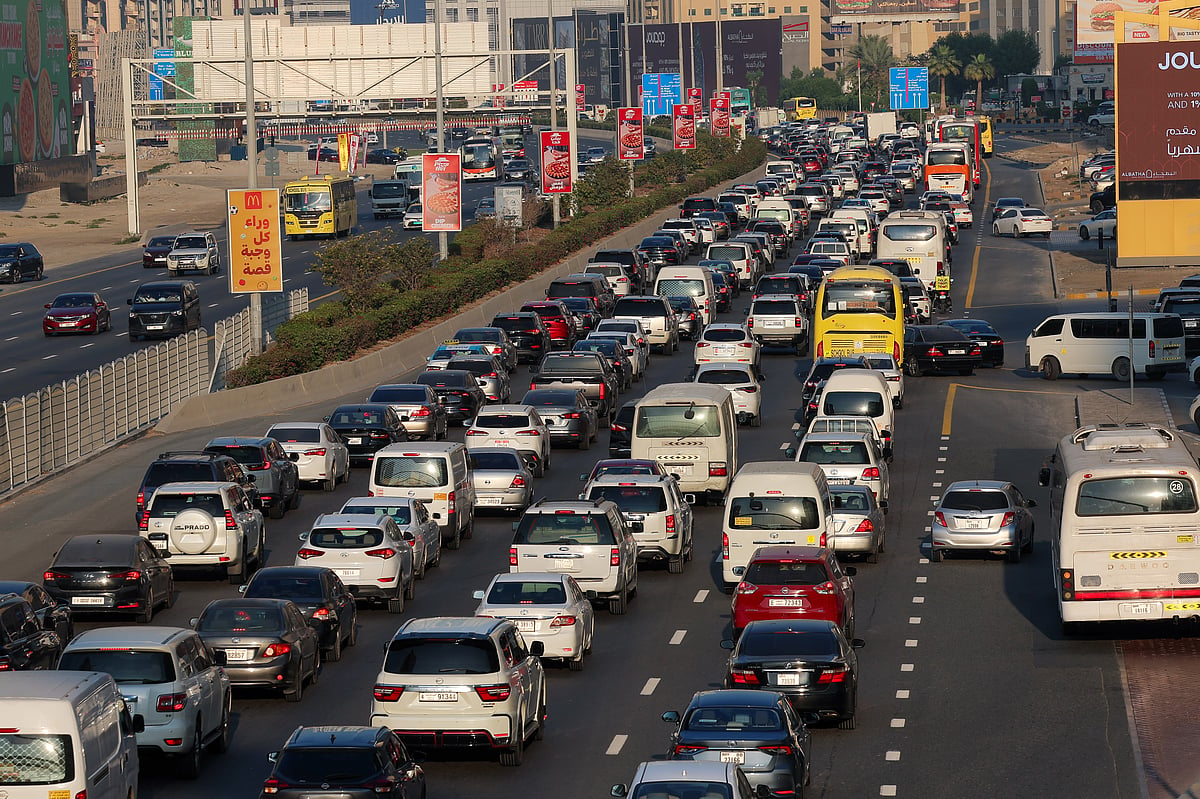
Dubai–Sharjah evening commute disrupted by congestion across key roads
Commuters faced significant delays on Monday evening as heavy congestion built up across major routes linking Dubai and Sharjah, with traffic pressure intensifying during peak travel hours.
The most affected stretch included the Dubai–Sharjah entry and exit points, where vehicle queues extended across multiple intersections and interchanges.
Get updated faster and for FREE: Download the Gulf News app now - simply click here.
Major congestion hotspots reported
Traffic slowdown was observed across several key corridors, including:
Port Saeed towards Sharjah via E11
Mirdif towards Al Qusais Industrial Area via E311
Al Jadaf and Zabeel Second corridors in central Dubai
University City access roads in Sharjah
Al Nahda, Industrial Area 4 and surrounding zones
Additional congestion was reported along Sheikh Mohammed Bin Zayed Road, where heavy volume further slowed traffic flow.
Minor accidents add to delays
Several minor collisions in both Dubai and Sharjah contributed to intermittent slowdowns, particularly across residential and industrial zones.
Affected locations included Karama, Al Twar 3, Umm Hurair Second, Nad Al Hamar Road, Al Rashidiya, Muhaisnah areas, Dubai Festival City, and Al Mamzar–Deira corridors.
In Sharjah, slowdown was reported around Al Nahda, Industrial Area 4, S113 and nearby neighbourhood routes.
Commuter impact across peak hour
The combined effect of congestion and minor incidents resulted in stop-start traffic conditions across multiple entry points between the two emirates, with delays extending into surrounding residential districts.
Motorists were urged to anticipate extended travel times during evening peak hours as pressure remained high across key inter-emirate routes.
Network Links
GN StoreAbout Gulf NewsTerms & ConditionsReach by GNSitemapContact usPrivacy PolicyGN FocusHave your sayWork with usAdvertise with usGulf News epaperPrinting Services
Download our app
© Al Nisr Publishing LLC 2026. All rights reserved.