Etihad Rail freight milestone puts passenger network in focus
Etihad Rail scales up freight impact as passenger services move closer to launch
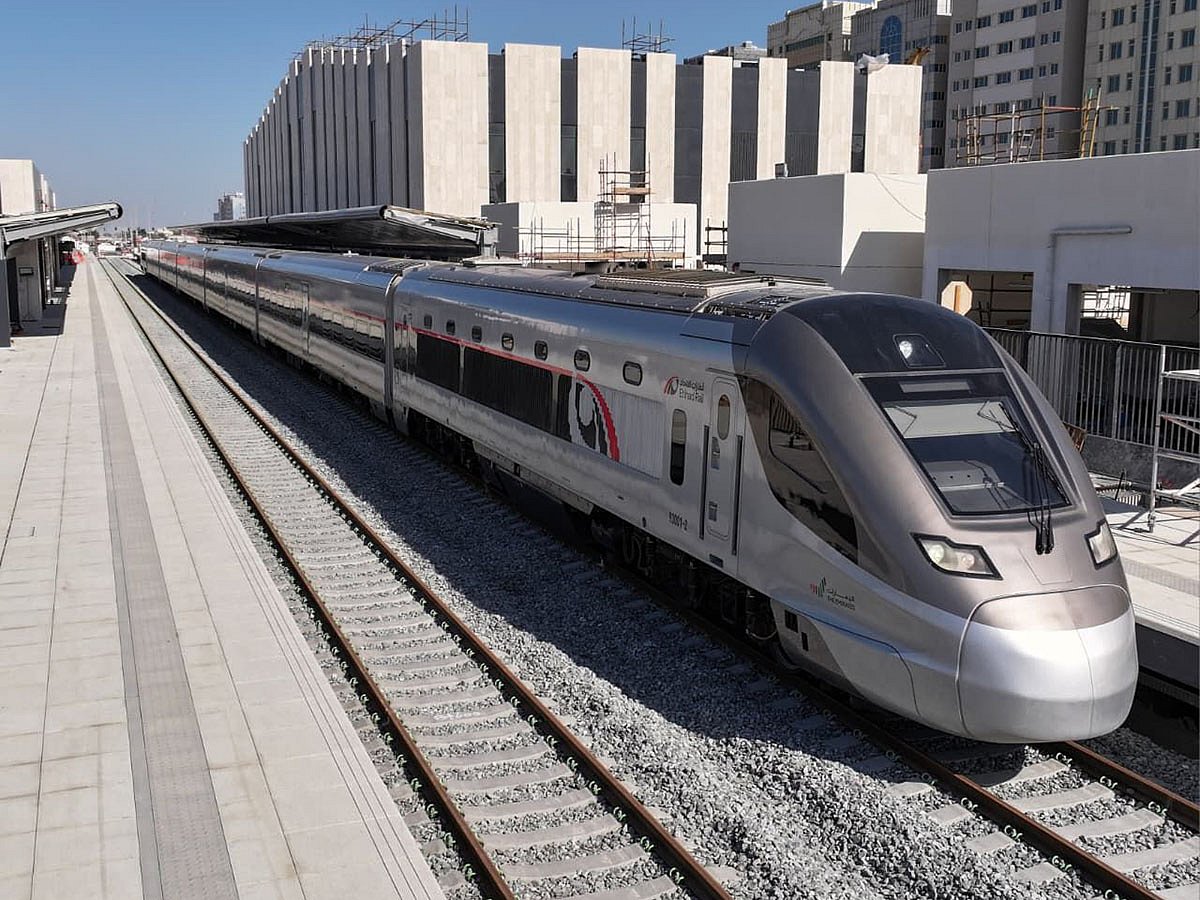
Dubai: Etihad Rail has transported more than 10 million tonnes of stone and gravel and moved 148,000 containers across the UAE, highlighting the growing role of the national railway in supporting trade and infrastructure development.
The milestone was highlighted during a meeting between Sheikh Hamdan bin Zayed Al Nahyan, Ruler’s Representative in the Al Dhafra Region, and a delegation from Etihad Rail, where the company’s latest project updates and long-term plans were reviewed.
Sheikh Hamdan described Etihad Rail as a key pillar of the UAE’s national transport system and a strategic initiative driving sustainable infrastructure. He also praised the competitive position the company has achieved within the transport sector, noting its contribution to comprehensive development through a railway network built to global standards.
Freight backbone gains scale
Freight operations have become the backbone of Etihad Rail’s impact on the economy. The transport of construction materials such as stone and gravel has supported large-scale infrastructure projects, while container movements have strengthened domestic supply chains and trade flows between emirates.
The scale of cargo handled since operations began reflects rising demand for rail as an alternative to road transport, particularly for heavy and bulk goods. The network’s role in reducing congestion and improving logistics efficiency has placed it firmly at the centre of the UAE’s long-term transport strategy.
Passenger services come into focus
Attention is now shifting toward passengers. Etihad Rail has confirmed that the first phase of its long-awaited passenger network will connect Abu Dhabi, Dubai and Fujairah, forming a spine that links the country’s main commercial centres with the east coast. Passenger services are expected to begin in 2026, with additional routes and stations to follow.
“I am able to now reveal the initial routes which will launch in 2026,” said Azza Al Suwaidi, deputy chief executive of Etihad Rail Mobility. “Initially, trains will operate between Abu Dhabi and Dubai, our twin centres of commerce, as well as connect with Fujairah in the east. From that spine, and over the course of 2026 and beyond, further routes, connections and stations will come online. We are anticipating big demand.”
Faster intercity travel
Journey times are expected to be about one hour between Abu Dhabi and Dubai, and around 90 minutes between Abu Dhabi and Fujairah, with final timetables still under development. Trains will operate at up to 200 kilometres per hour and carry up to 400 passengers.
The Abu Dhabi-Dubai corridor will see frequent services to meet rising demand for commuter and business travel. The Fujairah link is designed to support tourism and improve access to the east coast, offering relief from increasingly congested highways.
Population growth and heavier use of road networks played a central role in determining the first routes. Station locations were selected based on population density, travel demand and inter-emirate connectivity.
Stations begin to take shape
Established in 2009, Etihad Rail began freight operations in Abu Dhabi before expanding into a fully operational national freight network in 2023. Building a passenger system alongside it presented complex challenges.
Plans are also advancing for a separate electrified high-speed passenger line between Abu Dhabi and Dubai, which aims to cut travel time to around 30 minutes. A launch timeline for that service has yet to be announced, though it is expected to further reshape daily travel patterns once operational.

Sign up for the Daily Briefing
Get the latest news and updates straight to your inbox
Network Links
GN StoreDownload our app
© Al Nisr Publishing LLC 2026. All rights reserved.