Abdulaziz Al Shamsi, assistant director general of the communication and business sector of the Sharjah Chamber of Commerce and Industry
What the Khorfakkan Mango Festival offers to local farmers and families
Fifth edition turns mango into a livelihood, a learning platform, a community experience
Last updated:
6 MIN READ
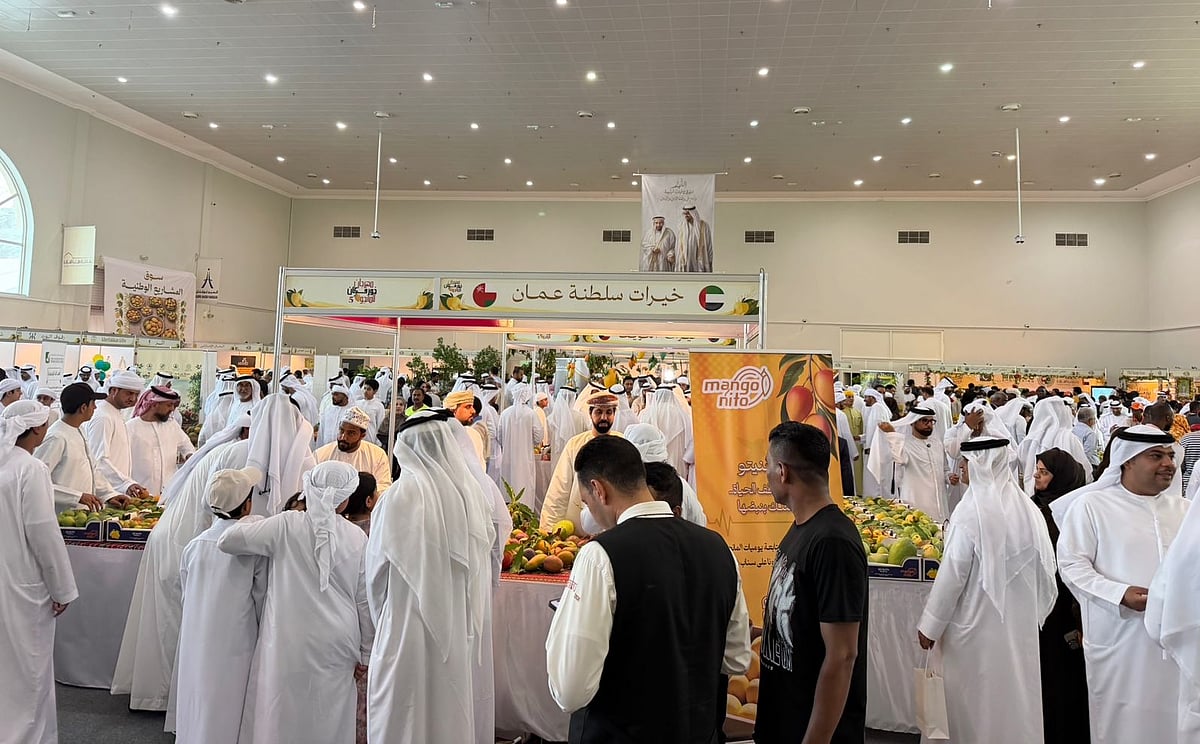
The three-day Khorfakkan Mango Festival operates under the theme "Mango: Our Fruit, Our Wealth" held at Expo Khorfakkan
Tricia Gajitos / Gulf News
Sharjah: In Khorfakkan, a mango is never just a mango. It is the result of months of care, irrigation, patience, and planning. It is also a competition entry, a source of income, a family project, and, for many growers, a livelihood rooted in the land.
From today, June 26, that story has unfolded publicly as the fifth Khorfakkan Mango Festival opened at Expo Khorfakkan, transforming the venue into a bustling marketplace where farmers, families, entrepreneurs, and international exhibitors came together over one of the UAE's most celebrated fruits.
Organised by the Sharjah Chamber of Commerce and Industry (SCCI), in cooperation with the Municipal Council of Khorfakkan, Khorfakkan City Municipality, and Expo Khorfakkan, the three-day festival is being held under the theme "Mango: Our Fruit, Our Wealth."
For organisers, the event has represented more than a seasonal celebration.
“It is our priority to look after the food security and through this festival we are looking to promote the local farmers, to have their products in hand, and to find new markets for those products. We can see in the past few years, there were a lot of initiatives to promote food security and this is one of the parts,” Abdulaziz Al Shamsi, assistant director general of the communication and business sector of the SCCI, told Gulf News.
He has expressed hope that farmers will be able to sell their harvests directly to consumers throughout the festival while raising awareness of locally grown produce.
Get updated faster and for FREE: Download the Gulf News app now - simply click here.
Direct value for farmers
For farmers across Khorfakkan and the wider Eastern region, the festival has offered something valuable in today's agricultural landscape, direct visibility.
Instead of relying solely on traditional supply chains, growers have presented their harvests straight to the public, where quality is assessed by consumers, agricultural experts, and fellow farmers alike.
This year's opening day has featured three flagship competitions, Mango Mazayna (Most Beautiful Mango), Largest Mango, and Best Mango Basket, rewarding excellence in cultivation, presentation, and creativity.
Participation has been closely regulated. Only mangoes grown locally on registered farms or home gardens have been accepted, with ownership verification required during registration. Leading entries have also been inspected on-site to ensure authenticity and maintain fairness.
Alkaabj Farm stall
Al Shamsi has noted that the competitions go beyond recognising the best fruit.
“We have several awards for the farmers on the best mango, also the best practices in water usage and irrigation. Those two are for the farmers to encourage awareness on the best practices of farming solutions,” shared Al Shamsi.
For many exhibitors, the festival's biggest reward has been the opportunity to reach customers directly.
“This helps us advertise our family’s farm. Our products our clean and we don’t use pesticides, chemicals, or any other additives. We travel around the world to bring seeds, to try, plant, and sell. If you try to buy from us, the taste is different as it is sweeter because it is made with love, not from chemicals,” explained Amar Fisal, Emirati owner of Alkaabj Farm.
Returning this year with a larger display, his farm has showcased fresh mangoes alongside locally grown limes, chico fruit, dates, and three varieties of sugar-free mango juice.
“We prepared better than last year. We brought fresher products and improved the way we present them.”
Amar Fisal, owner of Alkaabj Farm
More than a local festival
Although the spotlight remains on UAE-grown mangoes, the festival has increasingly become an international meeting point for agricultural businesses.
For Syed Saleem Akhtar, senior vice chairman of the Pakistan Business Council in Sharjah, the event has evolved into an important commercial platform.
“When you go to festivals like this, you introduce your products to different nationalities. It has become a commercial hub where businessmen involved in agriculture meet each other and build business relationships,” said Akhtar.
Syed Saleem Akhtar, senior vice chairman of the Pakistan Business Council in Sharjah
After receiving a strong response last year, Pakistani exhibitors have returned with larger quantities of fresh mangoes delivered daily by air.
“Last year we came mainly for branding, but people really loved our mangoes. This year we expect the footfall to increase from more than 10,000 visitors to over 15,000 visitors per day.”
The delegation has also introduced handcrafted rosewood gift boxes designed for premium mango gifting, along with special Pakistani delights.
Pakistan Pavilion
Uganda has also returned after a successful debut last year.
“This festival helps us showcase Uganda's organic products to people in the UAE while helping farmers back home reach new markets,” stated Ambassador Aisa Ismail, deputy head of mission and in charge of Uganda Consulate in Dubai.
After receiving positive feedback last year, Uganda has expanded its display beyond mangoes to include cocoa and flour while exploring supply opportunities with supermarkets across the UAE.
Ambassador Aisa Ismail, deputy head of mission and in charge of Uganda Consulate in Dubai
Hands-on family experience
As farmers compete for awards, families have been drawn into a more interactive experience. The Best Mango Basket competition has encouraged participants to combine agriculture with creativity, while on June 27, the programme expands further with the Children's Mango Beauty Contest and the Best Innovative Idea or Mango-Based Project Competition.
The activities have been designed to introduce younger generations to farming through hands-on participation. Visitors have also explored stalls offering fresh produce, heritage displays, food products, and innovative mango-based creations.
Chamoyah stall
Among the first-time exhibitors has been Chamoyah, offering the Mexican flavour of chamoy to festival visitors.
“This festival has really helped us because mangoes are our main product. We are introducing Mexican chamoy to the UAE market through mangoes, allowing more audiences and customers to discover a different way of enjoying the fruit,” exclaimed Jay Menorca, owner of Chamoyah.
Known for its viral "mango flower" concept at Global Village, the business has highlighted that participating in Khorfakkan offers an opportunity to display the product to a wider audience in Sharjah.
Jay Menorca, owner of Chamoyah
Learning beyond the competition
Beyond the contests and marketplace, the festival has continued to position itself as an educational platform.
Workshops on modern farming methods, irrigation systems, mango cultivation, and pest management run throughout the three-day event, offering practical guidance to experienced growers and newcomers alike.
Combined with cultural performances and heritage activities, the programme has shown the festival's broader ambition of strengthening agricultural knowledge while preserving local traditions.
Emiratis performing their traditional dance
A growing agricultural platform
Now in its fifth edition, the Khorfakkan Mango Festival has grown beyond a seasonal attraction. It has become a platform supporting local agriculture, encouraging sustainable farming practices, creating new commercial opportunities, and strengthening awareness of UAE-grown produce.
The festival remains open daily from 4.30pm to 10pm at Expo Khorfakkan until June 28.
Expo Khorfakkan
By the end of each day, the biggest success is measured not only in competition trophies or sales figures, but in the conversations taking place between farmers comparing harvests, entrepreneurs discussing new markets, and children discovering that every mango on display represents months of dedication.
In Khorfakkan, the mango is more than fruit. It is a bridge between tradition and innovation, between local farms and global markets, and between the people who grow the land and those who enjoy its harvest.
Network Links
GN StoreAbout Gulf NewsTerms & ConditionsReach by GNSitemapContact usPrivacy PolicyGN FocusHave your sayWork with usAdvertise with usGulf News epaperPrinting Services
Download our app
© Al Nisr Publishing LLC 2026. All rights reserved.