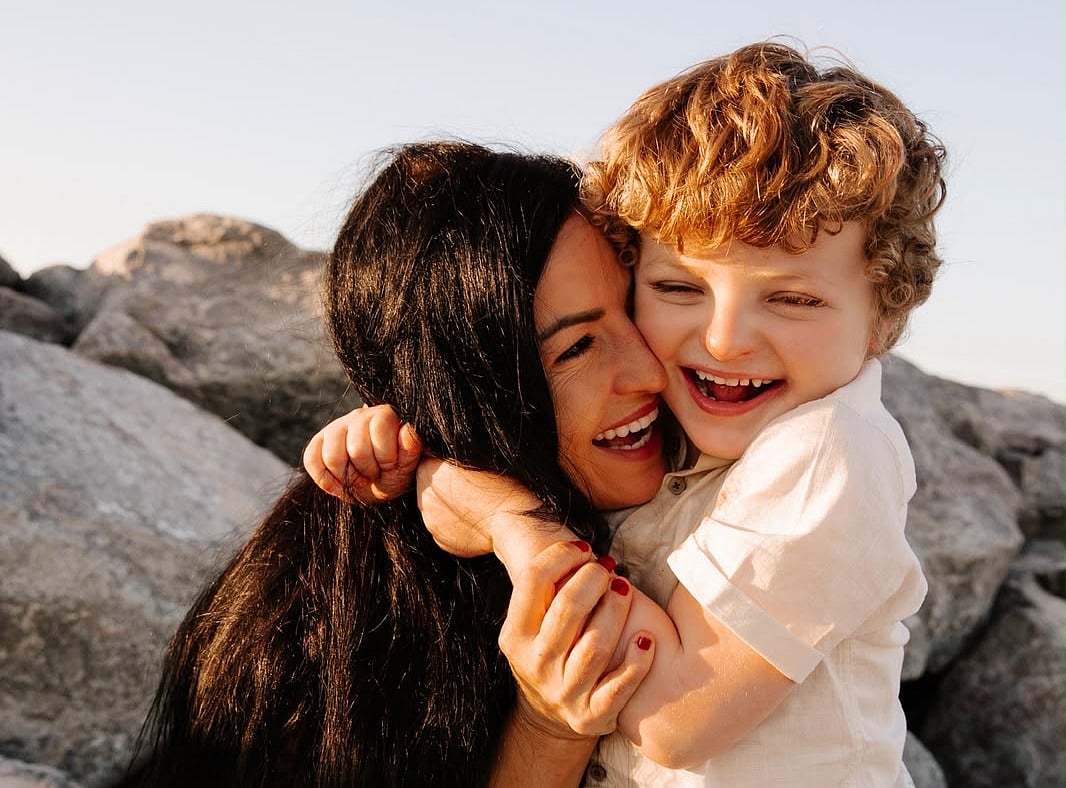
Six-year-old Samson
Dubai: For Rhian Adams, every step her six-year-old son Samson takes is a milestone worth celebrating.
Samson, who is nearly seven, has been diagnosed with Angelman syndrome when he was just 10 months old. The rare genetic condition affects a gene on chromosome 15 and can cause significant challenges with speech, movement, learning, and communication.
Now, Adams, a British expatriate based in Dubai and a mother of two, has been preparing to take on a challenge of her own, riding 150 kilometres by camel across the Dubai desert over 15 days to raise awareness of the condition.
Get updated faster and for FREE: Download the Gulf News app now - simply click here.
The challenge, titled “Carried through the sand — 15 days for chromosome 15,” will see Adams ride approximately 10km each day, from October 12 to 26, through the desert at a camel farm, managed by the Hamdan Bin Mohammed Heritage Centre.
For Adams, the number 15 is more than a figure. It has been a reference to chromosome 15 and the diagnosis that changed the course of her family’s life.
“I wanted that number to give people a reason to ask questions and learn more,” Adams told Gulf News.
‘The same little boy I loved’
When Samson was diagnosed, the news has been devastating for Adams.
“Being told he would never talk, maybe never walk, and never live an independent life brought my world to a halt,” recalled Adams.
The diagnosis has brought a flood of questions about his future and forced Adams to reconsider many of the things she had imagined for her son.
“Samson was still Samson, the same little boy I loved with all my heart. A diagnosis could explain his challenges, but it could never describe everything he is.”
Today, Samson is nonverbal, but that does not mean he cannot communicate. He uses photographs, touch buttons, facial expressions, and the way he connects with people to express himself. He loves music, swinging, spinning, and rough play. Above all, Adams loves eating and training.
“He also laughs a lot.”
Hospital stays
Life with Angelman syndrome has brought serious medical challenges. Samson has experienced seizures, severe sleep difficulties, and feeding problems. He has been admitted to hospital 25 times, including a month spent in intensive care.
According to Adams, who is raising Samson and his older sister, Seren, as a single mother, balancing medical needs with the everyday joys of childhood has not always been easy.
“There have been frightening moments and long periods of exhaustion,” described Adams.
Her definition of strength has changed along the way.
Rhian Adams with her son Samson and daughter Seren
“I come from a sporting background, where progress is often measured in medals, distances, or personal bests. With Samson, progress might be turning a door handle, taking a step, or learning to do something we have practised for months. Those moments feel enormous.”
Samson has learned to walk, despite doctors initially warning that he might never do so. However, he is still unable to stand independently without moving.
Adams’ hopes have now included seeing him stand, run, and squat down to the floor. She has expressed hope that Samson will find more ways to communicate when he is uncomfortable or unwell, or when he needs to use the bathroom.
“These skills would give him more independence and help us understand and meet his needs.”
‘If you learn to walk, I’ll learn to walk on my hands’
One of Adams’ most powerful memories came from a promise she has made to her son.
“When doctors told me Samson might never walk, I made him a promise, ‘If you learn to walk, I will learn to walk on my hands,’” shared Adams.
Around three years later, Samson walked. Adams has kept her promise and learned to handstand walk. The experience has reinforced a lesson she now carries into every challenge, progress can come through small, repeated efforts.
“Learning to walk did not mean all his mobility challenges disappeared. But it was an enormous milestone.”
From fitness coach to camel rider
Adams moved to the UAE in 2014 after seeing opportunities in the country’s growing fitness industry. Over the years, the UAE has become home, the place where she has built her career and where her children are growing up.
The country has also played an important role in Samson’s medical journey. Having access to specialists in neurology, neurodevelopment, and genetics has been vital, especially during difficult hospital stays.
Support has come from beyond the medical community. Friends and the wider community have helped her family feel included, something that has been really meaningful as a single mother.
“Having people around us who welcome both children and see Samson as a little boy to include makes such a difference,” exclaimed Adams.
Why a camel journey
The desert challenge combines two parts of Adams’ life, her love of physical challenges and her desire to make people stop and ask questions about Angelman syndrome.
She has previously taken part in a camel caravan a decade ago, so this will not be her first experience travelling through the desert by camel. But this journey has a very different purpose.
“I have always loved a physical challenge. I wanted to use something unusual and memorable to draw attention to a condition many people have never heard of,” explained Adams.
Rhian Adams riding a camel
Each day of the 15-day challenge will focus on a different aspect of life with Angelman syndrome, including diagnosis, seizures, sleep, communication, development, inclusion, and joy. Adams will combine footage from the camel journey with videos of Samson and information about the condition.
The preparation has involved practice rides and strength training, in order to help her control her body as the camel moves across dunes and uneven ground. Apart from the physical preparation, there is also an emotional one.
‘Being nonverbal does not mean having nothing to say’
One of Adams’ biggest objectives is to change how people understand children such as Samson. Angelman syndrome affects more than speech or developmental milestones. She has urged people to look beyond the diagnosis.
“Being nonverbal does not mean having nothing to say,” stated Adams.
Samson has preferences, feelings, humour, and a distinct personality.
“He has so much joy, even with everything he faces.”
Adams has encouraged people to speak directly to children such as Samson, give them time to respond, and make an effort to get to know them.
“Say hello. Invite them. Give them time. Those simple things can make a family feel welcome.”
Hope for research and greater awareness
Adams hopes the campaign reaches healthcare professionals in the UAE. She would like to see more clinicians learn about Angelman syndrome, study the condition further, and better understand the challenges faced by children and their families.
Research is a major source of hope. For families living with Angelman syndrome, progress could mean fewer seizures, better sleep, easier movement, and more effective ways of communicating.
“I hope that research will lead to treatments that make a meaningful difference to Samson’s life and the lives of others with Angelman syndrome,” remarked Adams.
‘Our life is still full of love’
For Adams, the camel journey is not about proving how much she can endure. It is about making sure people see the child behind the diagnosis.
“The boy who laughs at the funniest little noise, loves being swung around, and tries to force a laugh when I hold a microphone near his mouth,” said Adams.
Her own journey has taught her that resilience is not about never struggling.
“Sometimes it means accepting help, allowing yourself to cry, and finding the strength for the next small step.”
Her Christian faith has also been an important source of peace and hope.
“There is hardship in our life, but there is also laughter, friendship, and so much love.”
And that is the message she hopes will remain after the final kilometre of the 150km journey, that children such as Samson should not be defined by what they cannot do.
“I hope people leave this campaign with greater understanding and a willingness to include children like Samson. And I hope other parents take away a little hope. Our life has taken a different path from the one I imagined, but it is still full of love, purpose, and moments worth celebrating.”
Network Links
GN StoreAbout Gulf NewsTerms & ConditionsReach by GNSitemapContact usPrivacy PolicyGN FocusHave your sayWork with usAdvertise with usGulf News epaperPrinting Services
Download our app
© Al Nisr Publishing LLC 2026. All rights reserved.