UAE sees first robotic epilepsy procedure at Cleveland Clinic in Abu Dhabi
Milestone offers safer, more precise diagnostics for complex epilepsy cases
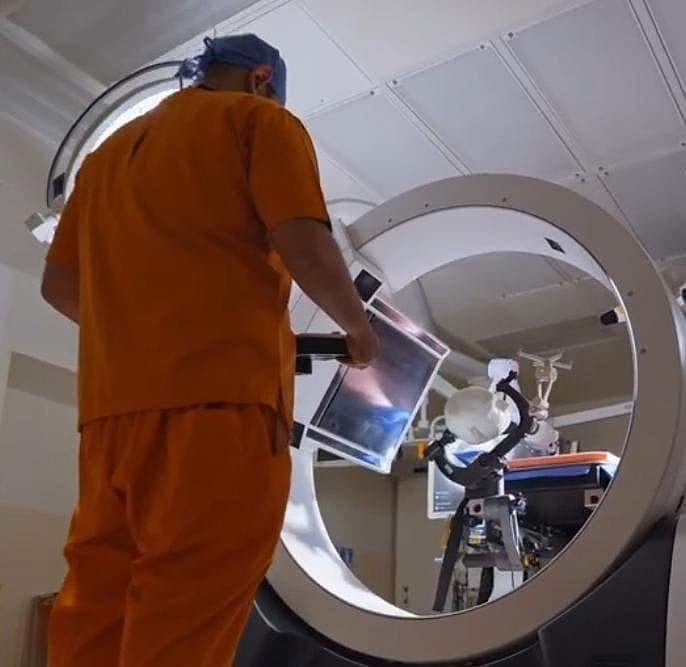
Abu Dhabi: Cleveland Clinic Abu Dhabi has performed the UAE’s first robotic-assisted procedure to map and diagnose epilepsy, marking a major step forward in treating complex cases.
Building on the hospital’s achievement of conducting the country’s first non-robotic stereoelectroencephalography (SEEG) procedure last year, the introduction of robotic technology for the SEEG procedure further enhances safety, efficiency, and diagnostic accuracy.
Since adopting the robotic-assisted technique, the hospital has completed three procedures, underscoring the growing clinical impact of this innovation and its role in advancing epilepsy diagnostics and surgical planning.
Epilepsy
Traditionally, epilepsy diagnostics relied on a frame-based approach in which a rigid head frame is fixed to the patient’s skull to guide electrode placement, a process that can be uncomfortable and time-consuming. Robotic-assisted SEEG offers a minimally invasive alternative, allowing clinicians to precisely locate seizure origins deep within the brain. Thin electrodes are implanted into targeted areas to monitor electrical activity and identify the seizure onset zone, resulting in reduced patient discomfort, faster recovery, and enhanced surgical precision.
Dr Georges-Pascal Haber, Chief Executive Officer at Cleveland Clinic Abu Dhabi, said: “Bringing the robotic SEEG procedure to the UAE is more than just adopting new technology. We are giving people with epilepsy access to safer, more precise diagnostics that can change the course of their care. Innovation in neurology is advancing rapidly, and investing in technologies like this helps us understand the brain in ways we could not before. This milestone reflects our commitment to providing the most advanced patient-centred care and reinforces our role in shaping the future of minimally invasive neurological treatment.”
Sufficient clarity
Robotic SEEG is especially valuable for patients with drug-resistant epilepsy, where non-invasive diagnostic tools such as scalp EEG, MRI, PET-CT, and ictal SPECT scans may not offer sufficient clarity. Robotic assistance enables millimetric accuracy in planning and executing electrode trajectories, minimising risk and improving diagnostic confidence. Once the seizure origin is identified, clinicians can develop a personalised surgical treatment plan focused on long-term seizure control.
Smarter approach
Dr Florian Roser, Chief Medical Officer and Institute Chief of the Neurological Institute at Cleveland Clinic Abu Dhabi, said: “The Robotic SEEG procedure represents a smarter and smoother approach to epilepsy diagnostics. It allows us to tailor our approach to each patient’s unique brain anatomy, improving accuracy and efficiency while supporting better-informed treatment planning. As the UAE’s first Level 4 Epilepsy Center in the UAE, this advancement reflects our ongoing commitment to pioneering neurological solutions to patients, offering the most advanced forms of non-invasive and invasive neurodiagnostic evaluation.”
The procedure was led by Dr Florian Roser alongside a multidisciplinary team of specialists, including Dr Tanmoy Maiti, Dr Mohamad Ayman Haykal, and Dr. Eugene Achi, all experts in epilepsy surgery and diagnostics, ensuring coordinated care and optimal patient outcomes.
Network Links
GN StoreDownload our app
© Al Nisr Publishing LLC 2026. All rights reserved.