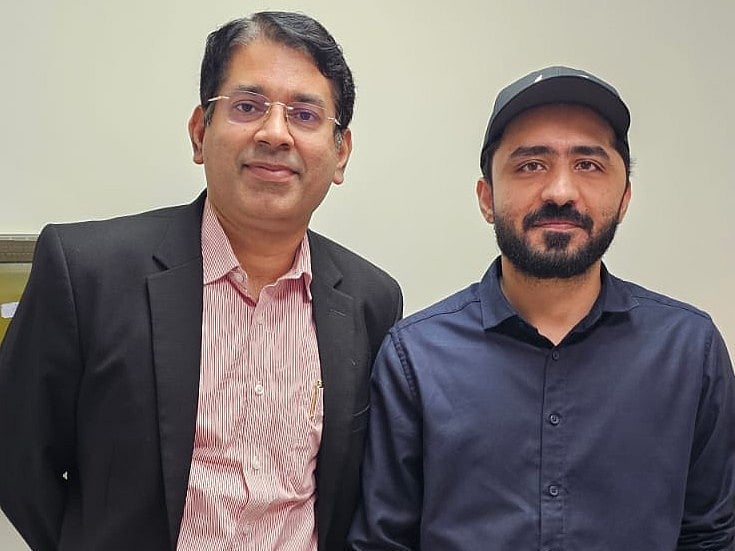
A 30-year-old Pakistani expat living in Sharjah has regained full vision after undergoing emergency brain surgery for a rare and potentially blinding condition that caused sudden loss of sight in both eyes.
Emad Arif Khan, a real estate consultant, suffered rapid vision deterioration, leaving him unable to read, write or carry out daily activities. Doctors later discovered that his sudden blindness was caused by a rare and large arachnoid cyst in the brain that had led to dangerously high intracranial pressure, compressing the areas responsible for vision.
Until the onset of symptoms, Emad had been healthy and fully independent, including driving. Two weeks before seeking urgent medical help, he had recovered from a flu but soon began experiencing pain during eye movement, persistent frontal headaches and gradually worsening blurred vision.
He initially sought treatment at another clinic, where he was prescribed eye drops. However, his condition continued to worsen, prompting him to seek further evaluation at Aster Hospital Mankhool, where he arrived with loss of vision in both eyes.
At the hospital, Dr Parth Joshi, Specialist Ophthalmologist, detected papilledema – swelling of the optic nerves – a critical sign of raised pressure inside the skull. An urgent MRI scan revealed a large arachnoid cyst pressing on areas of the brain responsible for vision, along with a smaller cyst near the cerebellum.
Common in children, not adults
While arachnoid cysts are detected in about 1.4 per cent of patients undergoing brain MRI scans, more than 90 per cent are asymptomatic and rarely require surgical intervention. They are more commonly diagnosed in children and seldom cause sudden vision loss in adults, making Emad’s case exceptionally rare.
Recognising the critical risk of permanent blindness, the neurosurgery team, led by Dr Prakash Nair, Consultant Neurosurgeon, recommended immediate surgery. Dr Nair performed surgery on the left side of the skull to open the cyst and relieve pressure inside the brain. The cyst was carefully drained. A biopsy confirmed the cyst was benign.
Following surgery, Emad experienced temporary speech difficulty – a known effect of sudden pressure changes in the brain, but did not suffer facial weakness, limb weakness or seizures. His recovery included physiotherapy, clot-prevention care, feeding support and wound management. Follow-up CT and MRI scans confirmed a significant reduction in the cyst, full brain re-expansion and no complications.
Only 4% of patients with arachnoid cysts require surgery, making this case exceptionally rareDr Prakash Nair
Return to normal life
By the time of his discharge on June 25 last year, Emad’s headaches had resolved and his vision had improved dramatically. Subsequent follow-ups confirmed normal vision (6/6), normal eye pressure, no optic nerve swelling and no neurological deficits. He has since travelled to his home country and reported returning to a fully normal life.
“When my vision loss occurred suddenly, it was a frightening experience that deeply worried me and my family. Even simple daily tasks became difficult,” Emad said.
“By the grace of Allah Almighty, I have completely recovered, and my vision has been fully restored,” he said, noting the care and support from the medical team.
Only 4% require surgery
Dr Nair highlighted the rarity of the condition.
“Only 3 to 4 per cent of patients with arachnoid cysts require surgery. Swift diagnosis and immediate surgical intervention were crucial in saving Emad’s vision,” he said.
Dr Joshi added that “early recognition” of papilledema and close collaboration between ophthalmology and neurosurgery played a decisive role in the outcome.
Sign up for the Daily Briefing
Get the latest news and updates straight to your inbox
Network Links
GN StoreDownload our app
© Al Nisr Publishing LLC 2026. All rights reserved.