Pakistani expat in Dubai, 32, undergoes two heart surgeries in just six months
Dubai doctors perform redo bypass surgery, rare procedure accounting for just 2% of cases
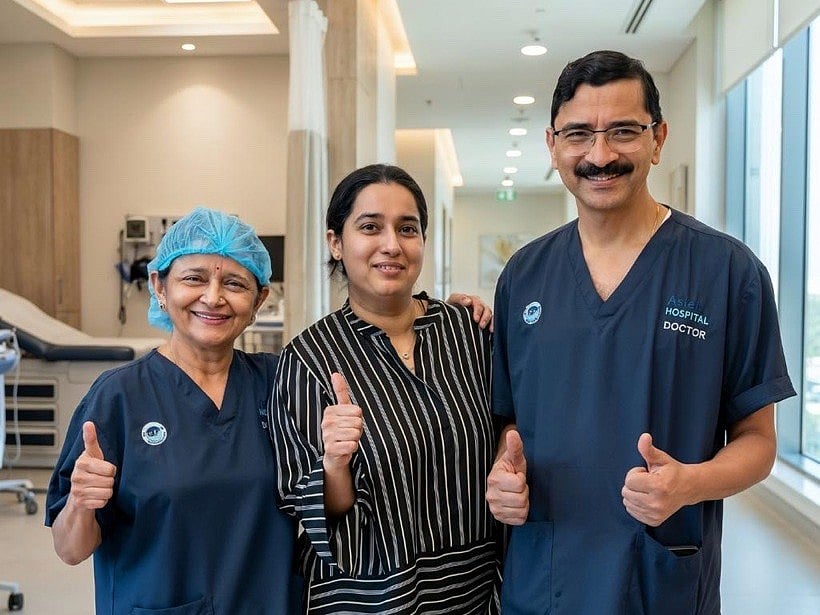
Dubai: Mahpara Ashraf was no stranger to fear. The 32-year-old Pakistani expat, living in Dubai, had already been through the ordeal of bypass surgery just months earlier. But when the chest pain came back, sharper and more urgent, she knew something was terribly wrong.
What followed was one of the rarest and most complex cardiac procedures performed in the UAE: an emergency redo coronary artery bypass grafting (CABG) surgery, just six months after her first, carried out on a beating heart at Aster Hospital, Al Qusais.
She made it through, with the intervention of a team of expert doctors in Dubai.
What happened
Mahpara had multiple comorbid conditions including diabetes, high blood pressure, high cholesterol, and severe coronary artery disease. As her cardiac condition worsened, she underwent a stent procedure in Pakistan to open a blocked heart artery in May 2025.
A month later, in June, she had a full bypass surgery, also in Pakistan. She returned to Dubai hoping the worst was behind her. It wasn’t.
Back in Dubai, the chest pain returned with a vengeance. She visited Aster Hospital, Al Qusais, for further evaluation. Repeat coronary angiography revealed multiple blockages: not just in her native arteries, but also in the bypass grafts from her first surgery. Of all the grafts placed during her initial operation, only one remained open.
She was admitted with unstable angina, a condition that, left untreated, can trigger a massive heart attack.
Get updated faster and for FREE: Download the Gulf News app now - simply click here.
Racing against time
The odds were stacked heavily against her. Mahpara had diabetes, high blood pressure, and high cholesterol. It is a dangerous combination that significantly raises surgical risk. She was also on blood-thinning medication, adding yet another layer of complexity.
Redo bypass surgeries account for only about 2% of such procedures globally. Performing one within six months of the original surgery, on a young woman, in an emergency setting was exceptionally rare territory.
Women make up only 20% to 30% of all CABG patients worldwide, partly because the hormone oestrogen offers some cardiovascular protection before menopause. Yet when women do require the surgery, they tend to have worse outcomes than men, often presenting later, with more advanced disease and more pre-existing conditions.
The surgical team at Aster Hospital faced another challenge beyond the rarity of the case: finding suitable blood vessels to create the new bypasses. The vessels used in her first surgery were no longer available.
On a beating heart
They proceeded with an emergency redo CABG on a beating heart, a technically demanding approach that requires exceptional precision, and successfully completed four bypass grafts.
Dr Sandeep Shrivastava, Consultant Cardiothoracic Surgeon at Aster Hospital, Al Qusais, said: “This was a highly challenging and rare case. Performing a redo bypass surgery within such a short time frame, and that too on a beating heart, requires a high level of experience & surgical expertise. The second time surgery, presence of prior grafts, and the patient’s unstable condition added to the complexity. Our team carefully planned every step, and complete revascularization with four grafts is expected to provide a long-term durable outcome.”
Cardiac surgeons, cardiologists, anaesthesiologists, and critical care specialists coordinated closely at every stage: from planning to the operating table to post-operative care.
Dr Shipra Srivastava, Consultant Cardiothoracic Surgeon, said: "This case is rare for multiple reasons. Our patient was only 32 years old and female, with multiple pre-existing medical conditions. Within just six months, all except one of her grafts were completely blocked. Globally, the prevalence of CABG in females accounts for only 20–30% of cases."
Dr Abdul Rauoof Malik, Specialist Cardiology, added: "This case reflects a growing trend where younger patients are developing serious heart disease due to conditions like diabetes, hypertension, and high cholesterol. It also highlights the importance of timely follow-up after previous heart procedures. With proper evaluation and a team-based approach, even high-risk redo surgeries can be performed successfully at Aster Hospital, Al Qusais."
'They saved my life'
Mahpara's recovery after the surgery was smooth and uneventful. Speaking from the other side of her ordeal, she said: "I am truly grateful to the doctors and staff at Aster Hospital, Al Qusais for saving my life. I was very worried when my chest pain came back so soon after my first surgery, but the cardiac surgical team handled my case with great care and confidence. Their support throughout my treatment and recovery means everything to me."
Network Links
GN StoreDownload our app
© Al Nisr Publishing LLC 2026. All rights reserved.