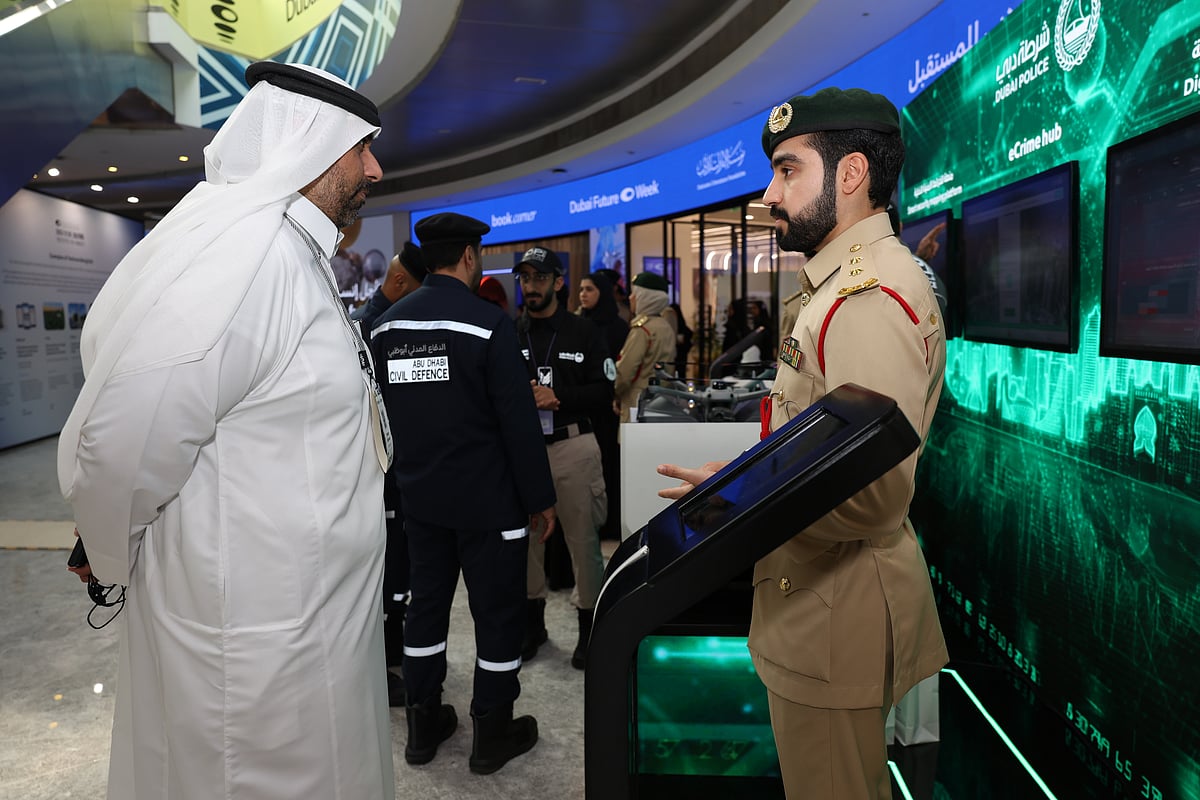
Dubai Police showcases AI traffic systems, smart drones and robotic patrols in Dubai.
Dubai: Dubai Police is showcasing a range of advanced security technologies, including a digital traffic platform that analyses road accidents and violations to identify accident hotspots, alongside autonomous robotic patrols, smart surveillance systems and an expanded drone network, at Dubai Future Week 2026.
The technologies are being displayed at the event, organised by the Dubai Future Foundation from November 18 to 21, as Dubai Police highlights how artificial intelligence, robotics and data-driven solutions can improve road safety, strengthen security operations and prepare the force for future challenges.
Among the key innovations on display is the Digital Traffic Platform, which analyses traffic accident and violation data to identify the leading causes of crashes and pinpoint locations recording the highest number of incidents. It also generates recommendations and potential solutions to support future traffic planning and decision-making.
Get updated faster and for FREE: Download the Gulf News app now - simply click here.
Dubai Police is also presenting its Smart Security Mapping Platform, which uses interactive maps and data dashboards to visualise security information and indicators. The system enables geographical analysis and helps authorities monitor the distribution of security indicators across different areas.
Another featured service is the e-Crime platform, which allows residents to report cybercrimes securely, around the clock, through the Dubai Police smart application and website. The service covers incidents including financial fraud, cyber extortion, personal account theft and digital hacking.
Robotic patrols and smart drones
Visitors can also see DPR02, an autonomous robotic patrol connected directly to police operations rooms. Designed to operate continuously, the robot collects field data, supports operational control and helps improve response times and security coverage.
Another innovation is DPR1.5, a hybrid autonomous ground robot developed to carry out security tasks in challenging terrain. It can support security operations, monitor infrastructure, analyse data and integrate with command-and-control systems.
Dubai Police is also displaying DJI Dock 4, which has joined its drone fleet and strengthens the emirate's Drone Box network. The system comprises drone stations deployed across Dubai to respond immediately to emergency calls received through the 999 hotline. The network currently covers 50 per cent of Dubai's urban areas.
The exhibition also features the Ferrari Mansory tourist police patrol, equipped with the Himma X smart bag. The specially designed bag contains electronic devices and assistive technologies to support People of Determination, facilitate communication and improve their access to police services.
Visitors can also experience the Ghiath smart patrol through a specially developed virtual simulation programme that allows them to try driving a police patrol vehicle.
Dubai Police showcases AI traffic systems, smart drones and robotic patrols in Dubai.
Preparing for the future of policing
Brigadier Dr Expert Hamdan Al Ghassiya, Director of the Future Foresight Centre at Dubai Police, said the force's participation supports government efforts to promote a culture of future foresight and strengthen institutional readiness to respond to rapid developments.
He said Dubai Police was committed to incorporating foresight findings into strategic planning and the development of police operations, enabling it to anticipate security challenges and support Dubai's ambition to remain a global model for future readiness.
Colonel Omar Khalifa Belobaida Al Suwaidi, Deputy Director of the Future Foresight Centre, highlighted the importance of the event in facilitating knowledge exchange with research institutions, experts and innovators.
He said Dubai Police was exploring opportunities for cooperation to develop solutions addressing the future needs of policing, while benefiting from emerging trends and understanding their implications for security operations.
Manal Rashid Al Qasimi, Director of the Future Planning Department at the centre, said the force was showcasing several artificial intelligence agents and smart platforms as part of its participation.
Three public workshops on Saturday
Dubai Police will also organise three interactive workshops on Saturday, November 21, focusing on emerging security challenges and the impact of technology on society.
The first workshop, titled 'Under Surveillance: Will Future Wellbeing Mean Being Watched?', will examine how public safety and security could evolve by 2050, including the shift from responding to incidents towards predicting and preventing risks through smart technologies.
The discussions will address the balance between public protection, privacy and trust, as well as the safeguarding of personal data, individual rights and freedoms, and the importance of maintaining human oversight.
The second workshop, 'Beyond Reality: Deepfakes and Security Threats', will explore deepfake technology and generative content, their development and their implications for community, institutional and digital security.
Participants will examine ways to detect manipulated content, verify digital authenticity and prevent related crimes through technical, security and judicial capabilities, alongside legislative frameworks and proactive measures.
The third workshop, 'The Future of Financial Security in a World of Virtual Assets', will focus on the role of artificial intelligence in tracking virtual assets and preventing their misuse for financial crimes.
Discussions will examine methods of identifying the ultimate beneficiaries of transactions and the challenges of tracing virtual assets when encryption and concealment technologies are used.
Network Links
GN StoreAbout Gulf NewsTerms & ConditionsReach by GNSitemapContact usPrivacy PolicyGN FocusHave your sayWork with usAdvertise with usGulf News epaperPrinting Services
Download our app
© Al Nisr Publishing LLC 2026. All rights reserved.