UAE Supreme Court overturns deportation of resident convicted of drug use
Resident born in UAE argued deportation would cause harm to family and their stability
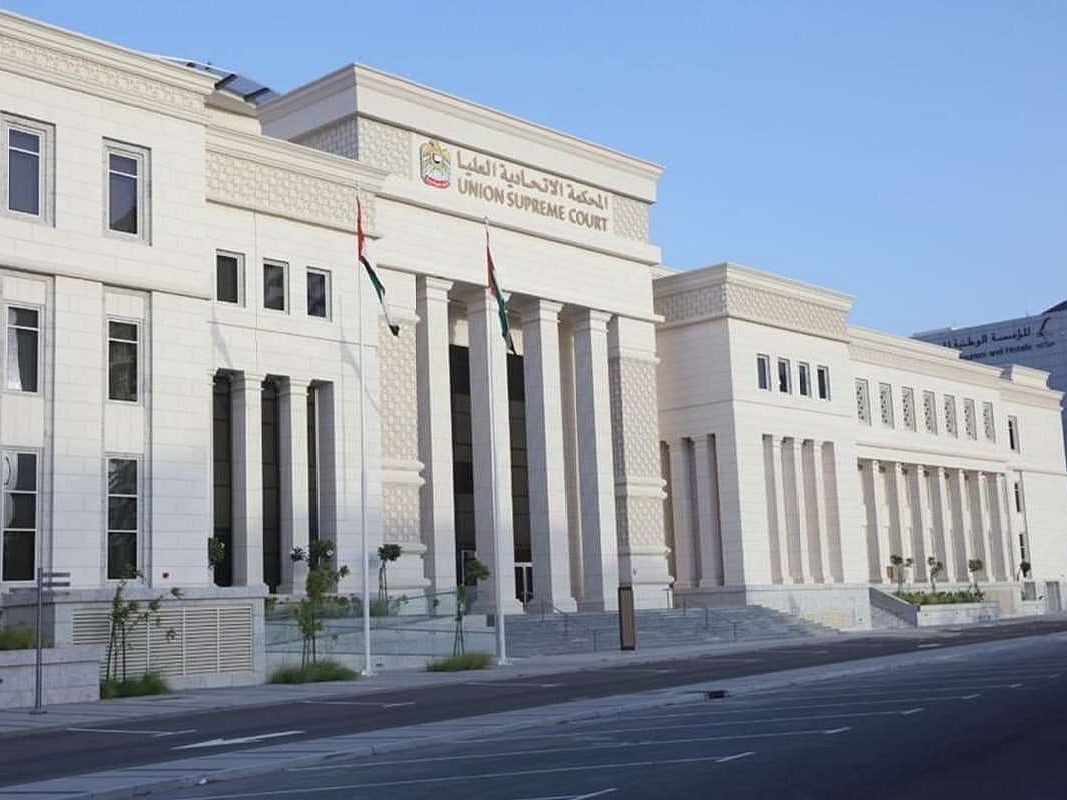
Ajman: The UAE's Federal Supreme Court has overturned an appeal court ruling ordering the deportation of a resident convicted of consuming psychotropic and harmful substances, ruling that deportation cannot legally be imposed as a substitute for a fine.
The court partially quashed the appeal judgment and reinstated the original Dh30,000 fine, finding that the lower appellate court had misapplied the law by replacing a financial penalty with deportation, according to Emarat Al Youm.
Get updated faster and for FREE: Download the Gulf News app now - simply click here.
The case involved a resident who was born in the UAE and lives in the country with his family. He argued that deportation would cause serious harm to him and his relatives, particularly because he had been the only party to appeal the original judgment, while the Public Prosecution had not challenged it.
According to court records, Ajman's Public Prosecution charged the defendant with consuming two psychotropic substances, methamphetamine and pregabalin, for a second time without legal authorisation.
He was also accused of consuming tropicamide, a substance that can harm the brain and central nervous system and cause sedation, according to a forensic laboratory report.
Prosecutors referred the case to the Ajman Federal Misdemeanours Court, seeking punishment under Federal Decree-Law No. 30 of 2021 on combating narcotic drugs and psychotropic substances, as amended.
The court convicted the defendant and imposed a Dh30,000 fine covering the related offences. He appealed the ruling, seeking to have it overturned.
However, the Ajman Federal Court of Appeal replaced the fine with deportation, prompting the defendant to challenge the decision before the Federal Supreme Court.
In his appeal, the defendant argued that the deportation order would seriously disrupt his family's life, noting that he was born in the UAE and had established his life there.
He also questioned the reliability of the forensic evidence, citing a delay between the collection of a sample and its submission for laboratory analysis, which he claimed could have affected its integrity.
The defendant further maintained that he had used one of the psychotropic substances under a valid medical prescription that had not been properly considered by the lower court. He also complained that neither he nor the arresting officers had been questioned during the preliminary inquiry and prosecution investigation.
The Federal Supreme Court rejected his challenges to the conviction, finding that the lower court had relied on sufficient and legally acceptable evidence.
It explained that assessing forensic reports and technical evidence falls within the discretion of the trial court, provided its conclusions are reasonably supported by the evidence. Such findings cannot be reconsidered by the Court of Cassation merely because the defendant disputes their evidential weight.
Regarding the medical prescription, the court noted that the forensic medicine department had confirmed that pregabalin, the active ingredient in Lyrica, had been dispensed to the defendant under a prescription issued around the relevant period.
However, no prescription had been established for methamphetamine or tropicamide, meaning the medical evidence did not absolve him of responsibility for the offences.
The court also dismissed his complaint about not being questioned during the preliminary investigation, ruling that procedural matters preceding the trial did not, in themselves, provide grounds to overturn the conviction.
Deportation cannot replace a fine
The Federal Supreme Court nevertheless found that the appeal court had made a legal error by substituting deportation for the Dh30,000 fine.
It explained that Article 126 of the UAE's Crimes and Penalties Law permits courts, in specified circumstances, to order the deportation of a foreign national instead of a custodial sentence for a misdemeanour.
That power, however, applies to imprisonment and does not extend to financial penalties.
The court distinguished between a fine, which constitutes a principal criminal punishment, and deportation, which is a legal measure. It found that the appeal court had failed to observe that distinction when it cancelled the fine and ordered the defendant's removal from the country.
The judgment also examined Article 75 of the UAE's anti-narcotics law, amended by Federal Decree-Law No. 14 of 2025, which provides for the deportation of foreign nationals convicted of offences under the legislation, subject to specified exceptions.
Those exceptions include cases in which the convicted person was, at the time of the offence, the spouse or first-degree relative of a UAE citizen, or belonged to a family residing in the country whose stability would be seriously harmed by deportation or whose members would be deprived of essential care or financial support.
The Supreme Court emphasised that the original trial court had imposed only a fine, without ordering deportation, and that the defendant alone had appealed the ruling.
It therefore partially overturned the appeal judgment, cancelled the deportation order and upheld the original Dh30,000 fine.
The court dismissed the remainder of the appeal and ordered the return of the security deposit.
Network Links
GN StoreDownload our app
© Al Nisr Publishing LLC 2026. All rights reserved.