Canva turns AI into a designer that builds content from a single prompt
Assistant now calls multiple tools to create and edit designs in one go
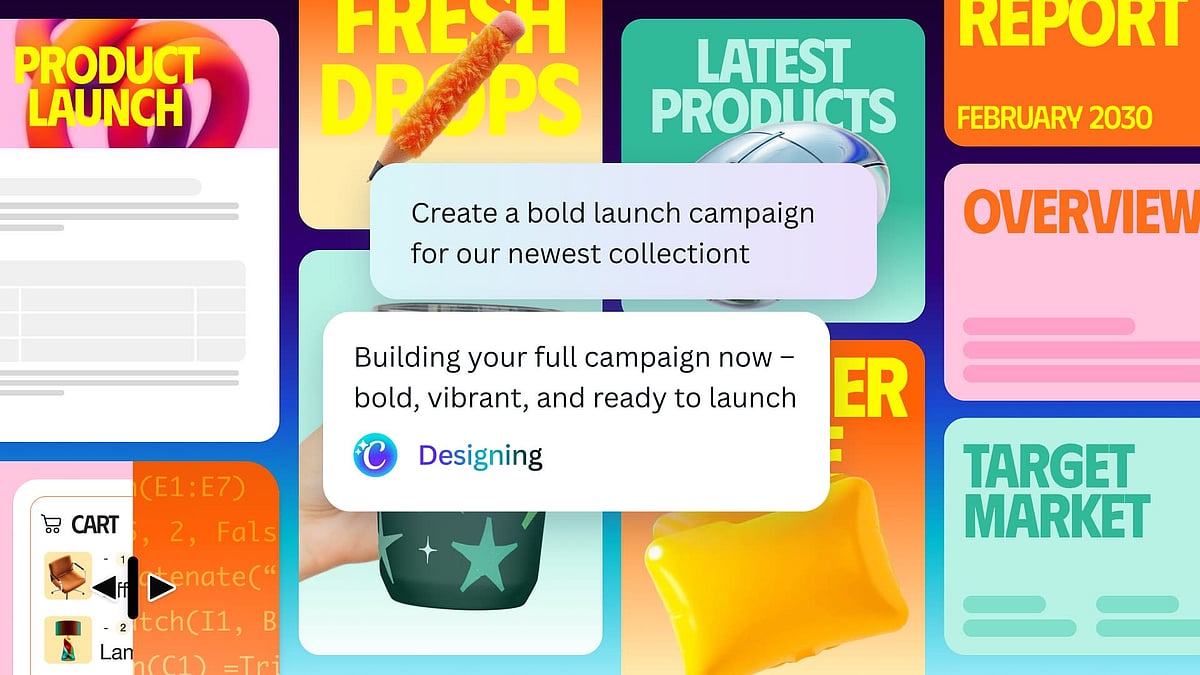
Dubai: Canva has expanded the capabilities of its AI assistant, allowing it to automatically call on multiple tools to generate designs based on simple text prompts.
According to a report by TechCrunch, the updated assistant can interpret a user’s request, select the appropriate tools within Canva, and produce fully editable designs.
Get updated faster and for FREE: Download the Gulf News app now - simply click here.
The system moves beyond basic prompt responses by enabling what developers describe as “agentic” behaviour—where the AI can chain together multiple actions, such as layout creation, image generation and content placement, into a single workflow.
Users can describe a task in natural language, and the assistant generates multiple design options structured in layers, allowing further editing and refinement.
The update is part of Canva’s broader effort to position its AI tools at the centre of user workflows, adding features such as website generation, spreadsheet creation and automated scheduling of tasks.
Other platforms are moving in a similar direction. Adobe recently introduced an AI assistant for its Firefly tools, while design platform Figma has integrated AI agents into its services, reflecting a wider shift toward automation in creative software.
Recent coverage by The Verge highlights how AI-driven design tools are increasingly moving towards prompt-based systems that generate and refine content through a single conversational interface.
Founded as a drag-and-drop design platform, Canva has steadily added AI features in recent years, aiming to simplify content creation for both individuals and businesses.
The latest update reflects a broader industry shift from tools that assist users to systems that can execute tasks end-to-end within a single platform.
Network Links
GN StoreDownload our app
© Al Nisr Publishing LLC 2026. All rights reserved.