iPhone Duo vs. Samsung Galaxy Z Fold 8: Which Foldable wins on cameras, crease and chip?
Heavier but tougher: iPhone Duo takes on Samsung’s lighter, thinner Z Fold 8
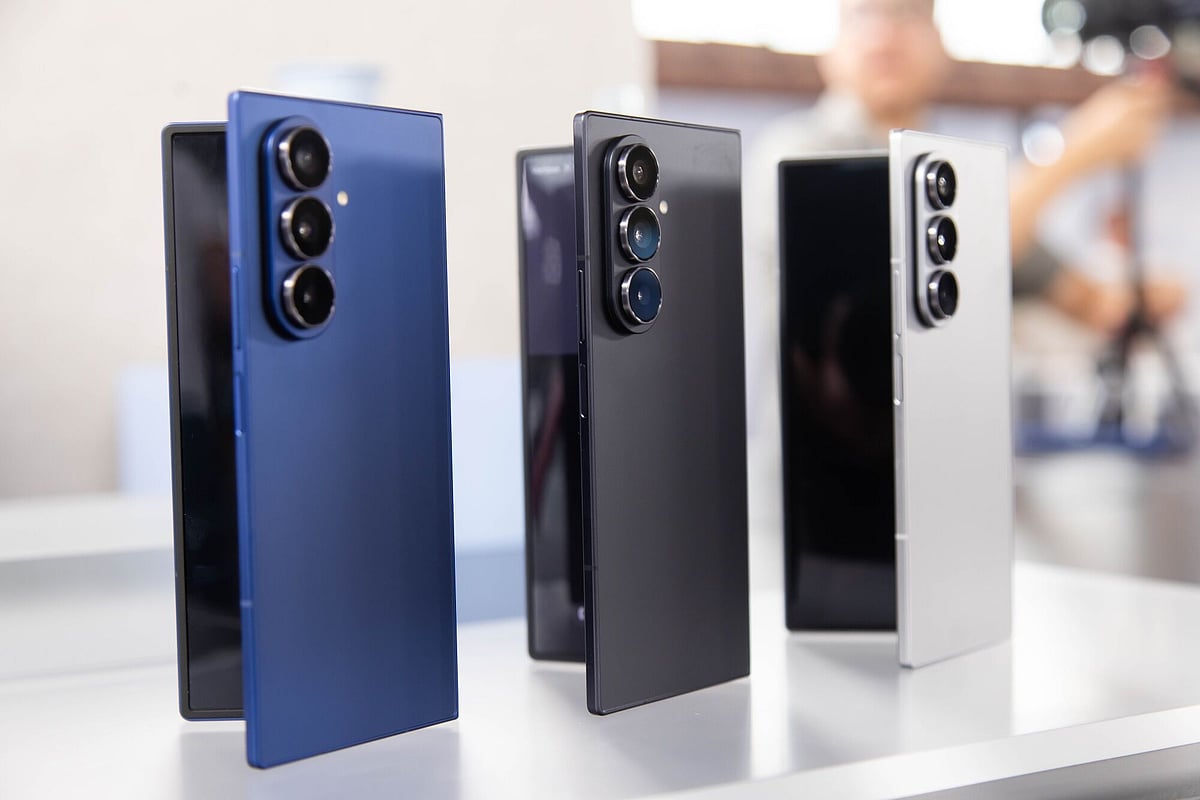
Samsung has spent eight years and eight generations refining its foldable phones. Apple has arrived much later with its first foldable, the iPhone Duo.
Early hands-on reviews suggest Apple may have learned a few things from Samsung along the way. But it is too early to call a winner. The iPhone Duo does not officially ship until October 23, so reviewers have not yet had enough time to test it as an everyday phone.
Still, early coverage gives us a good idea of how Apple's first foldable compares with Samsung's Galaxy Z Fold 8.
The big story: Apple made the crease harder to see
The crease is one of the biggest challenges with foldable phones. Apple has taken a different approach to making it less noticeable.
The crease can still be felt with a finger, but it is difficult to see during normal use. Apple uses a special nano-texture covering on the inner display that helps scatter light around the fold, according to 9-5Google.
The display itself uses several layers, including custom polymer, the OLED panel, glass and a titanium backing. Flexible adhesive holds the layers together while allowing them to move as the phone opens and closes.
However, the crease has not disappeared. Hands-on footage from Apple's launch event showed that the physical fold is still there. Reviewers have reached a similar conclusion: you can feel it, but the nano-texture finish makes it much harder to notice when reading, watching videos or moving between the two screens.
Samsung has also made progress. The Galaxy Z Fold 8 is lighter and easier to open than previous models, while its inner-screen crease is less noticeable.
So this is not quite the dramatic victory for Apple that some early reactions suggest. Apple has made the crease less distracting visually, while Samsung has continued to reduce the physical crease itself. Neither company has eliminated it.
Design and build: Samsung is lighter, Apple is more resistant
The biggest difference between the two phones is easy to spot when you pick them up. The Galaxy Z Fold 8 weighs 7.09 ounces, compared with 8.96 ounces for the iPhone Duo. That makes Apple's foldable the heaviest iPhone yet.
Reviews from T3, Android Central and Gizmodo suggest, the Z Fold 8 measures as little as 0.16 inches when unfolded, compared with 0.21 inches for the Duo.
Apple does have an advantage when it comes to protection. The iPhone Duo has an IP68 rating for dust and water resistance. The Galaxy Z Fold 8 has an IP48 rating. That gives the iPhone a more substantial level of protection against water and dust.
The materials are different too. Samsung uses an aluminium frame, while Apple has opted for titanium.
For someone who prioritises a lighter, slimmer phone, Samsung has the advantage. For water and dust resistance, Apple's rating is stronger.
Performance: Apple has the chip advantage on paper
The iPhone Duo appears to have a significant advantage in raw performance, at least on paper.
It uses Apple's A20 Pro chip, while the Galaxy Z Fold 8 is powered by Qualcomm's Snapdragon 8 Elite Gen 5.
Apple says the A20 Pro is the fastest smartphone chip yet and claims its additional GPU core can deliver up to 40 per cent faster graphics performance than the previous generation. Early reviews, based on Tom's Guide and Endgadget, of the Galaxy Z Fold 8, meanwhile, have found its performance smooth and reliable. Some reviewers have noted that the phone can get warm, particularly during gaming.
The real comparison will become clearer once independent benchmarks for the Duo are available.
Battery: The bigger screen changes the equation
Apple is making battery life one of the iPhone Duo's selling points.
The company rates it for up to 44 hours of video playback on the outer display and up to 31 hours on the inner screen. Apple also says the phone can reach 50 per cent charge in around 20 minutes with a 60W charger.
But there is an important catch: battery life depends on which screen you use. The outer display can reportedly last longer than the iPhone 18 Pro Max. Using the larger inner display, however, puts more demand on the battery.
Samsung's Galaxy Z Fold 8 has a 4,800mAh battery and uses silicon-carbon battery cells for the first time in the series. Early coverage suggests it should comfortably last through a typical day.
Battery performance will be one area where longer-term testing matters more than launch-day specifications.
Cameras: Samsung has the more versatile setup
Samsung has a clear hardware advantage when it comes to camera variety.
The Galaxy Z Fold 8 has three rear cameras: a 200MP main camera, a 12MP ultrawide and a 10MP telephoto camera with 3x optical zoom.
The iPhone Duo has two 48MP cameras. One is the main camera, while the other is an ultrawide with a 120-degree field of view. It also offers 2x zoom. The difference is straightforward: Samsung has a dedicated telephoto camera, while Apple does not.
Apple is instead relying on its image processing and sensor technology to deliver strong results from a simpler camera system.
For people who regularly use optical zoom, Samsung's setup offers more flexibility.
Software and multitasking: Apple has some interesting ideas
This may be the most unexpected part of the early comparison.
Samsung has had years to develop software for foldable phones. The Galaxy Z Fold 8 can run up to four apps at once and makes multitasking relatively straightforward.
But some early reviewers have found Apple's approach surprisingly polished.
The iPhone Duo has a redesigned side dock that gives apps more vertical space. That matters because some apps, including Instagram and TikTok, do not always make the best use of the Galaxy Z Fold's larger inner screen.
Apple also appears to have reduced the number of steps needed to launch and group apps.
The transition between the two screens is another area where the Duo has impressed early reviewers. For example, an app such as Netflix can remain open as the phone moves from the outer screen to the larger inner display.
The hinge is another difference. The Duo's hinge can hold the phone at different angles, while the Galaxy Z Fold 8's hinge is designed to stop at fully open or fully closed positions.
Samsung still has a mature foldable software system, but Apple's first attempt shows that the company has approached the format with some fresh ideas.
So, how close is the fight?
The early reviews do not point to a clear winner. Apple has made an impressive first entry into the foldable market, particularly with its display treatment, performance claims, hinge design and software.
Samsung still has some obvious hardware advantages. The Galaxy Z Fold 8 is lighter and thinner and offers a more versatile camera system with a dedicated telephoto lens.
The crease comparison is also more complicated than it first appears. Apple's approach makes the crease harder to see, while Samsung has continued to reduce the physical crease itself.
So, has Apple caught up with Samsung?
In some areas, yes. But the early hands-on coverage is not enough to settle the larger question.
The iPhone Duo still needs to go through sustained daily use, independent benchmarks, battery testing and long-term hinge testing. Those results will tell us much more than launch-event demonstrations or a few hours of hands-on time.
For now, the most interesting takeaway may be that Apple's first foldable is already giving Samsung's eighth-generation device a surprisingly close comparison.
Network Links
GN StoreDownload our app
© Al Nisr Publishing LLC 2026. All rights reserved.